The 8 Growth Tactics for LinkedIn Content That Converts in 2026
-
Optimize with Relevant Keywords
Your LinkedIn profile acts as a dedicated search page. To boost visibility, curate profile copy that mirrors the terms your target audience uses when seeking solutions like yours. Think of LinkedIn as an on platform SEO exercise rather than a static resume.
- Incorporate industry and role specific keywords throughout your headline, About section, and experience summaries.
- Study peer profiles to identify commonly used terms and phrases that attract your ICP.
- Balance keyword density with natural readability to avoid keyword stuffing.
-
Craft a Custom LinkedIn URL and Clean Visuals
First impressions matter. A clean, custom profile URL paired with professional visuals increases credibility and search discoverability both on LinkedIn and external search engines.
- Customize your URL to include your name or brand for easy sharing.
- Use a high quality headshot and a banner that communicates value and a clear CTA.
- Ensure your banner aligns with your value proposition and directs visitors toward the next step.
-
Lead with a Strong, Problem Solving Headline
Your headline should communicate outcomes, not just titles. A clear promise of value helps prospects decide to explore your profile further.
- Format templates such as: “Helping [ICP] achieve [result] through [method]” or “Book [X] meetings per month via LinkedIn outreach”.
- Pair the headline with a profile image and banner that reinforce the stated value.
-
Showcase with the Featured Section and Public Profile
The Featured area is where you can spotlight offers, case studies, and proven results. Keep it fresh and aligned to the high impact actions you want visitors to take.
- Highlight a low, mid, and high commitment offer to capture a range of buyer readiness levels.
- Make sure your profile is public so visitors can access the Featured items, About content, and contact options.
-
Tell a Persuasive About Section with a Clear Path
The About section should function like a concise mini sales page. Use a value driven narrative that follows the attention interest desire action framework and ends with a direct way to engage.
- Hook the reader with a pain point relevant to your ICP.
- Describe your unique approach and the outcomes you deliver.
- Include social proof, then a concrete CTA such as a Calendly link or message prompt.
-
Reorder Your Profile for Conversion
Placement matters. Structure your profile so the most compelling information appears first, guiding visitors toward action without friction.
- Place the Featured section above the About section to surface your top offers upfront.
- Follow with a value focused About, then experience and testimonials to reinforce credibility.
-
Consistency in Posting and Content Quality
Algorithmic visibility rewards steady presence. Establish a sustainable cadence that fits your capacity while still delivering value.
- Start with a conservative goal such as one post per week, then scale as you maintain quality.
- Leverage content formats that drive engagement, including carousels and short videos.
-
Engage with Visual and Interactive Content
Visual content and interactive formats capture attention and extend time on page, boosting your reach and conversions.
- Use carousels to educate or guide through a process with 5 to 10 slides.
- Incorporate short videos, graphics, and polls to increase engagement and feedback.
- Consider long form articles for thought leadership while pairing posts with eye catching visuals.
LinkedIn Premium
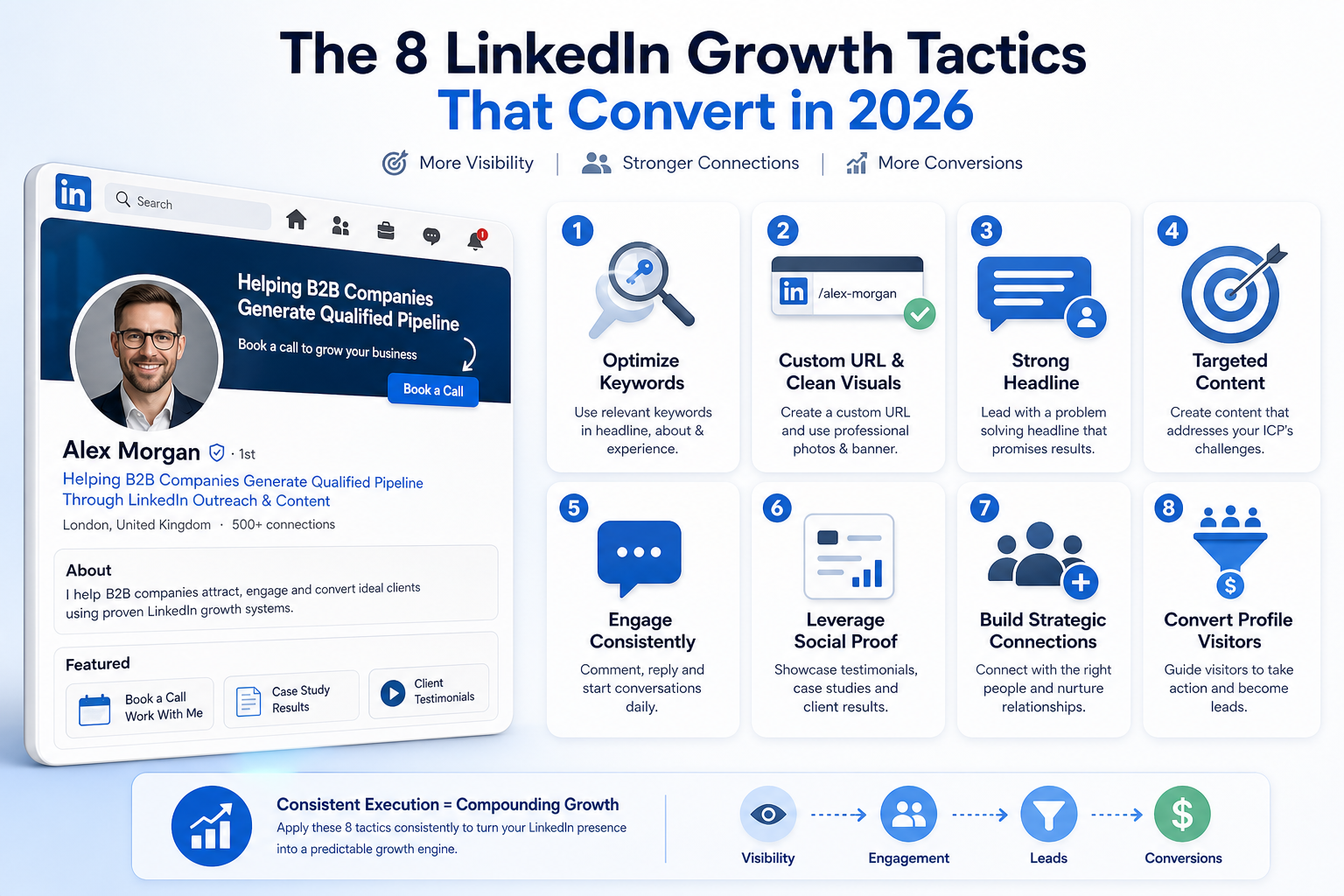
LinkedIn Premium unlocks a layer of visibility and intelligence that can dramatically amplify your reach and the quality of your content insights. When you pair consistent posting with the deeper analytics and audience data that Premium provides, you gain a clearer map for what to post, when to post, and who is most likely to engage. This is not about flashy tricks alone; it is about turning routine activity into data informed momentum that compounds over time.
Premium features that directly influence reach and insights include enhanced profile visibility, expanded search and the ability to see who viewed your profile, and access to more detailed engagement data. These tools help you make smarter decisions about targeting, timing, and content format. In practice, this means you can identify the segments of your audience that respond best to your messages, tailor your posts to their interests, and retarget prospects with precision after analyzing engagement patterns.
How Premium amplifies consistent posting
- Deeper engagement signals — Premium reveals who is engaging with your content beyond basic metrics. With richer signals, you can infer intent and prioritize conversations with high potential for conversion.
- Audience visibility — The ability to see more of your second and third degree networks allows for strategic expansion of your reach when your posts align with the interests of these extended audiences.
- Content performance insights — Premium provides granular data on which posts resonate, including timing, format, and topic clusters. This accelerates experimentation and reduces guesswork in your content strategy.
- Informed posting cadence — By understanding which days and times yield higher engagement among your target ICP, you can calibrate your schedule to maximize impressions without increasing output volume.
Altogether, Premium acts as a force multiplier for a disciplined posting strategy. It turns steady activity into an adaptive content plan that evolves with your audience. By regularly publishing with the benefit of Premium insights, you can elevate not just how often you post but how effectively you connect with the right people, at the right times, with the right message.
Remember, consistency remains the backbone of growth. Premium does not replace quality; it enhances your ability to iterate quickly, learn from precise feedback, and push your content strategy toward higher reach and deeper engagement.
Sprout Social
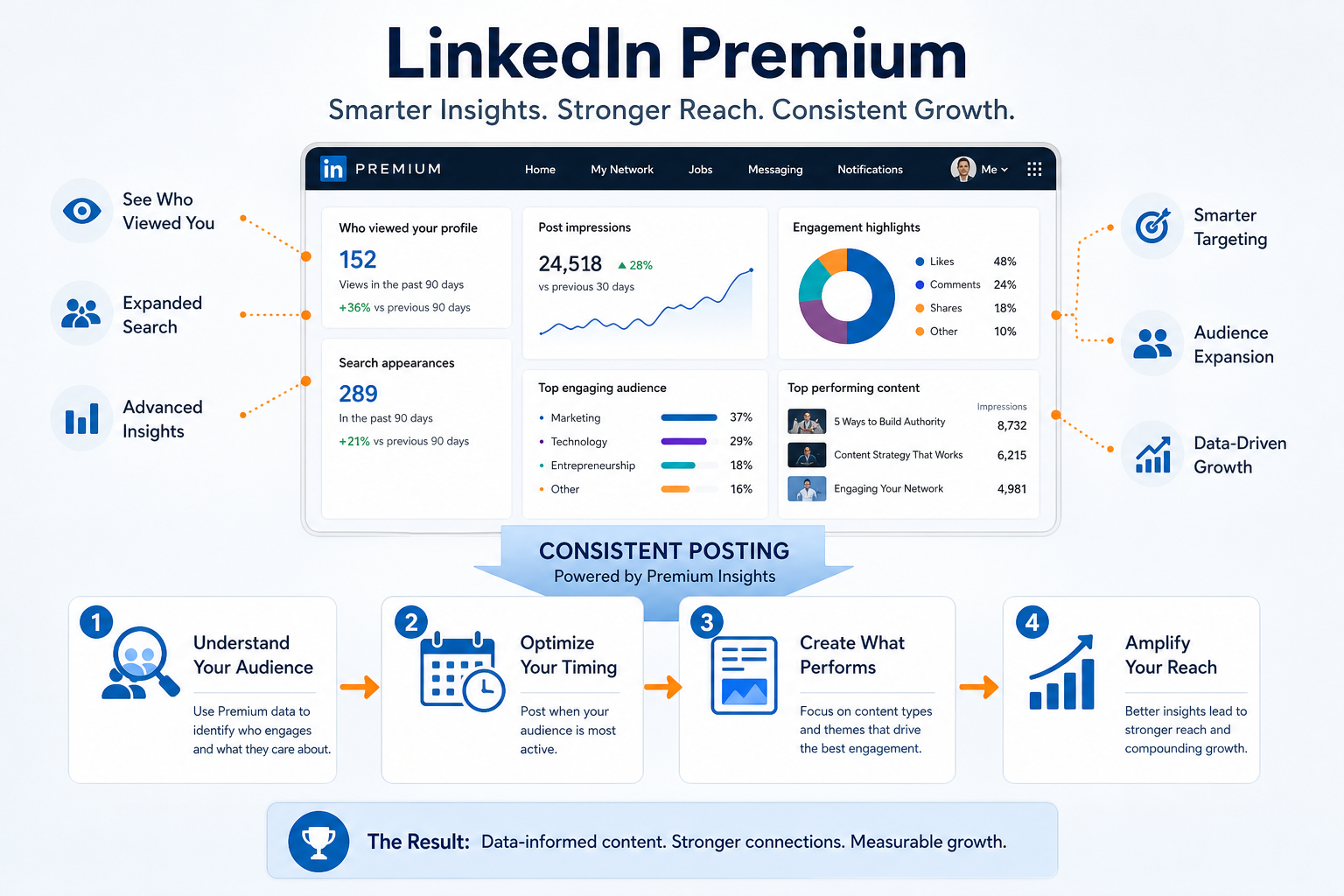
Sprout Social highlights employee advocacy as a lever for organic reach and earned media value. When employees share company content, testimonials, and thought leadership, brands extend their reach beyond official channels and tap into trusted networks. The effect is real and measurable when advocacy scales across the workforce.
In 2022, Sprout Social reported that employee advocacy generated earned media value of nearly $450,000. This figure shows how each participating employee compounds the impact of a brand’s content, driving broader exposure, higher engagement, and more conversations without relying on paid media.
Advocacy programs boost organic reach and engagement in several practical ways:
- amplified reach — Employee shares reach audiences that are often more receptive and trusting, expanding visibility beyond the company’s own followers.
- authentic engagement — Content shared by employees tends to create higher credibility and richer conversations, leading to more meaningful interactions.
- cost efficiency — Advocacy reduces reliance on paid amplification by leveraging voluntary, authentic endorsements from internal champions.
- social proof — A network of employee advocates creates social proof that reinforces the company’s value proposition and helps attract potential customers or partners.
To maximize these benefits, organizations can design lightweight advocacy programs that empower employees to share approved content, provide easy sharing prompts, and recognize contributions. With a clear policy and training, advocacy initiatives support a more consistent and credible brand presence, ultimately contributing to higher organic reach and engagement over time.
Buffer
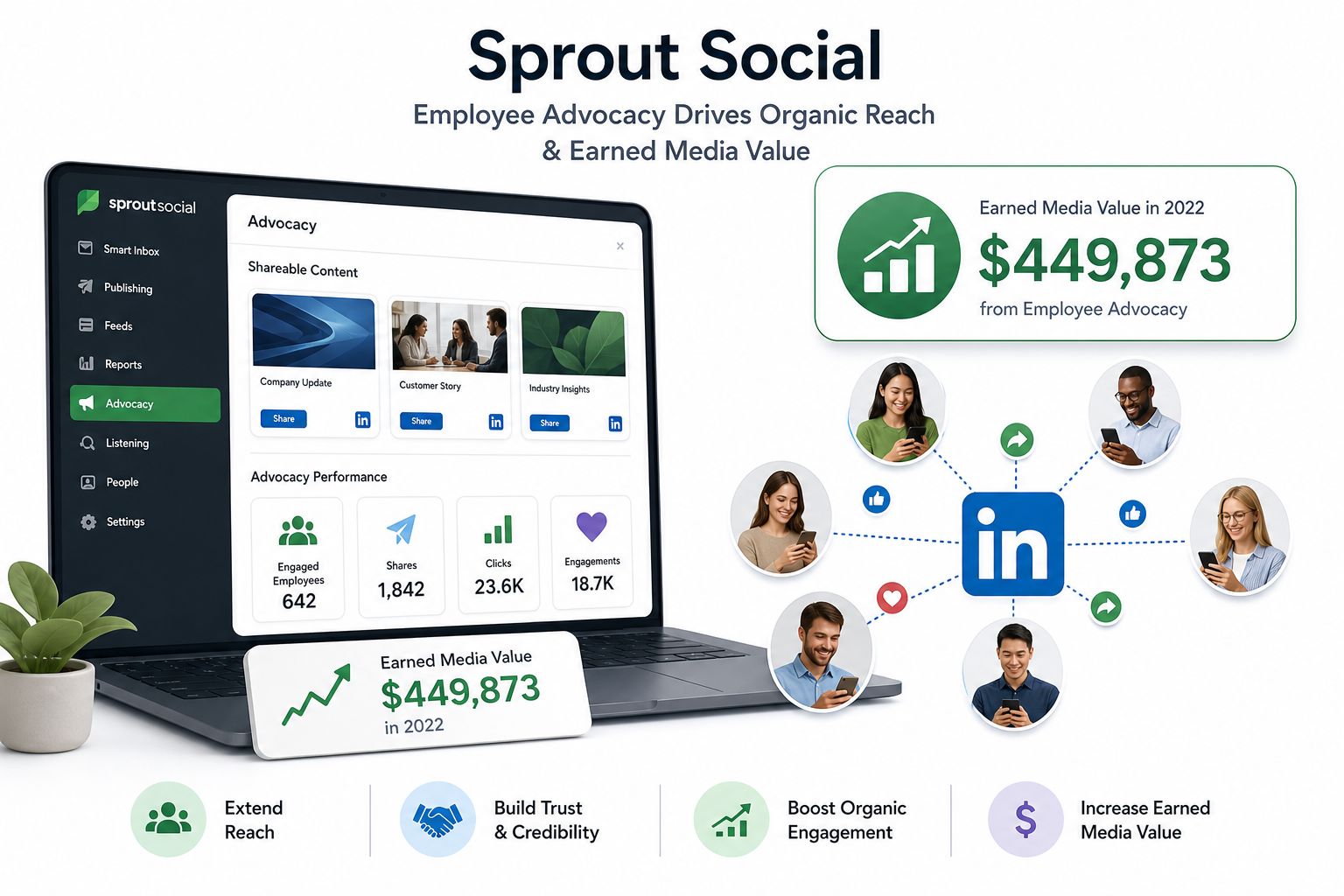
The cadence of your LinkedIn activity matters as much as the content you publish. A data-driven approach to posting frequency and timing helps you maximize impressions and engagement without burning out your team. Buffer, in its large-scale analysis of millions of LinkedIn posts, shows that consistency paired with smart timing yields superior reach and interaction compared to irregular, sporadic posting. Translating those insights into a repeatable scheduling routine builds momentum over weeks and months.
Key takeaways from Buffer’s study include principles you can apply to your cadence planning:
- Consistency beats bursts — Regular posting signals to the LinkedIn algorithm that you are an active, reliable creator, which tends to improve long-term visibility.
- Quality first, frequency second — It is better to publish fewer high-value posts than to flood feeds with mediocre content. Pair a sustainable posting rate with strong hooks and visuals.
- Time matters, not just volume — Publishing during periods of higher audience activity yields more impressions and, in turn, more engagement. Align posting windows with when your ICP is most likely to be online.
- Experiment and iterate — Use verified experiments to refine your cadence. Start with a modest baseline, track outcomes, and adjust format mix and timing based on actual data.
Illustrative cadence guidelines based on data driven thinking
| Cadence Element | Recommended Range | What to Watch For |
|---|---|---|
| Posting frequency | 3 to 5 posts per week | Maintain quality; avoid content fatigue and audience burnout |
| Primary posting window | Dip into peak activity periods for your ICP, typically midweek mornings | Track engagement by time slot to identify your best performing windows |
| Content mix balance | 2 educational or value-driven posts, 1 industry commentary, 1 lighter or engaging post | Adjust mix based on what resonates most with comments and saves |
| Experiment cadence | Monthly light tests; quarterly larger experiments | Document results; iterate on formats, topics, and posting times |
How to translate this into your team’s workflow:
- Set a baseline — Choose a sustainable weekly posting target, for example three posts per week, and confirm before increasing.
- Schedule strategically — Create a recurring calendar block for content creation and posting, aligning with your identified peak windows.
- Measure the signals — Track impressions, engagements, and follower growth by post and time slot to pinpoint the most effective timing.
- Iterate rapidly — Use small controlled experiments to test new formats or topics at the same time slot to isolate impact.
In practice, applying Buffer’s data-driven cadence means treating posting as a repeatable process rather than a one-off. By coupling consistent output with optimized timing, you increase the odds that your content appears in more feeds, earns more impressions, and generates stronger engagement with your target audience over time.
Canva
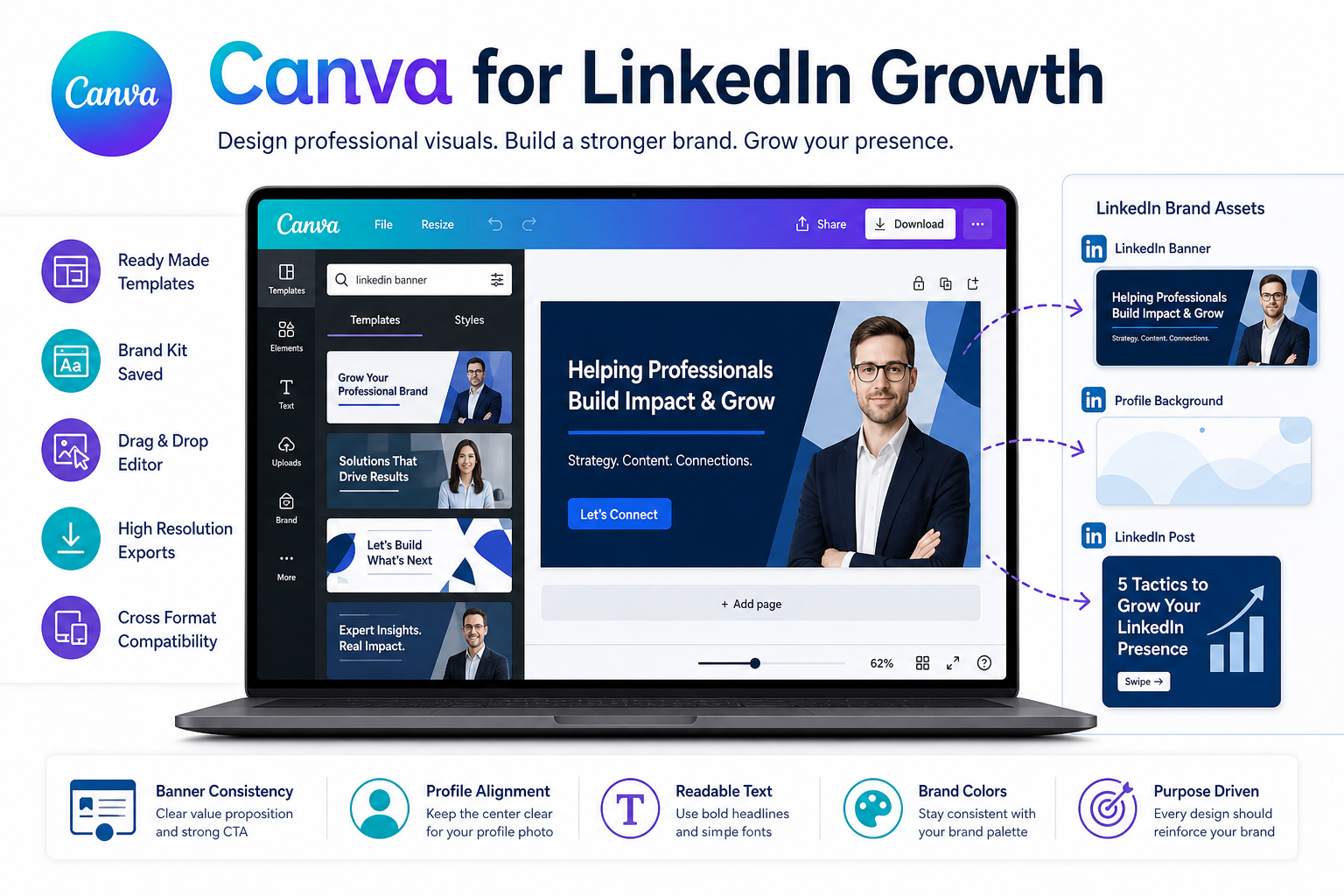
Canva is the visual branding tool for designing professional banners, background images, and post graphics that reinforce your LinkedIn identity. It makes it straightforward to create cohesive visuals that align with your brand voice without requiring advanced design skills. With Canva, you can quickly produce on-platform visuals that feel polished, consistent, and ready for sharing across your profile and updates.
Key ways Canva supports LinkedIn branding include:
- Ready made templates — A wide library of LinkedIn banner templates, post templates, and carousels tailored for professional audiences.
- Brand kit — Save your logo, color codes, and fonts so every asset stays on brand with a single click.
- Drag and drop editor — Intuitive tools for text, shapes, icons, and images that speed up production.
- High resolution outputs — Export options that preserve quality for banners, backgrounds, and thumbnails across devices.
- Cross format compatibility — Easily adapt designs for LinkedIn posts, background images, and document shares without starting from scratch.
Practical guidelines for using Canva to strengthen your LinkedIn presence:
- Banner consistency — Create a LinkedIn banner that communicates your value proposition and includes a clear CTA. Use your brand colors and a concise headline to set expectations for profile visitors.
- Profile background alignment — Ensure the banner works with your profile photo and headline. Keep the central message away from the profile image so it remains legible on mobile.
- Post visuals that educate — Design carousel slides, quote graphics, and data visuals that complement your written posts and encourage saves and shares.
- Legibility matters — Use high contrast text, large fonts for headlines, and minimal copy on images to ensure readability on small screens.
- File management — Save templates for different content themes (educational, industry commentary, case studies) so you can deploy visuals quickly when posting.
| Canva Use Case | Benefit | Tip |
|---|---|---|
| LinkedIn Banner | Brand identity, immediate value cue, professional first impression | Include a single focus message and CTA |
| Post Visuals | Increased engagement and scroll stopping power | Use readable fonts and color contrast for mobile viewing |
| Carousel Slides | Structured, step by step education with visual pacing | Limit each slide to one idea and maintain visual rhythm |
| Infographics | Data driven storytelling that is easy to share | Highlight key takeaways in bold and use icons for quick scanning |
To integrate Canva into your workflow, build a small library of evergreen templates that reflect your branding. Train team members to reuse these designs so every LinkedIn touchpoint—profile banners, post images, and document shares—feels part of a single brand narrative. This visual consistency reinforces recognition and reduces production time, enabling you to publish more confidently.
Creator Mode
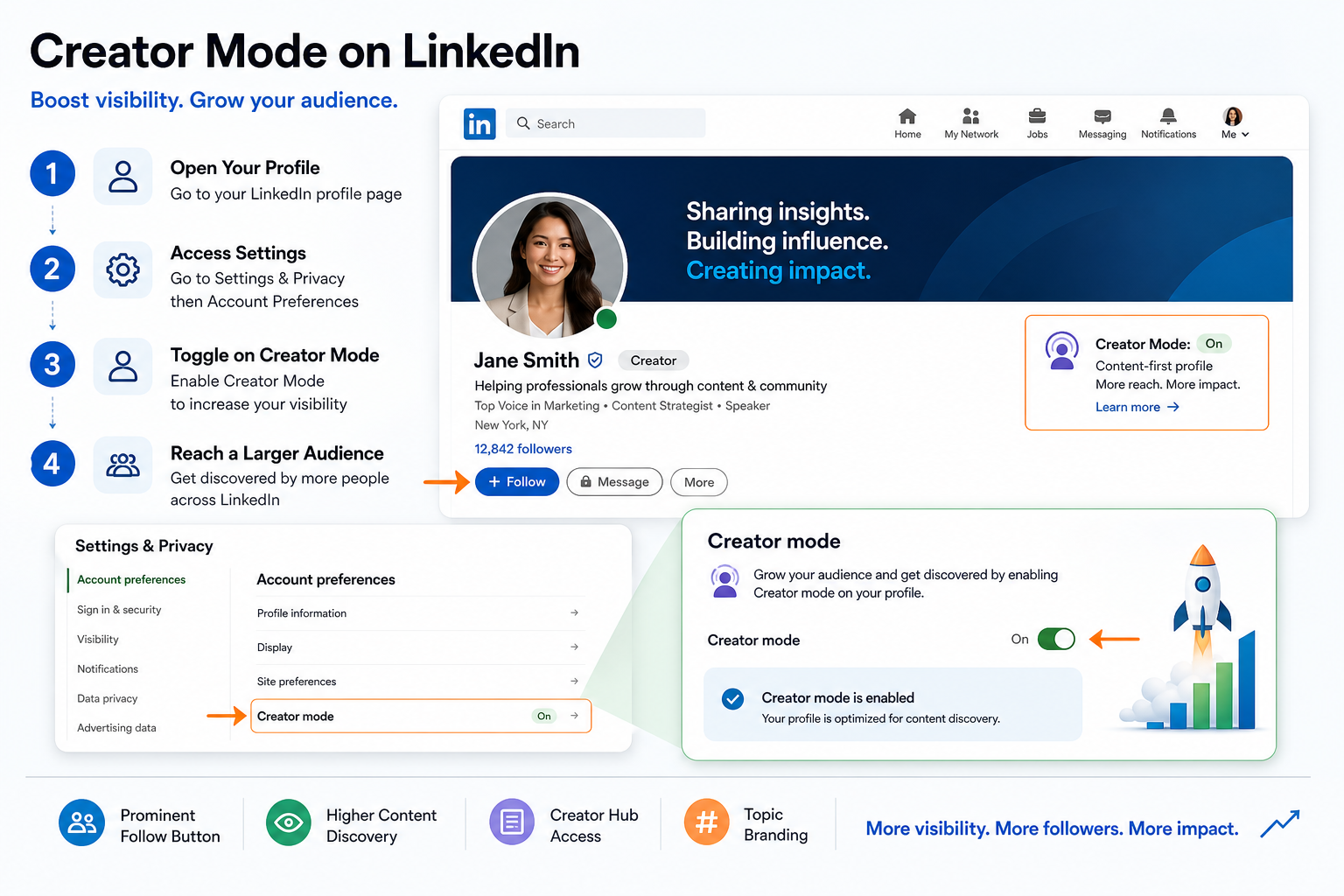
Creator Mode is a LinkedIn visibility feature designed for content creators who want to extend their reach within the LinkedIn ecosystem. When you enable Creator Mode, your profile signals a content-first approach, making it easier for people to discover and follow your updates as you publish regular posts, videos, carousels, and newsletters. The result is greater exposure to a broader audience beyond your direct connections, helping you grow a community of followers who care about your expertise.
What Creator Mode changes on your profile and in your reach:
- Follow button prominence — The default action shifts from a primary connect request to a prominent follow button, encouraging more people to subscribe to your content.
- Improved content discovery — Your posts gain higher visibility in the LinkedIn feed for people who may not yet know you, expanding your potential audience.
- Creator hub access — You gain access to additional content management features and a centralized space to showcase your topics, featured posts, and newsletters.
- Topic branding — You can highlight specific content topics or themes, helping LinkedIn surface your posts to users who engage with those topics.
How to enable Creator Mode
- Open your profile — Sign in to LinkedIn and navigate to your profile page.
- Access settings — Go to Settings & Privacy and locate Account preferences.
- Toggle on Creator Mode — Enable the Creator Mode switch and confirm your choice.
- Configure topics and newsletter options — Select main content topics that align with your niche and, if you publish newsletters, set them up to maximize subscriber growth.
Best practices to maximize the impact of Creator Mode:
- Publish consistently on your chosen topics — Build a recognizable content rhythm around your core themes to attract a dedicated following.
- Leverage the follow strategy — Encourage profile visitors and post viewers to follow you for ongoing insights rather than relying solely on connection requests.
- Optimize content formats for the audience — Use a mix of short videos, carousels, and informative posts that align with your topics to improve engagement and reach.
- Link newsletters and lead magnets thoughtfully — If you publish newsletters, integrate them with strong CTAs in posts to convert followers into engaged subscribers.
In summary, Creator Mode is a strategic visibility feature that shifts the focus from one-off connections to long-term content engagement. By highlighting your content and enabling a broader audience to follow your updates, it can accelerate growth, deepen engagement, and unlock access to LinkedIn’s distribution pathways that favor consistent creators.
Calendly
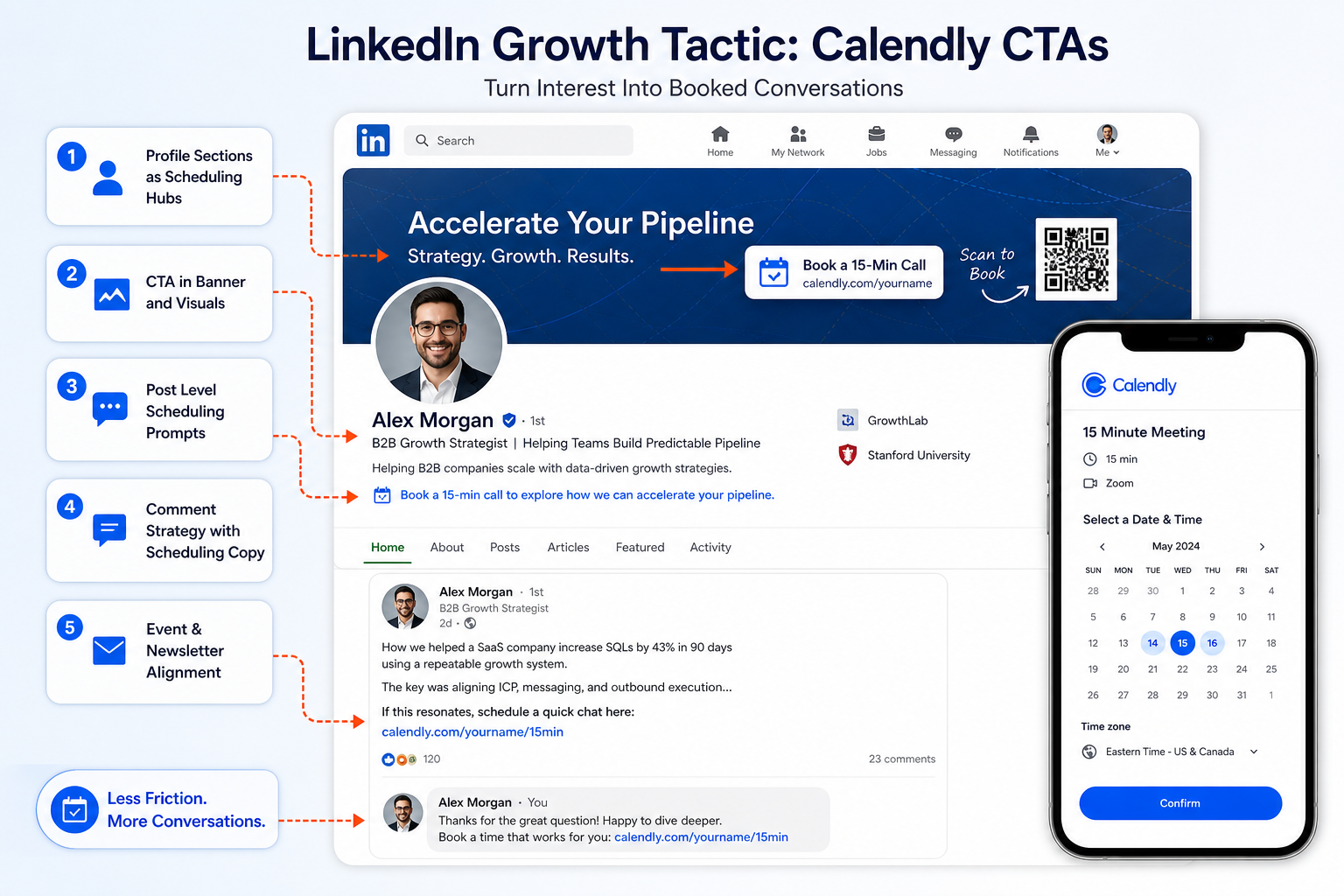
Calendly integrations offer a smooth path from interest to action by placing calendar based CTAs directly where prospects engage. When readers land on your profile or stop to read a post, a well placed scheduling option reduces friction and accelerates the conversation. The goal is to convert curiosity into booked conversations without back and forth messaging or manual coordination.
Here is how to leverage Calendly and calendar based CTAs across your LinkedIn presence:
- Profile sections as scheduling hubs — Add a dedicated line in the About or Featured areas that invites readers to book a time. Pair the CTA with a brief value statement, for example: “Book a 15 minute call to explore how we can accelerate your pipeline.”
- CTA in the banner and visuals — Include a concise, highly visible CTA that points to a Calendly link. Ensure the banner emphasizes a high value outcome and uses a short URL or a QR code for mobile readers.
- Post level scheduling prompts — In posts that discuss a specific offer, outcome, or case study, embed a Calendly link with a natural CTA such as “If this resonates, schedule a quick chat here.” Keep link text action oriented rather than generic.
- Comment strategy with scheduling copy — When replying to engagements or opportunities, add a scheduling option in your reply to invite immediate consultation without derailing the thread.
- Event and newsletter alignment — If you run webinars or newsletters, include a Calendly link in follow up messages or event thank you notes to convert attendees into longer conversations.
Best practices for calendar based CTAs
- Offer multiple time slots — Provide a few options across different days to accommodate time zones and schedules.
- Keep the booking flow simple — A short form requesting only essential details reduces drop offs. Consider a two step process: confirm the appointment and then get a brief context note.
- Prequalification with a note — In the booking description, include a one line prompt asking the prospect to share a topic or goal. This helps tailor the call and sets expectations.
- Follow up with confirmation and value — Send an automatic calendar invite with a short agenda, relevant resources, or a pre call question to maximize readiness.
- Privacy and consent — Be transparent about data usage and keep the booking process compliant with your privacy guidelines.
Table: Ideal placement ideas for Calendly CTAs
| Location | CTA Sample | Pros |
|---|---|---|
| About section | “Book a 15 minute call to discuss how we can help your team achieve [outcome].” | Direct, context driven, high intent signals |
| Featured section | “Schedule a quick strategy session” with a calendar embedded link | Showcases offers prominently, boosts conversion potential |
| Post footer | “If this resonates, book time here to dive deeper” | Turns engagement into an action while the topic is fresh |
| Banner image | CTA overlay: “Book a call” with shortened link | Visible during profile visits, capitalizes on first impression |
Practical setup steps you can implement today:
- Create a simple booking page — Set up a Calendly event with a concise title, a clear description of what will be covered, and a few available time slots.
- Add the link to high impact areas — Place the link in the About, Featured, and top posts where it aligns with the user intent demonstrated in the content.
- Test messaging variations — A/B test different CTAs and descriptions to identify which phrasing yields the most bookings.
- Monitor conversion signals — Track which posts or profile sections drive the most bookings and optimize based on that data.
In short, Calendly integrations transform passive profile visits and passive post engagements into proactive conversations. By aligning scheduling with your value proposition and reducing friction at the moment of interest, you can accelerate lead qualification and shorten the path from attention to engagement.
LinkedIn Carousels
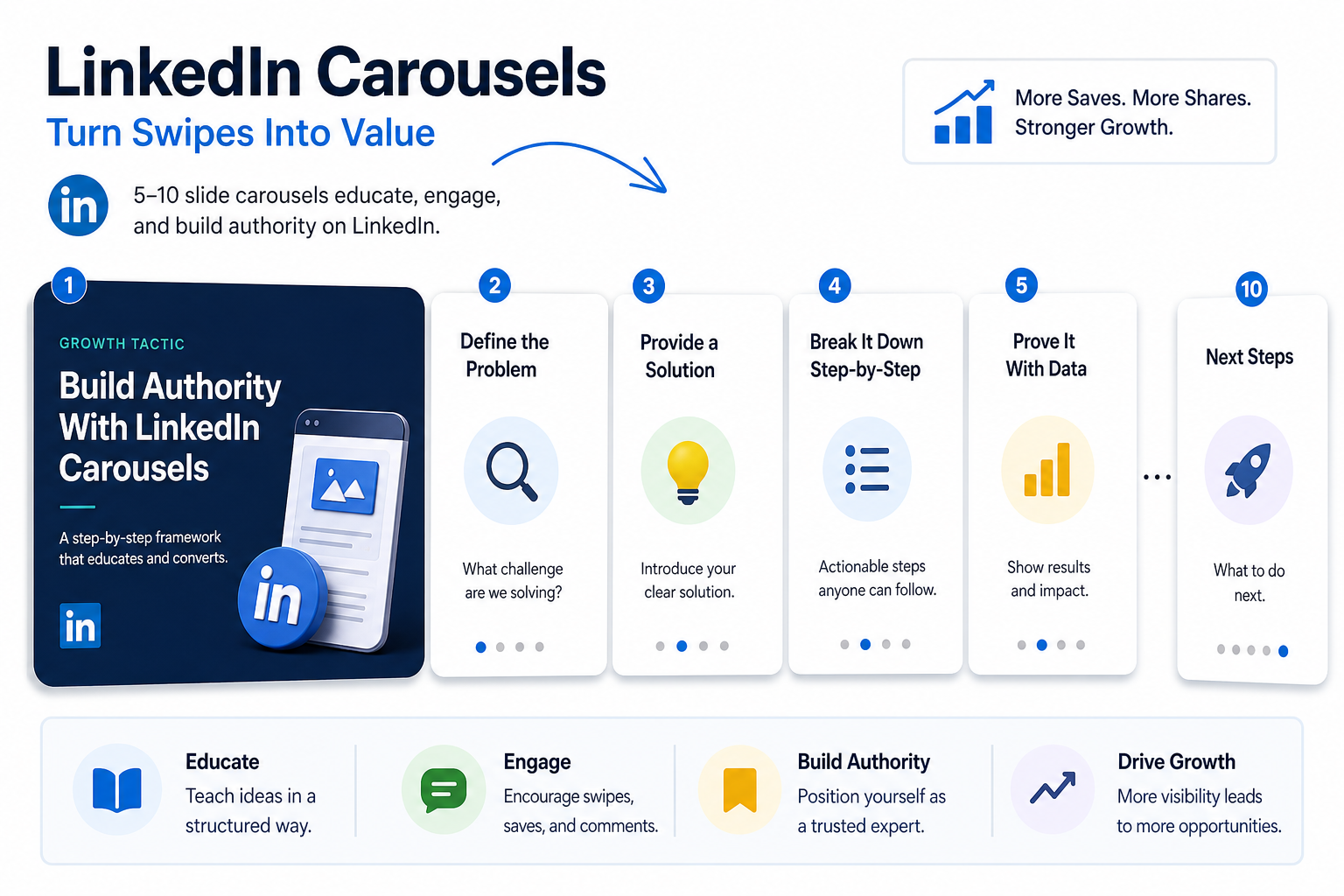
LinkedIn Carousels are a powerhouse content format for education and engagement on the platform. By delivering a structured, scroll friendly experience, carousels invite readers to swipe through a sequence of slides that build a narrative, explain a process, or reveal data in digestible chunks. This format aligns with how professionals absorb information on mobile and desktop alike, turning passive scrolling into an active, cumulative learning journey.
Key reasons carousels work well for education and engagement:
- Narrative pacing — Each slide advances the story, creating anticipation and encouraging users to continue swiping.
- Visual storytelling — Combining concise copy with charts, icons, and color coding makes complex ideas easier to grasp.
- Higher engagement signals — Carousel posts typically generate more saves, shares, and comments due to their multi-step value proposition.
- Longevity in feeds — The swipe format stands out in crowded feeds and can remain relevant as a durable educational resource.
Best practice guidelines for creating 5 to 10 slide carousels that educate and convert:
- Start with a crisp hook slide — Use a bold statement or question that promises a clear outcome to draw readers in.
- Structure with a clear framework — Organize slides around a repeatable framework such as problem, solution, steps, proof, next steps.
- Limit each slide to one idea — Keep copy short and scannable; use visuals to reinforce the point rather than duplicating text.
- Incorporate data visuals — Replace long paragraphs with charts, infographics, or bullet trees that convey numbers quickly.
- Maintain visual rhythm — Use a consistent color palette, typography, and slide layout to create a cohesive reading experience.
- Include a strong takeaway on the final slide — End with a practical action, a checklist, or a prompt for discussion to drive engagement.
- Optimize for skimmability — Ensure legibility on mobile with large fonts, high contrast, and minimal copy per slide.
Content ideas for 5 to 10 slide carousels that consistently perform well:
- Step-by-step how-tos — Break down a process into 5 to 8 actionable steps with concise explanations on each slide.
- Frameworks and checklists — Introduce a popular framework, then provide a reproducible 3 to 5 step checklist.
- Before and after case visuals — Show the problem state and the improvement after applying your method, supported by simple metrics.
- Data storytelling — Present a small dataset with labeled visuals, emphasizing the insight and takeaway.
- Cheatsheets and rapid utilities — Share a one-page reference or template that readers can save and reuse.
Implementation tips to maximize reach and saves:
| Strategy | What to Include | Why It Helps |
|---|---|---|
| Concise headlines on each slide | One strong statement per slide, with a supporting visual | Improves scanability and retention |
| Visual data supports | Simple charts, icons, callouts highlighting key figures | Translates numbers into actionable insights quickly |
| Text-to-visual balance | Minimize paragraph length; maximize image weight | Keeps attention and reduces cognitive load |
| CTA alignment | End with a practical action, such as a prompt to comment, save, or try a checklist | Directs engagement and increases post interaction |
Examples of slide sequences you can adapt for your audience include:
- Slide 1 hook question or bold statistic
- Slides 2–4 state the problem with minimal text and a supporting visual
- Slides 5–7 present the steps or the framework in a logical order
- Slides 8–9 show evidence, mini case points, or data highlights
- Slide 10 clear takeaway and a CTA to engage or download a resource
Tracking and iteration ideas for carousels:
- Test slide counts — Compare 5 slide versus 8 slide formats to see which yields higher saves.
- Vary data density — Use lightweight visuals on some carousels and richer data visuals on others to see what resonates.
- Monitor engagement signals — Pay attention to completion rate and comment quality as indicators of educational value.
In summary, LinkedIn carousels offer a scalable method to educate your audience while driving meaningful engagement. By delivering structured, visually driven step by step content in a compact 5 to 10 slide format, you can convey processes, demystify data, and nurture readers toward deeper interactions with your profile and offerings.
LinkedIn Live
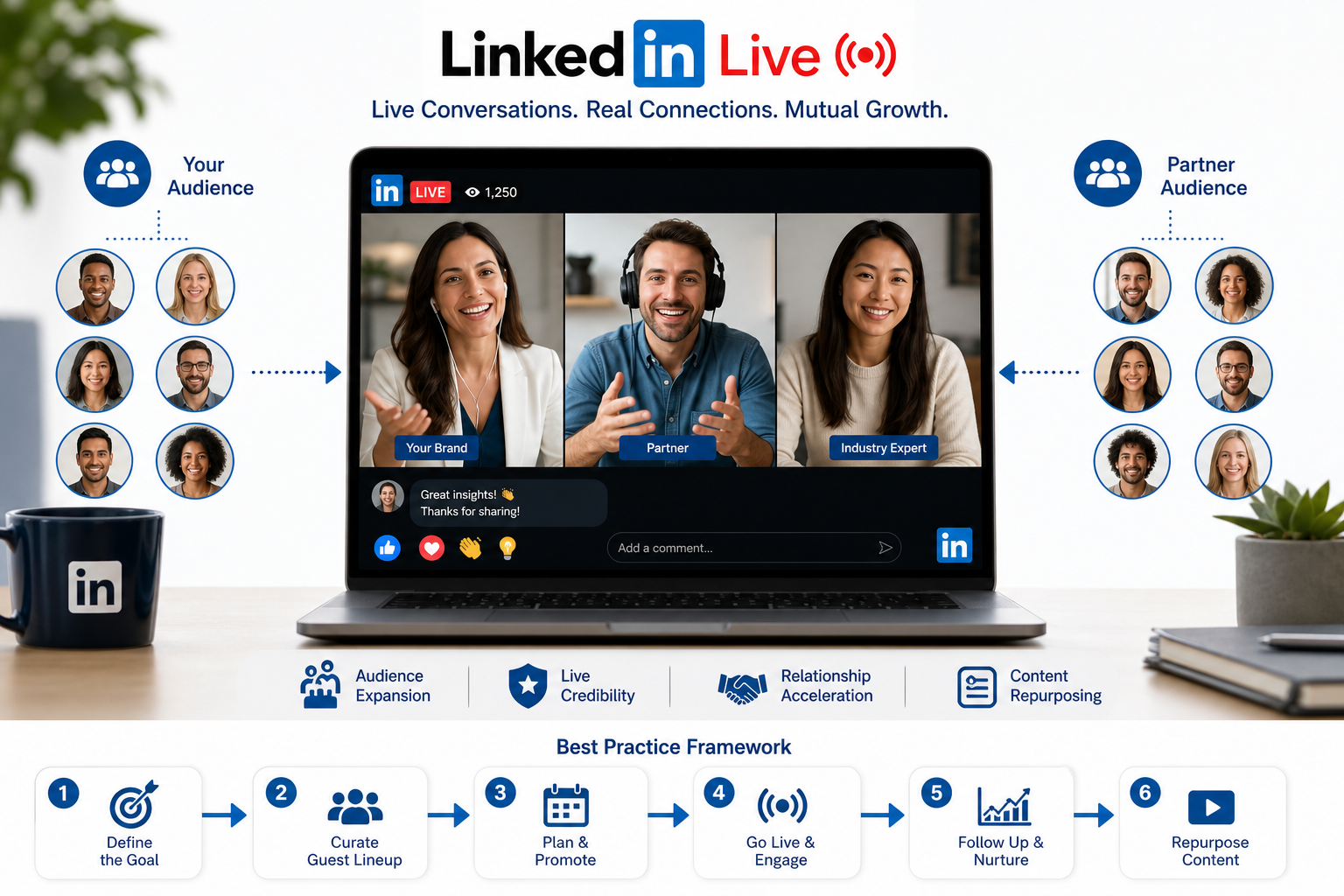
LinkedIn Live is a powerful vehicle for partner and thought leadership events, enabling real time conversations that humanize your brand and invite deep audience engagement. By hosting live sessions with collaborators, customers, or industry peers, you can extend reach beyond your own network while leveraging the credibility and authority of trusted voices. The result is a dynamic cross pollination of audiences, where viewers from partner communities discover your expertise and vice versa, creating mutual amplification and qualified conversations in the moment.
Key benefits of using LinkedIn Live for live events include:
- Audience expansion — Co hosting with partners exposes your content to their followers, increasing impressions and potential connections without paid media.
- Live credibility — Real time Q A, demonstrations, and panel discussions showcase expertise in a way that pre recorded content cannot match.
- Relationship acceleration — Direct interactions foster trust, enabling quicker qualification and faster movement along the pipeline.
- Content repurposing — Live sessions generate multiple assets (clips, quotes, summaries, carousel ideas) that fuel subsequent posts and nurture campaigns.
Best practice framework for successful LinkedIn Live events:
- Define the goal — Choose a clear outcome such as co marketing with a partner, product demonstrations, or thought leadership on a trending topic.
- Curate a relevant guest lineup — Select partners or industry experts whose audiences align with yours and whose perspectives complement the topic.
- Design a concise format — Plan a 45 to 60 minute session with a structured flow: introduction, panel or interview, live demo or case study, and audience Q A.
- Prepare audience value prompts — Prepare questions, talking points, and demonstrations that yield actionable insights for attendees.
- Promote across ecosystems — Publish pre event content, offer registration reminders, and coordinate cross posts with partners to maximize reach.
- Optimize the technical experience — Use reliable streaming setups, test audio and video in advance, and minimize on screen clutter and distractions.
- Engage in real time — Monitor comments, encourage audience questions, and invite partners to respond to live inquiries to diversify voices on screen.
- Capture and repurpose — Clip standout moments, extract quotes for posts, and create a post event recap with key takeaways and next steps.
Event formats that work well for partner and thought leadership alignment:
| Live Format | When It shines | Best Practices |
|---|---|---|
| Partner roundtable | Two or more organizations discuss a shared challenge with live audience Q A | Coordinate talking points in advance, rotate moderators, and capture cross brand insights |
| Product or solution live demo | Showcase capabilities with live use cases and customer scenarios | Prepare a scripted demo, invite real time questions, and provide follow up resources |
| Industry trend interview | Thought leaders discuss emerging topics and predict implications | Curate provocative questions, reference data, and invite viewer perspectives |
| Live workshop or mini training | Hands on session where attendees apply a framework or checklist | Offer downloadable takeaways and an optional follow up session |
Planning checklist to execute a high impact LinkedIn Live event:
- Set a measurable objective — Define the specific outcome you want, such as a set number of qualified leads or a certain engagement rate.
- Confirm partners and roles — Agree on guest speakers, moderator, and the flow for questions and interactions.
- Develop a content roadmap — Create a run of show, slide deck or visuals, and demo scripts if applicable.
- Coordinate promotion — Schedule posts, email invites, and partner cross promotions with clear CTAs and registration details.
- Prepare engagement prompts — Draft questions, polls, and live prompts to drive participation.
- Rehearse and test — Run a full rehearsal to ensure timing, tech readiness, and guest comfort.
- Track performance — Monitor attendance, engagement metrics, and post event actions to optimize future events.
Cross pollination tactics to maximize audience overlap and value extraction:
- Joint promotion with partners — Schedule co branded posts, shared newsletters, and joint invitations to both audiences.
- On screen guest rotations — Rotate speakers across related topics in future streams to introduce audiences to new perspectives.
- Unified CTAs — Direct attendees to a common resource hub, such as a knowledge base, webinar replay, or a joint landing page.
- Repurpose momentum — Transform live conversations into bite sized clips, answer transcripts into quotes, and create a curated highlights reel for ongoing promotion.
Metrics to evaluate after each LinkedIn Live event:
| Metric | What It Indicates | Target Boost |
|---|---|---|
| Attendee count | Volume of live participants and reach of promotion | Increase by leveraging partner audiences in future events |
| Engagement rate | Comments, likes, shares, and Q A activity during the stream | Aim for high-quality questions and active moderator engagement |
| Lead quality | Number of qualified prospects generated or scheduled follow ups | Track source and cohort for better partner alignment next time |
| Replay performance | Views, watch time, and saves of the replayed asset | Optimize post event clips and summaries for ongoing value |
Overall, LinkedIn Live events centered on partnerships and thought leadership create fertile ground for cross pollination. By combining credible voices with practical demonstrations and real time dialogue, you can extend reach, accelerate trust, and turn live conversations into lasting connections that feed your ongoing growth narrative.
These connections return over time as audiences look to future streams for fresh insights and practical guidance.
Organization-Wide Brand Alignment
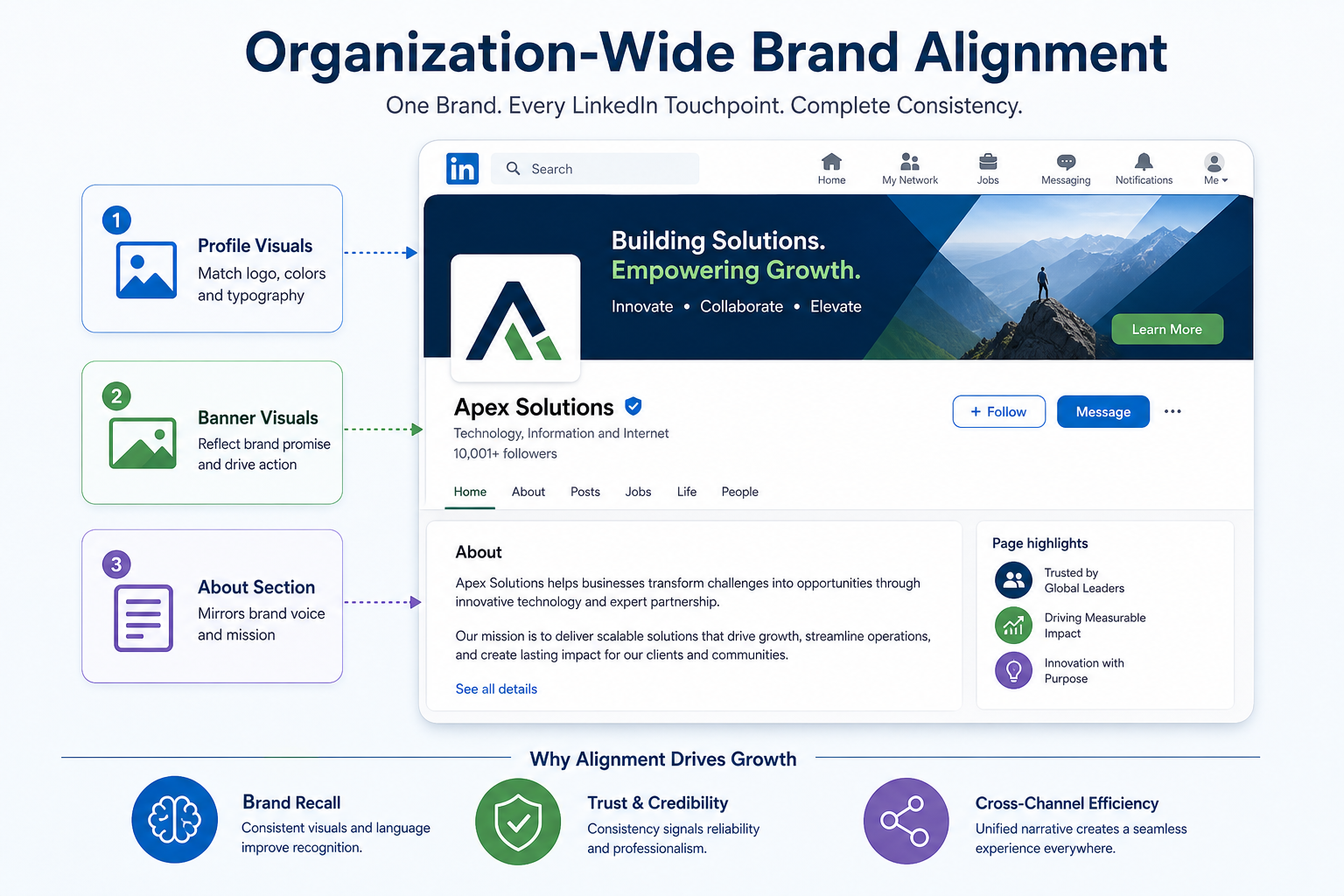
Organization-Wide Brand Alignment is about harmonizing every LinkedIn touchpoint with your broader brand narrative. When profile branding, banner visuals, and the About section echo the same story, tone, and value proposition, you create a cohesive experience that reinforces recognition across channels. This consistency not only builds credibility but also accelerates trust by signaling that your LinkedIn presence is an authentic extension of your brand ecosystem rather than a standalone effort.
Key reasons to invest in alignment include:
- Brand recall — Recurrent visuals and language improve memory and recognition among your target audience.
- Trust and credibility — Consistency signals reliability, professionalism, and a well governed brand voice.
- Cross-channel efficiency — A unified narrative reduces friction when audiences move between LinkedIn, your website, and other channels.
How to align profile branding with the broader brand narrative
- Profile visuals matching brand identity — Use logo placement, color palette, and typography that mirror your core brand guidelines. Ensure these elements are harmonious with your website and other social profiles.
- Banner and hero visuals aligned with brand storytelling — Design banners that reflect your brand promise, convey the core value proposition, and include a clear action cue that mirrors marketing campaigns elsewhere.
- About section mirrors brand voice and mission — Write in a tone that matches your brand voice, and articulate the same customer problems, solutions, and outcomes highlighted in other channels.
Practical steps to implement
- Audit existing assets — Catalogue profile photo style, banner design, and About copy. Compare with website homepage, product pages, and brand guidelines to identify gaps.
- Create a shared brand brief for LinkedIn — Document approved tone, messaging pillars, and visual guidelines that apply specifically to LinkedIn profiles and pages.
- Develop reusable templates — Produce profile photo frames, banner templates, and About blocks that can be adapted across individuals and teams while preserving consistency.
- Enforce governance and reviews — Establish a lightweight review process for profile updates and banner changes to maintain alignment during launches or campaigns.
Recommended structure for LinkedIn sections to maintain consistency
| Section | Brand Element | Consistency Guideline |
|---|---|---|
| Profile Photo | Headshot style aligned with professional brand image | Use similar lighting, background, and attire as on your website hero images |
| Banner | Brand banner reflecting value proposition | Incorporate brand colors and a concise message that echoes homepage headlines |
| About Section | Narrative that mirrors brand story and customer outcomes | Adopt the same voice, structure, and proof points used in key landing pages |
| Experience and Featured | Case studies, metrics, and offers aligned with brand storytelling | Highlight the same success metrics and customer benefits shown in marketing assets |
Common pitfalls to avoid
- Incoherent visuals — Mixing banner styles that feel disjoint from your brand can confuse visitors.
- Voice drift — Using a tone in About sections that diverges from your brand voice undermines trust.
- Mismatch between promises and reality — Ensure the outcomes you promise in LinkedIn copy are deliverable and reflected in case studies.
To keep momentum, treat Organization-Wide Brand Alignment as an ongoing program rather than a one time setup. Schedule quarterly reviews of LinkedIn assets, update banners for new campaigns, and refresh About copy to reflect current value propositions. When teams coordinate around a central brand narrative, LinkedIn becomes a powerful amplification channel that consistently reinforces your identity wherever professionals engage with your content.
Long-Form Articles and Thought Leadership
Long-Form Articles and Thought Leadership on LinkedIn are a powerful engine for building authority, extending the life of your content, and attracting ongoing profile traffic. Unlike quick posts that vanish after a day, well crafted long form pieces stay discoverable, position you as a credible expert, and continue to attract reads and inbound connections over weeks or even months. When readers encounter a thoughtful, data backed narrative, they view you as a trusted resource and engage with future content or explore your profile for more insights.
Key benefits of publishing long form articles include:
- Authority amplification — In depth analysis signals mastery and differentiates you from peers who publish only short updates.
- Content shelf life extension — Articles live on your profile and in search results, continuously driving discovery long after publication.
- Sustainable profile traffic — Thoughtful essays attract new followers, invite comments, and encourage revisits to your profile for more resources.
- Educational value and shareability — A well structured article can be repurposed into carousels, summaries, and newsletters, multiplying reach.
Crafting a compelling long form article
- Define a precise thesis — State a clear, value driven proposition your target audience can act on or apply.
- Anchor with data and examples — Include relevant research, case examples, and concrete results to support your claims.
- Structure for skim readers — Use a strong opening, subheads, short paragraphs, and callouts to improve readability.
- Offer practical takeaways — End with actionable steps, checklists, or templates readers can apply immediately.
Practical structure you can emulate for consistency:
| Section | Purpose | What to Include |
|---|---|---|
| Hook | Capture attention and promise value | A bold claim, surprising statistic, or provocative question |
| Context | Set the scene and establish relevance | Background, stakes, and the problem you address |
| Body | Deliver the argument with evidence | Sectioned arguments, data points, anecdotes, and visuals |
| Takeaways | Summarize core insights | Bullet list of actionable items or a checklist |
| Next Steps | Convert readers into advocates or leads | CTA to read related articles, subscribe, or contact for a discussion |
Optimization and discoverability
- Keywords and intent — Integrate target terms naturally within the headline and body to align with reader queries and LinkedIn search.
- Clear subheads — Use descriptive subheadings to improve scannability and help readers navigate complex ideas.
- Visual supplements — Embed data visuals, charts, or embedded media to reinforce key points and break up long blocks of text.
- Internal linking — Cross reference other LinkedIn articles or resources on your profile to deepen engagement and time on page.
Repurposing and distribution strategies can dramatically extend the impact of a single article:
- Carousels and summaries — Convert the article into a multi slide carousel that highlights each major insight.
- Newsletter snippets — Extract a compelling excerpt and send it to your audience with a link to the full article.
- Social snippets — Create bite sized posts that tease specific findings and invite readers to dive into the article for the full context.
- Commentary threads — Start conversation threads in the comments by posing questions related to the article’s thesis and inviting expert perspectives.
Measurement and iteration are essential for scaling thought leadership activities. Track these indicators to refine your approach over time:
- Read completion rate — Percentage of readers who reach the end of the article, indicating engagement depth.
- Profile traffic — Changes in profile views and new followers after publication.
- Engagement quality — Comments, questions, and post saves that signal meaningful resonance.
- Content resonance by topic — Identify themes that consistently attract attention and expand those topics in future writings.
In practice, a disciplined cadence of high quality long form articles can transform how professionals perceive you. The right piece acts as a durable evergreen asset, continuously attracting readers, generating conversations, and guiding them toward deeper engagement with your profile and offerings.
Hashtag and Comment Strategy
Hashtag and Comment Strategy combines two low cost, high impact practices that help surface your content to new audiences, deepen relationships with prospects, and boost overall reach on LinkedIn. When used thoughtfully, hashtags extend discoverability beyond your immediate network, while strategic commenting acts as a bridge to start conversations with key influencers, ICPs, and peers. Below are best practices, structured steps, and practical tips you can apply today.
Smart use of hashtags and thoughtful comments can compound reach over time, helping you attract the right audience without loud promotion.
Hashtag best practices
- Limit to a targeted set — Use a maximum of 3 to 5 hashtags per post. Focus on highly relevant, niche topics in addition to a broader industry tag to balance reach and specificity.
- Align with audience interests — Choose hashtags that your ICP is likely to follow or search for. Research what peers and competitors use successfully.
- Mix broad and niche tags — Combine one to two broad tags with two to three precise, topic specific tags to capture both wide and targeted visibility.
- Place thoughtfully — Include hashtags at the end of the post or within a short line that does not disrupt readability. Avoid scattering them through the copy.
- Consistency over time — Build familiarity by using a small, stable set of hashtags across multiple posts, then refresh the list quarterly based on performance.
Comment strategy for surface and relationships
- Set a daily engagement cadence — Reserve time for intentional commenting, not just liking. For example, 20 minutes twice a day focused on specific profiles.
- Target the right profiles — Focus on Influencers, your Ideal Customer Profiles (ICPs), and Industry Peers. Prioritize profiles whose content your audience values or that publish high quality discussions.
- Provide value with every comment — Add perspective, a useful data point, a quick tip, or a clarifying question. Avoid generic compliments or comments that are easily overlooked.
- Ask thoughtful questions — End comments with a question that invites further dialogue or helps surface a problem you can solve.
- Reference content when helpful — Quote a point from the post, add a short summary, or link to a relevant resource in a follow up reply when appropriate.
- Balance quantity with quality — It is better to comment deeply on fewer posts than to post lightweight comments across many conversations.
Workflow you can implement
- Create a 5 profile target list — Each day, choose 5 profiles from the three categories (Influencers, ICPs, Industry Peers) to engage with.
- Allocate 20 minutes for meaningful commentary — Write 2 to 3 substantive comments per profile per week to build recognition without spamming.
- Track commentary outcomes — Note which comments generate replies, profile visits, or connections, and double down on similar threads.
- Integrate with content strategy — When you leave insightful comments, align your own posts to address the topics that consistently attract engagement from those conversations.
Content guidance for comments that convert
- Be specific — Refer to a detail in the post to show you engaged and you are not just broadcasting template comments.
- Offer a mini insight — Share a quick observation, a data point, or a contrasting view to spark dialogue.
- Invite collaboration — Propose a co created idea, a quick experiment, or a shared resource that benefits both audiences.
- Maintain professionalism — Keep tone respectful, constructive, and free of overly promotional language.
Measuring impact
| Metric | What it indicates | Target |
|---|---|---|
| Comment reply rate | Share of comments that receive a direct reply from the original poster or others | Aim for 15–25 percent in response rate over a month |
| Profile visits from comments | Number of visitors who land on your profile after engaging with a post | Increase month over month as you participate in relevant conversations |
| New connections from discussions | Connections initiated after meaningful comment interactions | Track which topics and profiles convert to connections and replicate successful patterns |
| Content surface lift | Increase in impressions and saves on your own posts after virtue of appearing in comments | Monitor weekly to ensure the uplift remains consistent |
In summary, a disciplined Hashtag and Comment Strategy expands reach by making your content more discoverable and your profile more enticing to engage with. When hashtags are carefully selected and comments are consistently valuable, you surface to new audiences, deepen relationships with potential clients or collaborators, and create a durable asset for ongoing growth.
Profile Optimization Foundations
The Profile Optimization Foundations provide a practical, repeatable approach to turning your LinkedIn presence into a high-converting asset. By aligning keyword usage, URL structure, headline messaging, and a purpose-driven About section, you create a cohesive foundation that helps you appear in relevant searches, attract the right audience, and move visitors toward action.
1) Keywords that align with your audience
Your profile acts like a miniature on-platform search page. To boost visibility, embed terms your target audience uses when seeking solutions like yours. Treat this as a LinkedIn on-platform SEO exercise rather than a static resume.
- Research and mirror terms — Study industry peers and ICP profiles to identify commonly used phrases and job function keywords that correlate with your offerings.
- Strategic placement — Integrate keywords naturally in your Headline, About, and Experience sections without sacrificing readability.
- Balance density with clarity — Prioritize readability; avoid keyword stuffing while ensuring essential terms appear where they matter most.
Tip: review how often those terms appear in competitor profiles and adapt to align with the language your ICP uses in conversations and messages. Consistency matters as you refresh sections over time.
2) Custom LinkedIn URL for authority
A clean, custom profile URL builds trust and makes your profile easier to share. It also improves discoverability in both LinkedIn and external search results.
- Choose a concise handle — Use your name or brand, for example a simple linkedin.com/in/yourname.
- Consistency across touchpoints — Include the custom URL on contact cards, email signatures, and your website to drive traffic back to your profile.
- Keep it memorable — Avoid random strings; aim for a URL that is easy to recall and spell.
Tip: keep the URL aligned with your other branding elements so people can find you quickly across channels.
3) A strong headline that communicates value
Your headline appears beside every post and profile card. It must quickly convey what you do for whom and the outcome you deliver. Move beyond simple titles to a value-driven statement.
- Clear audience and outcome — Structure ideas around who you help and the result you provide, for example: “Helping ICP achieve X through Y method”.
- Outcome-oriented formats — Use templates such as:
- “Helping [ICP] achieve [result] through [method]”
- “Book [X] high-quality conversations per month via [channel]”
- Complement with visuals — Pair the headline with a matching banner and profile photo that reinforce the value message.
Tip: test variations of your headline to see which wording resonates with your target audience over a few weeks.
4) Compelling About section that converts
The About section should function like a concise, high-impact sales page. Use a proven structure that captures attention, demonstrates understanding, provides proof, and guides to the next step.
- Hook with a pain point — Start by acknowledging a problem your ICP faces and why it matters.
- Solution and approach — Explain how you uniquely address the pain point and the outcomes you deliver.
- Proof and credibility — Include brief social proof, metrics, or client outcomes to establish trust.
- Clear call to action — End with a direct path to engage, such as a Calendly link, a message prompt, or a downloadable resource.
Tip: weave a quick narrative that makes the reader picture themselves achieving the result you offer, then invite a simple next step.
Quick reference: copy structure you can adapt
| Section | Focus | Sample copy |
|---|---|---|
| Keywords | Profile elements with target terms | “Growth strategist for B2B SaaS teams using LinkedIn and outreach automation” |
| Custom URL | Clean, memorable URL | linkedin.com/in/yourname |
| Headline | Audience and outcome | “Helping ICP achieve X through Y method” |
| About | Hook, solution, proof, CTA | Hook: “If you struggle with X, you are not alone.” Solution: “I help you achieve Y by Z.” Proof: “Result metrics or client example.” CTA: “Book a quick intro call.” |
Implementation tips to apply these foundations quickly:
- Audit for alignment — Review current keywords, URL, headline, and About copy to identify gaps where ICPs search or what actions visitors take.
- Iterative edits — Make small, measurable edits to one element at a time (for example, update keywords first, then headline).
- Test and observe — Monitor visibility and engagement after changes. Use profile views and post interactions as indicators of improved relevance.
- Document your framework — Save a short internal guide with your agreed keywords, headline templates, and About structure to maintain consistency across team members.
Content Strategy and Cadence
Content Strategy and Cadence focuses on building a repeatable framework that keeps your LinkedIn presence evolving while aligning with how your audience actually consumes content. A well-defined strategy helps you attract the right people, hold their attention, and move them toward meaningful actions. This section outlines how to create a steady content mix, efficiently repurpose assets you already have, and maintain a posting cadence guided by audience activity data.
1) Create a consistent content mix
A balanced content mix ensures you educate, inspire, and prompt engagement without overwhelming your audience with any single format. The goal is to establish a recognizable pattern your followers come to expect, while staying flexible enough to test new ideas.
- Educational and value-driven posts — Share frameworks, step-by-step processes, and practical tips your ICP can apply immediately.
- Thought leadership and commentary — Publish perspectives on industry trends, backed by data or case examples to establish credibility.
- Story-driven content — Include personal experiences, lessons learned, and behind-the-scenes glimpses to humanize your brand.
- Engagement-oriented formats — Polls, questions, and prompts that invite comments and discussions.
2) Repurpose existing assets
Repurposing accelerates content production and extends the life of your best insights. Rather than creating everything from scratch, transform a single core idea into multiple formats that fit LinkedIn’s varied consumption styles.
- From long form to bite-sized — Break a comprehensive article into a carousel series or a set of micro posts.
- From data to visuals — Convert key metrics into charts, infographics, or data visuals for posts and carousels.
- From video to text and slides — Clip a short video into captioned snippets, or summarize a video in a 5-slide carousel.
- From events to evergreen assets — Turn live session takeaways into a recap post, a checklist, and a downloadable template for ongoing use.
Tip: repurposing helps you extract more value from each idea and keeps your content stream consistent without burning out your team.
3) Maintain a data-driven posting cadence
Cadence is about staying visible without sacrificing quality. Use audience activity signals to determine how often you post and when your audience is most receptive. Begin with a sustainable baseline and scale based on proven results.
| Cadence Element | Baseline Recommendation | Data to Monitor |
|---|---|---|
| Posting frequency | 3 posts per week | Impressions, engagements, follower growth |
| Posting windows | Two to three time slots per week that match ICP activity | Engagement by time slot, day of week performance |
| Content mix balance | 2 educational posts, 1 thought leadership, 1 engagement post per week | Saves, comments, and click-throughs by format |
| Experiment cadence | Monthly minor tests, quarterly major tests | Performance shifts after format or topic changes |
Practical steps to implement a data-driven cadence:
- Establish a baseline — Pick a sustainable posting target (for example three posts per week) and lock it in for four weeks before adjusting.
- Define peak windows — Use analytics to identify when your ICP is most active and schedule posts within those windows.
- Document format performance — Track how each format performs (carousels, videos, polls, plain text) and note which topics drive the strongest engagement.
- Iterate with purpose — Run small controlled tests (for example a carousel vs a long post on the same topic) to isolate impact, then scale the winning approach.
In summary, a disciplined content strategy blends a reliable mix of formats with repurposing discipline and a cadence tuned to audience behavior. When you align your content plan with how your audience consumes LinkedIn content, you create a sustainable growth engine that compounds over time.
Employee Advocacy and External Partnerships
Employee Advocacy and External Partnerships is a strong driver of reach and credibility on LinkedIn. When you turn employees into active content amplifiers and collaborate with credible external partners, you gain authentic voices, broaden your audience, and reinforce trust with your market. This approach shifts some amplification from paid media to trusted networks, making your LinkedIn presence feel more human and dependable.
Why employee advocacy matters
- Authentic reach — Content shared by employees tends to carry higher trust and relevance, driving more engagement and more inbound interactions.
- Expanded networks — Employees bring their own connections into the conversation, exposing your brand to communities you might not reach through corporate channels alone.
- Cost efficiency — Advocacy lowers reliance on paid campaigns by using internal champions to spread valuable content organically.
- Talent perception — A visible culture of advocacy signals a dynamic, engaged organization, which can attract talent and partnerships.
External partnerships that amplify credibility
- Co authored content — Joint posts, articles, or LinkedIn Live sessions with respected industry voices extend reach and boost perceived authority.
- Guest thought leadership — Guest articles or profile takeovers from partners provide fresh perspectives and tap into new audiences.
- Industry collaborations — Working with associations, consortia, or complementary service providers creates cross pollination opportunities and shared credibility.
- Event co sponsorships — Partnered webinars or Live events attract attendees from both networks and generate more qualified conversations.
Practical steps to build an effective advocacy program
- Define guidelines — Create a light policy and guardrails that enable sharing while maintaining brand safety and accuracy.
- Equip with ready assets — Provide approved templates, talking points, and shareable assets that employees can customize.
- Make it easy to participate — Offer simple prompts, monthly themes, and recognition for top advocates to sustain motivation.
- Align with governance — Establish a lightweight review process for major campaigns to maintain consistency and quality across voices.
- Track impact — Monitor lifts in reach, engagement, and profile visits attributed to employee shares and partner content.
Practical steps to manage external partnerships
- Identify collaboration targets — List potential partners whose audiences overlap with yours and whose values align with your messaging pillars.
- Define joint value propositions — Agree on shared benefits, co created content formats, and mutually beneficial CTAs.
- Coordinate promotion calendars — Plan cross posts, joint announcements, and synchronized campaigns to maximize reach.
- Maintain clear attribution — Ensure proper credit and reference to partner sources to preserve credibility and avoid misrepresentation.
Measurement and governance
Use a simple framework to assess impact and iterate. Track core indicators to gauge the effectiveness of advocacy and partnerships:
| Metric | What It Indicates | Target |
|---|---|---|
| Reach from advocacy | Impressions and audience size driven by employee shares | Month over month growth in total impressions |
| Engagement quality | Comments, shares, and saves on advocacy posts | Consistently rising engagement rate per advocate post |
| Profile traffic | Visits to company and employee profiles from advocacy activity | Increase in profile views and connection requests |
| Partner driven leads | Leads or conversations initiated from partner content | Qualified opportunities tracked by source partner |
In summary, empowering employees to share meaningful content and pairing thoughtfully with external partners creates a multiplier effect. This approach builds credibility through authentic voices, expands reach beyond your existing network, and supports a sustainable growth trajectory on LinkedIn without relying solely on paid amplification.
Measurement and Adaptation
Measurement and adaptation form the backbone of a resilient LinkedIn growth program. Data-driven insights turn tactical posting into a repeatable, improving system. By regularly analyzing how your content performs, you can allocate time, resources, and creative energy to the actions that move the needle, while shedding approaches that underperform. This disciplined feedback loop keeps your strategy aligned with audience needs and platform dynamics, even as trends shift over time.
Core KPIs to monitor
- Impressions — The number of times your content appears in feed or search results. Tracks overall visibility and the reach of your posts and profile activities.
- Engagements — The sum of likes, comments, shares, and saves. Indicates how compelling your content is and the likelihood of action from viewers.
- Engagement rate — Engagements divided by impressions or reach. A normalized measure of resonance that helps compare posts of different sizes.
- Shares — How often your content is reposted or distributed by others. A proxy for perceived value and social proof.
- Follower growth — The rate at which new followers join your profile or page. Reflects long term interest and awareness of your value proposition.
How to structure a measurement routine
- Set a cadence — Establish a weekly or biweekly review to assess performance, test hypotheses, and plan iterations.
- Define a small set of hypotheses — For example, “Carousels outperform text posts for explaining complex processes,” or “Posting after 9 AM in the ICP time zone increases saves.”
- Compare like with like — Use consistent time windows, formats, and topics when evaluating performance to avoid misattribution.
- Document learnings — Maintain a simple log of what worked, what didn’t, and why you think the outcome occurred.
Practical tools and techniques
- Analytics dashboards — Build or use native platform analytics to track impressions, engagements, and follower metrics across posts, carousels, and videos.
- Content performance table — Create a rolling table listing each post, its format, topic, impressions, engagements, shares, saves, and follower impact.
- A/B style experimentation — Test one variable at a time (format, hook, timing) and compare results over at least two cycles to identify causal effects.
- Audience intent signals — Look for patterns such as high comment depth, question-driven interactions, or requests for follow-up resources to gauge intent.
Table: KPI to action mapping
| KPI | What it tells you | Representative actions |
|---|---|---|
| Impressions | How broadly your content is seen; indicator of reach and discovery opportunities | Experiment with posting times, formats with high exposure, and hashtag usage to widen reach |
| Engagements | Level of audience interaction and perceived value | Refine hooks, shorten or clarify messaging, add compelling CTAs to drive dialogue |
| Engagement rate | Quality of interaction relative to visibility | Prioritize content types and topics that consistently yield higher engagement efficiency |
| Shares | Social proof and extended reach via other networks | Create intrinsically valuable or provocative content that encourages sharing |
| Follower growth | Long term interest and brand affinity | Invest in foundational content that communicates clear value and niche authority |
Adaptation playbook
- Identify signals — Look for posts with rising impressions or a spike in saves and comments within 48 hours of publication.
- Prioritize winners — Reallocate resources toward formats, topics, or creators that consistently outperform benchmarks.
- Pivot with purpose — If a format underperforms for two consecutive cycles, replace it with a tested alternative while keeping core value propositions intact.
- Test new hooks and formats — Introduce one new variable per cycle (for example a carousel series or a video short) to isolate impact.
- Document and scale — Capture successful templates and convert them into repeatable playbooks, then replicate across similar topics or audiences.
Guiding principles for continual improvement
- Quality over quantity — Higher value content with clear outcomes tends to outperform volume driven by trend chasing.
- Audience first — Analyze what your ICP asks for in comments, what questions persist, and what solutions they seek to move forward.
- Consistency compounds — Regular, predictable posting with incremental improvements yields greater long term reach than irregular bursts.
- Ethical measurement — Focus on transparent analysis and actionable insights rather than vanity metrics that do not inform decisions.
By embedding measurement and adaptation into your workflow, you create a dynamic growth engine that evolves with your audience and the platform. The goal is not just to publish content, but to learn from every post, refine your approach, and steadily increase impressions, engagements, shares, and followers in a cohesive, sustainable cycle.
Getting Started with a LinkedIn Organic Growth Plan
Getting Started with a LinkedIn Organic Growth Plan is about building a practical, repeatable framework you can implement in a few focused steps. Grounded in eight core tactics and the improvement steps that accompany them, this starter outline helps you move from theory to action quickly while laying a foundation for sustained growth.
Use this as a practical blueprint you can revisit and adjust as you learn what resonates with your audience.
1) Set clear goals and define success metrics
Begin with a concrete target and a lightweight measurement plan. Align your objectives with how LinkedIn fits into your funnel, whether it is profile visits, connections, inbound inquiries, or content-driven leads.
Define milestones that you can review on a monthly basis to stay on track.
- Identify KPIs — impressions, engagements (likes, comments, shares, saves), follower growth, profile views, and click-throughs.
- Attach a timeframe — pick a quarter as a planning horizon and set monthly milestones.
- Map to outcomes — connect each KPI to a near term action (for example, more comments signals deeper engagement which can lead to conversations).
2) Optimize your profile foundations first
Your profile acts as the landing page for your organic growth. Apply a compact, repeatable optimization routine before you publish aggressively.
Make the profile a clear invitation to connect and learn more about you.
- Keywords that align with your audience — research terms your ICP uses and weave them into your headline and About copy.
- Custom LinkedIn URL — use a clean, memorable URL for credibility and easy sharing.
- Strong headline and About section — craft an outcome oriented headline and a mini sales page in About that follows Attention, Interest, Desire, Action.
3) Build a sustainable content mix
Create a predictable rhythm that educates, persuades, and engages. A balanced mix keeps your audience’s attention and supports long term authority.
Consistency over time compounds your visibility and trust.
- Educational and value driven posts — frameworks, checklists, step by step processes.
- Thought leadership and commentary — data backed perspectives on trends and best practices.
- Story driven content — personal experiences and behind the scenes that humanize your brand.
- Engagement oriented formats — polls, questions, and prompts to invite discussion.
4) Plan cadence and timing with a practical baseline
Consistency beats bursts. Start with a sustainable posting rhythm and refine over time using data.
Let the rhythm emerge from real patterns you observe in your audience.
- Posting frequency — begin with 3 posts per week and adjust based on quality and capacity.
- Optimal windows — identify peak activity periods for your ICP and schedule posts within those windows.
- Cadence governance — assign a repeating calendar block for ideation, creation, and posting to maintain momentum.
5) Invest in visuals and branding with practical templates
Visual consistency accelerates recognition and trust. Use accessible tools to produce on platform optimized assets.
Templates keep production efficient without sacrificing quality.
- Banner and profile visuals — ensure your visuals reflect your value proposition and brand voice.
- Carousels and short videos — diversify formats to boost scroll stopping impact and education.
- Canva style templates — create reusable templates for banners, post visuals, and carousels to speed up production.
6) Embrace content formats that drive reach and retention
Adopt a mix of long form, carousels, videos, and live formats to extend shelf life and expand distribution.
Different formats help you reach people at different stages of their journey.
- LinkedIn Carousels — 5 to 10 slides that educate and guide action.
- Video content — short, authentic clips that deliver quick, practical value.
- Long form articles — establish thought leadership and create evergreen assets on your profile.
- LinkedIn Live and events — plan partner or expert sessions to amplify reach and credibility.
7) Integrate with engagement rituals and discovery mechanisms
Leverage comments, hashtags, and strategic partnerships to surface your content to new audiences and deepen relationships with prospects.
Small, consistent actions add up over time.
- Hashtag discipline — use a focused set of 3 to 5 relevant hashtags per post to support discovery without clutter.
- Thoughtful commenting — allocate time for meaningful, value adding comments on targeted profiles to drive profile visits and connections.
- Employee advocacy and external partnerships — empower internal champions and collaborate with credible partners for broader reach.
8) Measure, learn, and iterate quickly
Set up a lightweight measurement routine to capture what works and what does not. Use fast feedback loops to refine your approach every cycle.
Document learnings and turn them into practical playbooks you can reuse.
- Content performance table — track post format, topic, impressions, engagements, saves, and profile impact.
- A/B style experiments — test one variable at a time (format, hook, timing) and compare outcomes over two cycles.
- Actionable learnings — document what worked and why, then convert those templates into repeatable playbooks.
Putting it into practice: a compact starter playbook
By following this starter plan, you create a repeatable, data informed growth engine for LinkedIn. It emphasizes a strong profile foundation, a balanced content mix, disciplined cadence, compelling visuals, active engagement, strategic partnerships, and a cadence of measurement and adaptation. As you iterate, your organic reach will compound, and your profile will become a reliable hub for meaningful professional relationships.
| Activity | What to Do | What You Track |
|---|---|---|
| Profile optimization | Research ICP keywords, set custom URL, craft a value driven headline and About | Keyword density, profile views, connection requests |
| Content mix | Publish 3 posts per week including 1 carousel or video, 1 thought piece, 1 engagement post | Impressions, saves, comments, follow growth |
| Cadence and timing | Schedule two to three posting windows per week aligned with ICP activity | Engagement by time slot, post resonance |
| Visual templates | Develop Canva templates for banners, carousels, and post visuals | Production time, consistency across posts |
| Engagement rituals | Allocate 20 minutes daily for meaningful comments on ICP and Influencers | Profile visits, new connections, inbound inquiries |
| Advocacy and partnerships | Establish lightweight employee advocacy guidelines and plan quarterly partner collaborations | Reach, engagement quality, leads from collaborations |
| Measurement routine | Weekly review of a compact dashboard and a monthly hypothesis test log | Impressions, engagements, follower growth, read depth, lead signals |
By following this starter plan, you create a repeatable, data informed growth engine for LinkedIn. It emphasizes a strong profile foundation, a balanced content mix, disciplined cadence, compelling visuals, active engagement, strategic partnerships, and a cadence of measurement and adaptation. As you iterate, your organic reach will compound, and your profile will become a reliable hub for meaningful professional relationships.
LinkedIn Growth Tactics in Practice: A 2026 Roadmap
LinkedIn Growth Tactics in Practice: A 2026 Roadmap transforms eight growth tactics into a compact, action oriented plan you can implement this year. The roadmap focuses on fast wins, a practical 90 day cadence, and a simple measurement framework that keeps you grounded in real outcomes rather than vanity metrics. Use this one page as your operating guide for building authority, generating leads, and sustaining momentum on LinkedIn in 2026.
Follow this roadmap to turn momentum into a repeatable system you can reuse quarter after quarter.
Quick wins to start strong
- Profile foundation bootstrap — complete keyword alignment in the headline and About, set a clean custom LinkedIn URL, upload a professional photo, and refresh the banner with a value proposition and CTA.
- First content burst — publish 3 high value posts in the first week including one carousel, one short video or reel, and one thought leadership piece with a data point or prediction.
- Calendly and CTAs — add a Calendly link to the About section and a prominent CTA in the Featured area to capture early conversations)
- Hashtag discipline — establish a small, focused set of 3 to 5 hashtags and apply consistently across posts to begin building discovery signals.
- Engagement ritual — schedule 20 minutes daily for meaningful comments on ICPs, Influencers, and Industry Peers to seed profile visits and inbound messages.
90 day cadence: a phased plan
The roadmap is organized into three 4 week phases. Each phase builds on the previous one, expanding reach while improving message precision and conversion outcomes.
| Phase | Focus | Key Outputs | Signals to Track |
|---|---|---|---|
| Phase 1 (Weeks 1-4) | Foundations and quick wins | Optimized profile, 3 initial posts, calendar based CTAs, first carousels | Profile views, connection requests, calendar bookings, post saves |
| Phase 2 (Weeks 5-8) | Content mix and engagement rituals | 2 educational carousels per week, 1 video weekly, starter Live or poll), employee advocacy prompts | Engagement rate, comments depth, follower growth, mentions |
| Phase 3 (Weeks 9-12) | Scale with partnerships and long form | Long form article, LinkedIn Live with partner, guest contributions, structured weekly cadence | Lead quality, partner driven conversations, replay views, content shares |
Cadence blueprint you can copy
- Posting cadence — 3 posts per week: 1 carousel or video, 1 educational thread or explainer, 1 industry perspective or case study.
- Engagement ritual — 20 minutes daily for targeted comments; rotate across Influencers, ICPs, and Industry Peers.
- Content repurposing — Each piece becomes a carousel, a short video clip, and a summary post to maximize shelf life.
- Live and events — Plan 1 LinkedIn Live or partner event in Phase 3 to unlock cross audience exposure.
Simple measurement framework
Use a lean dashboard that tracks core outcomes every week and at month end. Focus on what moves opportunities forward rather than counting likes alone.
| Metric | What It Indicates | Target in 90 Days | Data Source |
|---|---|---|---|
| Impressions | Overall visibility of your content | Growth 25–60 percent month over month, depending on phase | LinkedIn Analytics, post impressions |
| Engagement rate | Resonance relative to reach | 3–6 percent average across posts; higher for carousels and videos | Post analytics |
| Comments depth | Quality of conversation and intent | Consistent, thoughtful comments on 6–12 posts per week | Comments analytics |
| Profile visits | People considering your value proposition | Increase 20–40 percent from baseline | Profile analytics |
| Calendly bookings | Direct inquiries and pre qualified conversations | 10–25 booked conversations by week 12 from LinkedIn | Calendly integration / CTA click data |
| Lead quality | Prospects who align with ICP and show intent | Constellation of 3–6 high quality conversations per month | CRM or pipeline notes |
Measurement and iteration: a lightweight cycle
- Weekly check — Review impressions, engagements, and calendar bookings; identify one winning format to amplify.
- Biweekly experiment — Test one variable at a time (hook, format, or time window) and compare results over two cycles.
- Monthly synthesis — Compile a brief learnings document with the best performing templates, topics, and posting times; convert those into repeatable playbooks.
- Quarterly governance — Refresh keywords, banners, and CTA language to reflect current messaging pillars and market needs.
Bottom line — this 2026 roadmap translates eight tactics into a practical, one page plan. It prioritizes fast wins, builds a disciplined cadence, leverages repurposing and partnerships, and relies on a lean measurement loop focused on impact. Implement phase by phase, wind up with a scalable, repeatable growth engine for LinkedIn that compounds over time.
Why LinkedIn Content Converts: The Core Principles
At linqin.ai, our approach to LinkedIn content converting hinges on a few core principles that we apply consistently to every profile, post, and asset. By centering our efforts on relevance, consistency, authenticity, and strategic content formats, we create a repeatable flow that moves audiences from awareness to action.
These core principles guide how we craft messaging, shape formats, and plan our publishing calendar. They help us stay focused on outcomes and measurable impact.
Relevance: speak exactly to your ICP and their outcomes
We treat every piece of content as a targeted touchpoint in a larger value proposition. Relevance means embedding the keywords, topics, and problem statements that our audience cares about, and then demonstrating how we solve those problems with tangible results. By tailoring headlines, About sections, and post angles to the needs of our ideal customer profiles, we reduce friction and accelerate engagement.
Focus on what matters most to the reader and show real, observable results that align with their goals.
- We align profile copy with ICP needs, using outcome oriented language that clarifies who we help and what they achieve.
- We structure content around concrete benefits, such as pipeline acceleration, lead quality, or time saved through efficient outreach.
- We emphasize proof points, data, and real world examples that reinforce credibility and reduce hesitation.
Consistency: build momentum through reliable cadence and quality
Consistency is the gravity that compels the LinkedIn algorithm and audiences to recognize us as a dependable resource. We publish with a sustainable frequency, maintain quality, and use a predictable content mix so followers know what to expect and when to expect it.
Regular rhythm helps audiences anticipate value and keeps our messaging cohesive across formats.
- We establish a baseline cadence (for example three posts per week) and only scale when we sustain quality across formats like carousels, videos, and long form articles.
- We reuse and repurpose successful ideas across formats to maximize reach without sacrificing depth.
- We monitor timing windows aligned with our ICP’s activity to optimize impressions and engagement without increasing workload unsustainably.
Authenticity: cultivate trust with genuine stories and credible voices
Authenticity is the engine of lasting engagement. We share approachable, real world experiences, including lessons learned and behind the scenes insights. This openness invites conversation, fosters credibility, and lowers defenses that can block outreach.
By showing the humans behind the messages, we invite readers to connect on a practical level.
- We incorporate personal narratives and transparent experimentation to humanize our brand.
- We invite dialogue through thoughtful questions, open-ended prompts, and values aligned with our audience’s priorities.
- We showcase social proof through case studies, client outcomes, and third party validations where appropriate, without overclaiming.
Strategic Content Formats: leverage formats that reliably drive reach and conversions
Choosing the right formats accelerates learning and action. We favor content types known to perform well on LinkedIn, including carousels for education, short videos for reach, long form articles for authority, and Live or events for real time engagement. Each format is selected to advance a specific objective, whether it is educating our audience, elevating our thought leadership, or prompting direct responses.
Different formats work together to guide readers toward meaningful outcomes.
- Carousels for narrative education, step by step processes, and data storytelling that benefits from progressive slides.
- Video for authenticity, quick value delivery, and higher reach within feeds.
- Long form articles to deepen our expertise and create evergreen assets that continue to attract readers over time.
- Live and events to facilitate collaborative thought leadership and cross audience amplification.
Putting the Principles to Work
We translate these core principles into concrete practices that fuel conversions. From keyword optimized profiles to disciplined posting cadences, from expressive but authentic storytelling to strategic use of formats, our framework is designed to be repeatable, measurable, and scalable. The goal is to convert attention into conversations and conversations into meaningful outcomes for our business and the professionals we serve.
With these practices in place, teams can maintain momentum while adapting to new insights and audience feedback.