LinkedIn Growth Tactics 2026 Overview
LinkedIn Growth Tactics 2026 Overview. This long form guide compiles proven LinkedIn growth insights from recognized experts and 2026 hacks.
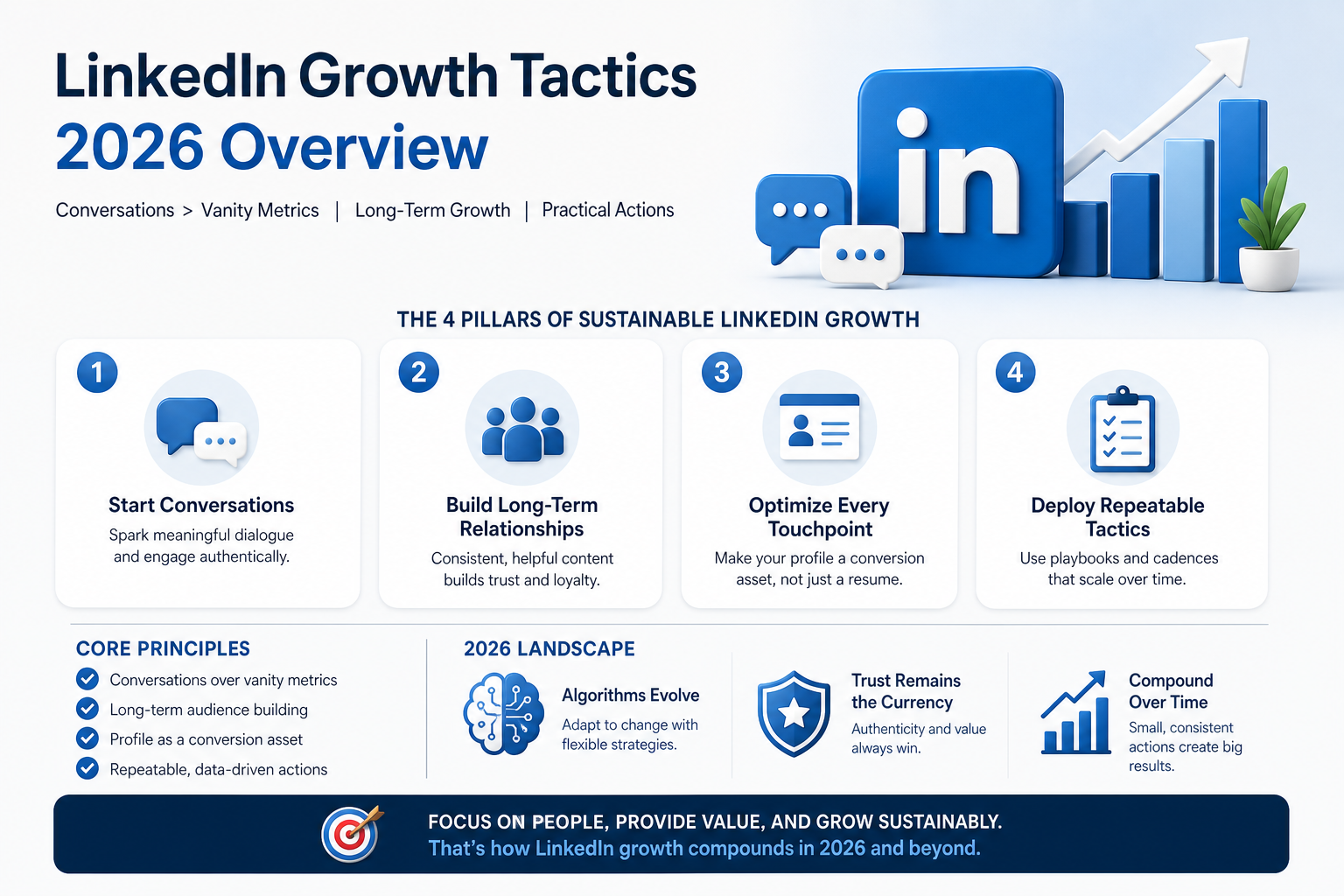
It emphasizes conversations over vanity metrics, long term audience building, and practical, repeatable actions you can implement today with our platform. The aim is to help you construct a sustainable growth engine that compounds over time rather than chasing fleeting viral moments.
In 2026 the most enduring success on LinkedIn rests on four pillars that experts consistently highlight. First, start conversations that matter. Second, prioritize long term relationship building through consistent, helpful content. Third, optimize every touchpoint on the profile to reduce friction for new connections and inquiries. And fourth, deploy repeatable, data driven tactics that scale rather than rely on luck.
Core principles you can apply now
Apply these principles today to start moving the needle. They form the backbone of a sustainable LinkedIn growth plan.
Use simple, repeatable actions to turn engagement into relationships and opportunities.
- Conversations over vanity metrics: Focus on meaningful comments and dialogue rather than likes or shares alone.
- Long term audience building: Publish regularly, nurture your audience, and convert trust into opportunities over time.
- Profile as a conversion asset: Treat your LinkedIn profile as a landing page with a clear value proposition and a frictionless path to action.
- Repeatable actions: Use well defined playbooks, checklists, and cadences that you can replicate weekly.
2026 landscape: what has changed and what remains valuable
People join conversations to solve real problems. They stay when they feel understood, see tangible benefits, and are invited to take a next step. The most successful creators mix authenticity with practical value, using formats that audience members can consume quickly and share with others who face similar challenges.
As platforms evolve, the core drivers of engagement stay constant: relevance, clarity, and a clear path forward for the audience. Short, accessible formats that deliver help in the moment continue to perform well. Creators who combine honest storytelling with actionable guidance tend to earn trust and sustained attention.
| Aspect | What to Do | Why It Works | Expected Outcome |
|---|---|---|---|
| Conversation first | End posts with a pointed question; respond quickly to comments; cultivate ongoing dialogue. | Early conversations signal value to the algorithm and widen distribution. | Increased reach, higher quality engagement, trust building. |
| Profile optimization | Custom URL, strong headline, public visibility, compelling About section using AIDA. | Clear value proposition; easier discovery in search and in feeds. | Higher profile views and inbound inquiries. |
| Content cadences | Regular posting schedule; mix of carousels, visuals, and concise posts. | Consistency teaches audience expectations and algorithms reward consistency. | Steady follower growth and recurring engagement. |
| Lead magnets and offers | Promote high quality lead magnets; use Featured and CTA appropriate to offer. | Captures audience intent and builds qualified leads with low friction. | Lower cost per qualified lead; faster pipeline creation. |
| Scale via assets | Carousels, short videos, and templates that can be repurposed across posts. | Repurposing content multiplies reach without proportional effort. | Better ROI on content creation; more impressions per hour worked. |
Practical, repeatable playbook for 2026
- Audit and align your profile:
- Update your banner to reflect current offerings and a clear call to action.
- Rewrite your About section with the AIDA framework and a Calendly link or message CTA.
- Reorder sections so that the Featured and About sections appear before the rest.
- Publish with purpose:
- Publish 3 to 5 posts per week, mixing formats: carousels, short insights, and quick questions.
- End every post with a question or prompt to invite comments.
- Leverage visuals and concise language to improve scroll stopping power.
- Engage in a structured way:
- Allocate 20 to 30 minutes daily to comment on targeted posts in three categories: Influencers, ICP, peers.
- Offer thoughtful, value rich comments that spark discussion rather than generic praise.
- Use a rotating list to ensure balanced engagement across your network.
- Lead magnet strategy:
- Develop a high value lead magnet that aligns with your services.
- Promote it via a dedicated post and pin the offer in the Featured section.
- Capture leads with a simple landing page or form linked from LinkedIn.
- Measurement and iteration:
- Track profile visits, post saves, comments, and click throughs to the lead magnet.
- Review weekly to identify which formats drive the best outcomes and scale those.
- Refine your messaging based on what problems your audience mentions most.
What to measure for accountability
To ensure you are moving toward tangible outcomes, track these metrics and review them monthly:
- Profile views and search appearances
- Average comments per post and sentiment of comments
- Lead magnet downloads and email list growth
- Click through rate to the lead magnet or booking page
- New connections and acceptance rate
Review these metrics with your team and align them with your growth goals. Regular checks help you stay focused and adjust tactics as needed.
Sample 4 week content calendar framework
Use this cadence to structure your posts and track engagement over a four‑week period.
| Week | Post Type | Topic Focus | CTA |
|---|---|---|---|
| Week 1 | Carousel | Step by step process in your niche | Download worksheet |
| Week 1 | Short Post | One controversial but constructive observation | Comment and discuss |
| Week 2 | Video | Behind the scenes or quick tutorial | Watch the full guide |
| Week 2 | Poll | Audience pain point assessment | Result share and analysis |
| Week 3 | Carousel | Checklist or blueprint | Get the full template |
| Week 3 | Text Post | Customer success story, short and precise | Comment your experience |
| Week 4 | Infographic | Key industry insights and trends | Share with peers |
| Week 4 | Live or AMA | Q and A on your niche topics | Book a call |
Getting started with LinkedIn Growth Tactics
Begin by choosing a single focus area and implementing the four week calendar above. Then expand gradually by adding new formats and optimizing based on feedback. The most important shift is to treat LinkedIn as a platform for ongoing conversations that build trust, not a place to chase ephemeral metrics.
Over time, these actions compound. You will create a durable growth engine that scales with your expertise and your audience as you continue to engage and refine your approach.
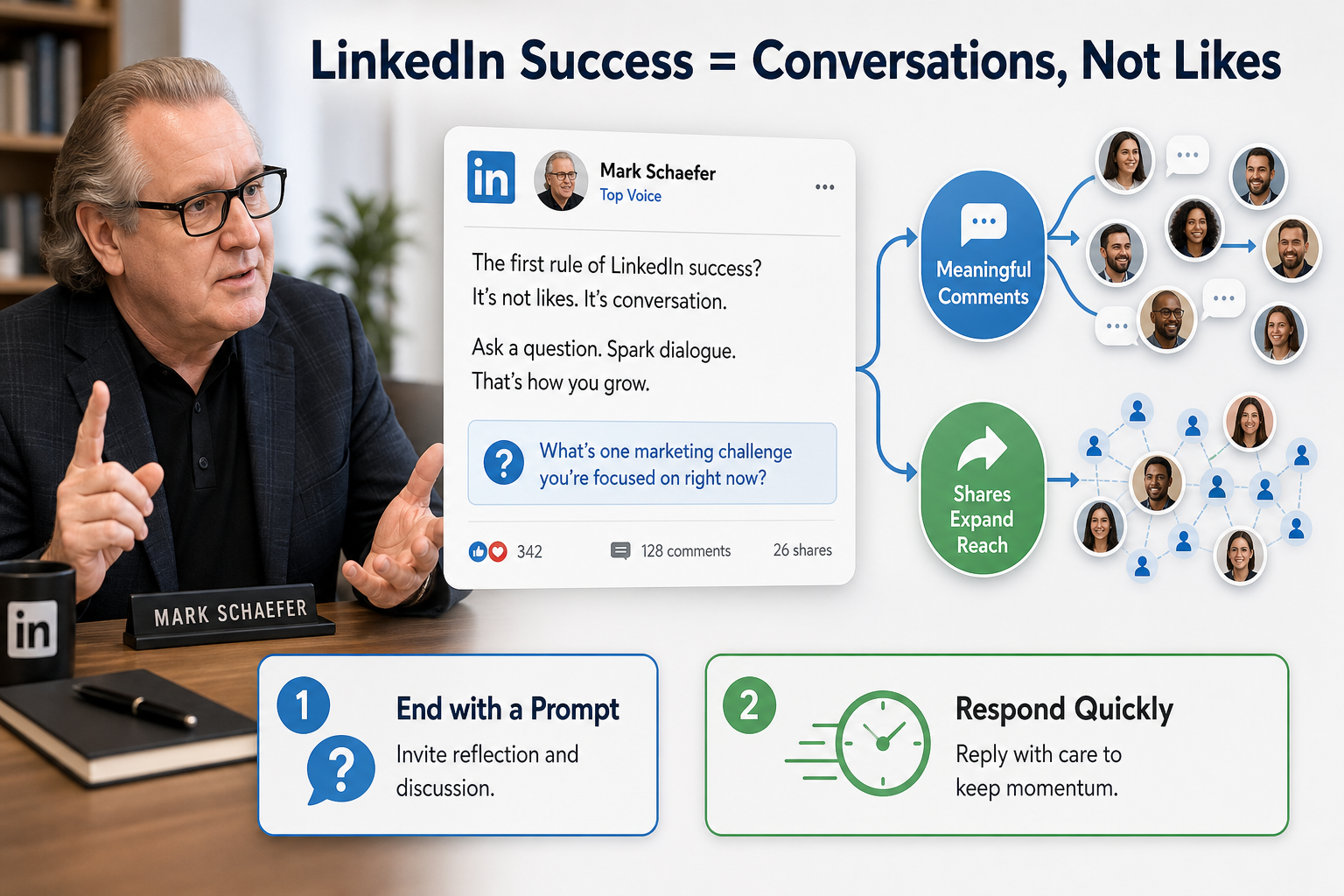
Mark Schaefer on the first rule of LinkedIn success
Mark Schaefer emphasizes that the true engine of growth on LinkedIn is conversation, not the accumulation of likes or superficial engagement. The platform rewards posts that generate meaningful dialogue, especially when a thread expands beyond the initial readers to reach new audiences through shares and comments.
According to this perspective, the best posts are those that invite participation. A simple question at the end of a concise post can ignite a cascade of responses, turning passive readers into active participants. When readers feel seen and prompted to contribute, they are more likely to comment with thoughtful insights, which signals value to the LinkedIn algorithm and increases the post’s distribution.
Two core tactics emerge from this approach:
- End with a prompt – Close your post with a question or scenario that invites reflection and discussion. This tiny nudge lowers the barrier for engagement and signals to readers that their perspective matters.
- Respond with speed and care – When comments appear, reply promptly with meaningful, concrete answers. Quick, thoughtful responses sustain momentum, validate commenters, and encourage further dialogue rather than letting the thread languish.
When these elements align, conversations flourish. The initial small circle of responders can become a larger chorus as others chime in, share the post, or reference it in their own networks. In Mark Schaefer’s view, the rare content that sparks genuine conversation becomes a magnet that extends beyond the creator’s immediate followers, turning engagement into enduring visibility and influence rather than a fleeting vanity metric.
Practical takeaways to apply today include:
- Craft posts around questions that tap into common challenges or curiosity within your audience.
- Monitor early engagement in the first few hours and be ready to join the conversation with thoughtful replies.
- Aim for quality over quantity – prioritize comments that add value over a high count of reactions.
Adopting this mindset helps you build trust, establish expertise, and create a scalable growth loop where conversation acts as the multiplier for reach and impact on LinkedIn.
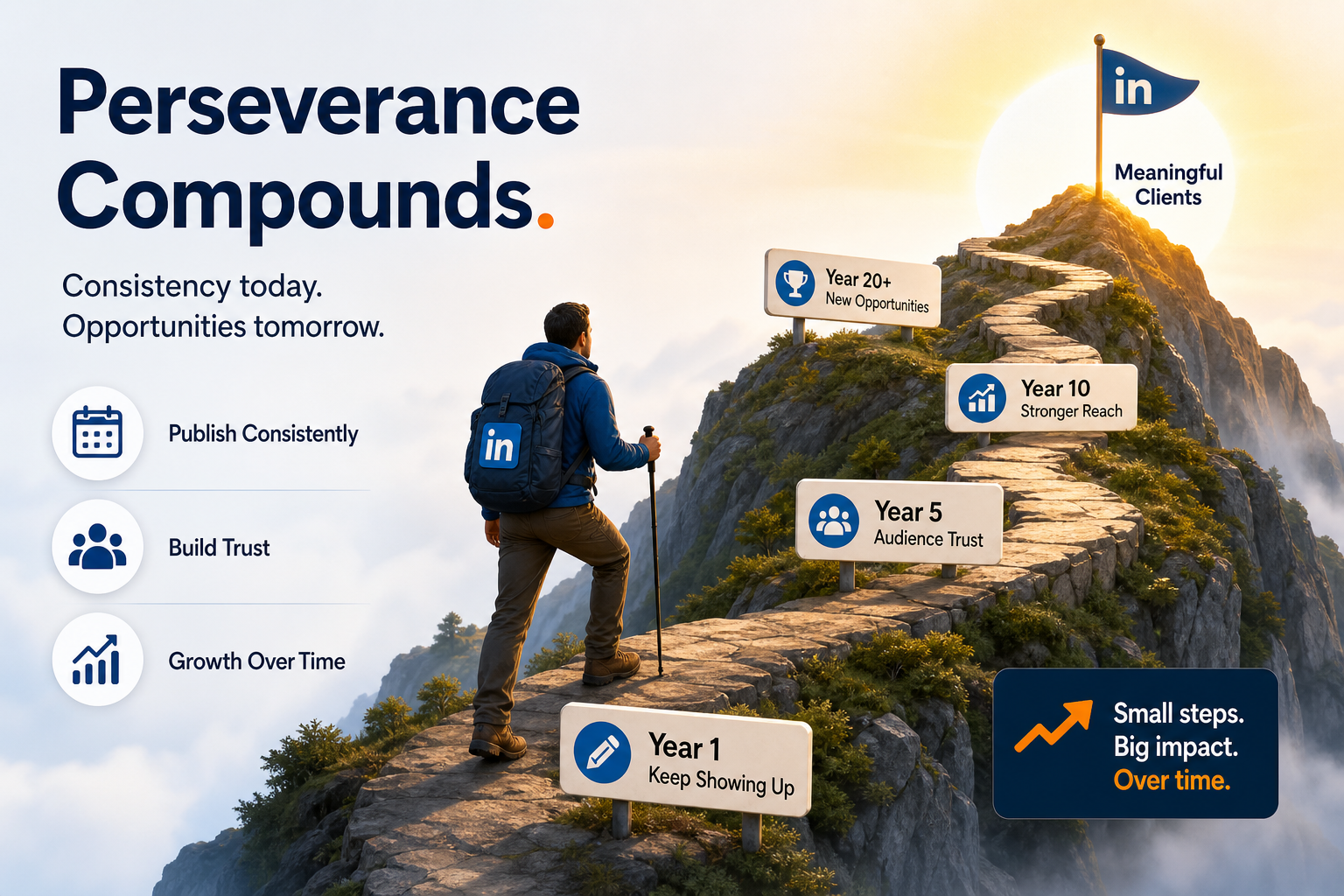
Mark Schaefer on perseverance as a growth secret
Perseverance, not one-off genius, is the hidden engine behind sustainable growth on LinkedIn. Mark Schaefer emphasizes that long-term success comes from consistent, helpful content published over years, never from a single viral moment. The logic is simple: trust compounds. When you show up repeatedly with value, your audience learns what to expect, and the algorithm rewards that reliability with more reach and more meaningful engagements.
Consider the arc of a creator who publishes regularly for decades. Early posts may gain modest traction, but over time they accumulate a library of insights that a new follower can discover long after the initial post was published. This is the kind of enduring visibility that turns readers into subscribers, followers into advocates, and occasional prospects into loyal clients. The key is not a sudden flash of attention, but a steady drip of quality content that documents your expertise and your willingness to help others navigate their challenges.
Two practical patterns emerge from Schaefer’s perspective on perseverance:
- Publish consistently above all else: regular cadence trains your audience to anticipate value, builds a predictable growth rhythm, and signals to the algorithm that you are an active, reliable creator.
- Let results accrue over time: expect that individual posts may feel incremental, but the cumulative effect over months and years opens doors that no single post could unlock.
There is a real-world payoff to this approach that goes beyond metrics. A founder who has invested in years of content often finds themselves being recognized as a trusted authority. This recognition can lead to opportunities like introductions to decision makers, invitations to speak, or engagements that align with their core expertise. The lesson is not to chase immediate returns, but to build a durable presence that signals reliability and depth to the people who matter in your field.
To integrate perseverance into your LinkedIn growth, try the following:
- Commit to a multi-year plan: map a content calendar that covers at least 12 months of topics tied to your expertise and audience needs.
- Prioritize utility over sensationalism: every post should deliver a clear takeaway, whether it is a framework, a checklist, or a concrete example.
- Track trust signals: monitor comments that reflect understanding, repeat visitors to your profile, and inbound messages or inquiries that reference earlier content.
In Mark Schaefer’s view, perseverance turns audience goodwill into durable influence. By showing up consistently, you create a growth loop where each piece of content reinforces the value of the next, gradually expanding your reach and turning steady effort into meaningful business outcomes without relying on luck or sporadic breakthroughs.
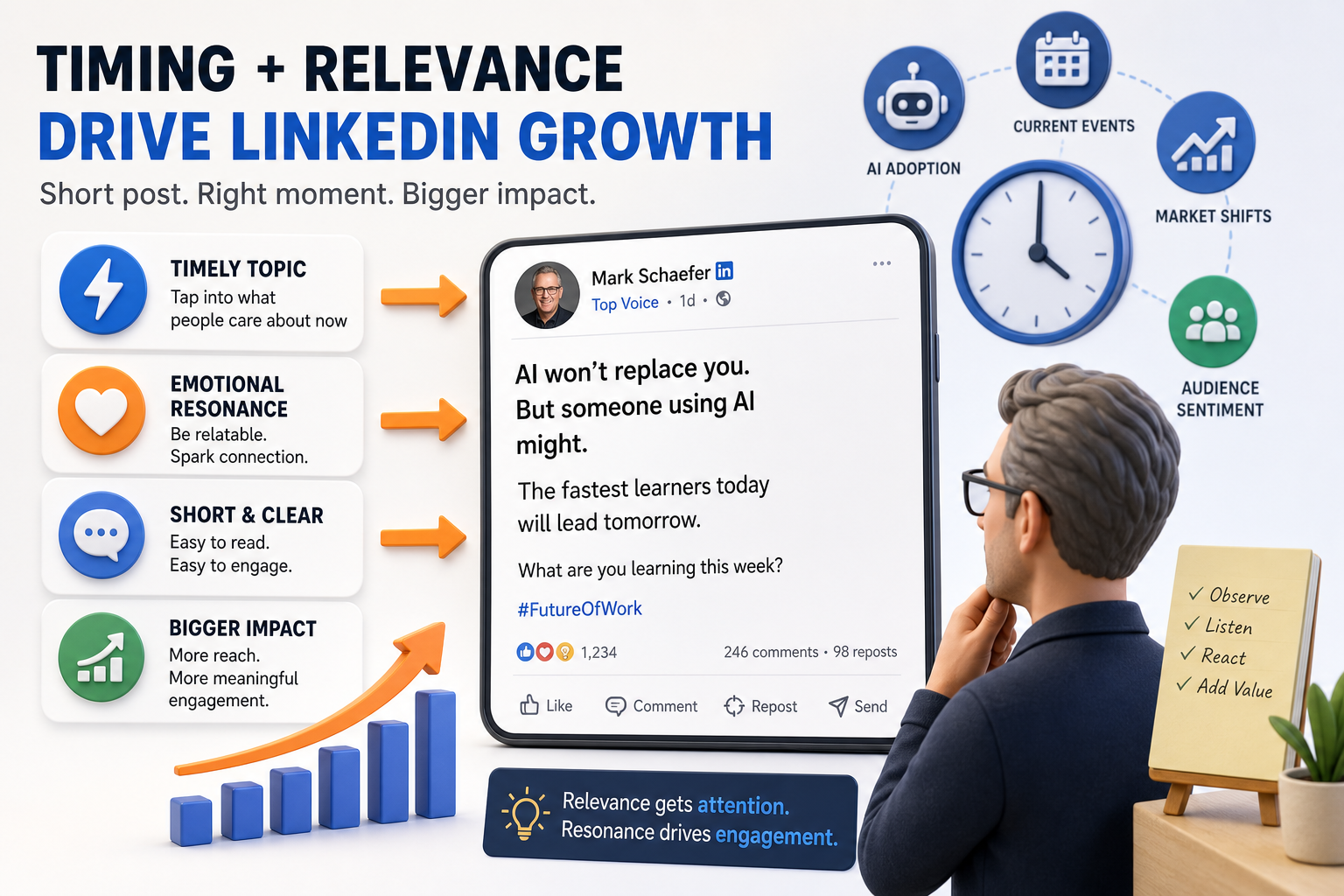
Mark Schaefer on timing and relevance
Timeliness and relevance are powerful accelerants for LinkedIn growth, especially when a post is short and punchy. Mark Schaefer argues that posts which tap into current concerns or near-term shifts can punch above their weight because they land at the moment when your audience is thinking about the same issue. The magic happens when the content resonates emotionally and mirrors what people are feeling now, not just what they should know in a vacuum.
When a post aligns with a prevailing mood or a hot topic such as AI adoption, rapid technology changes, or shifting market realities, it can unlock a bigger audience without needing to be long or highly polished. The combination of brevity and relevance signals to the LinkedIn algorithm that the content is timely and valuable, which can increase initial distribution and invite more meaningful engagement in the comments. In practice, this means you should monitor industry conversations, news cycles, and frequent user pain points to identify topics that are top of mind for your audience.
Emotional resonance matters as much as topicality. Posts that acknowledge uncertainty, frustration, or optimism in a relatable voice tend to earn more comments and shares than dry, factual updates. People engage when they feel understood and when the post offers a sense of relief or a clear path forward. The most effective timely posts often combine a concise observation with a tangible takeaway or a quick framework that readers can apply immediately.
To apply timing and relevance in your own content, consider these practical steps:
- Monitor conversations: subscribe to relevant hashtags, join industry groups, and track what people are asking about in comments and messages.
- Pick current, not merely popular: choose topics that genuinely affect your audience today, even if they are not the most sensational subjects.
- Lead with emotion and a clear payoff: open with a quick emotional cue or shared concern, then offer a practical takeaway in one sentence or a short tip.
- Time your posts thoughtfully: publish when your audience is most active, and consider posting after a recent development to ride the momentum.
- Invite reflection: end with a prompt that encourages others to share their perspective on how they are navigating the same challenge.
In essence, timing and relevance convert fleeting attention into conversation, and conversation into trust. When you craft short, emotionally attuned posts that speak to the current state of the world and your readers’ worries, you create a ripple effect that extends beyond the initial audience, increasing both reach and the likelihood of meaningful connections.
Mark Schaefer on long-term business benefits of content
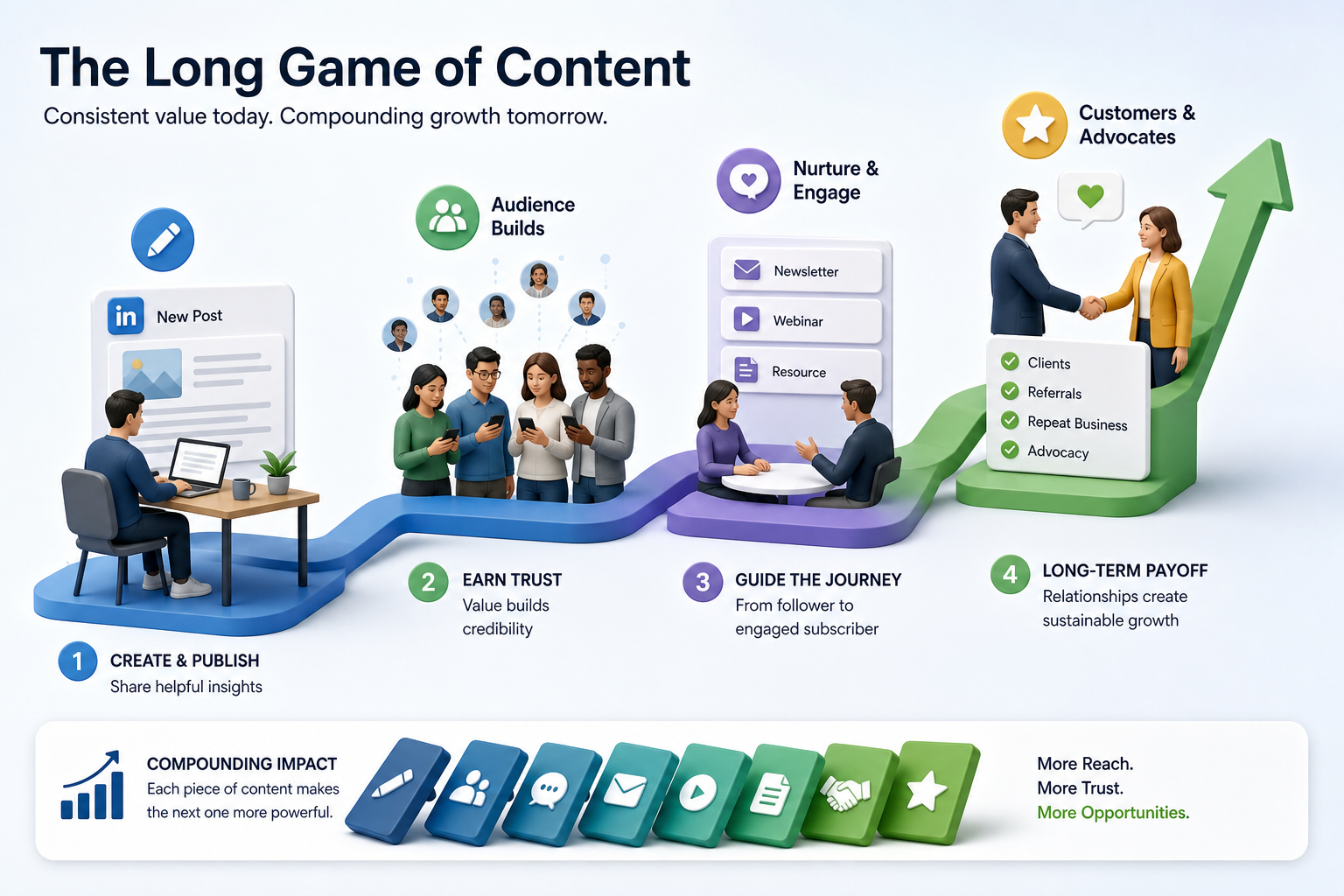
The payoff from viral moments is usually indirect. Mark Schaefer notes that the real value of content lies in building a durable audience over time, not in chasing one-off bursts of attention. When you publish consistently and deliver real help, you create a library of insights readers discover long after the initial post. That library gradually turns readers into customers, referrals, and advocates.
Two core ideas underpin this long-term view. First, trust compounds. Each piece of useful content adds credibility, so a new follower who encounters your early work later finds a cohesive, reliable narrative. Second, the customer lifecycle often spans months or years. A person may engage with multiple pieces of content, sign up for a newsletter, attend a webinar, and eventually become a client or collaborator. This gradual progression defines the long game in personal branding.
Practically, the long-term benefits show up when content serves as a conversion asset rather than a one-time signal. A well-documented expertise, delivered consistently, creates an enduring impression that keeps you top of mind for relevant opportunities. In this model, each new post compounds the impact of past work, broadening your reach and deepening the trust you’ve earned.
To translate this into actionable habits, consider these patterns:
- Publish with a multi-year lens: plan topics that build on each other and reinforce a clear value proposition over time.
- Focus on utility over flash: provide frameworks, checklists, templates, and examples readers can apply repeatedly.
- Measure trust signals: track repeat visitors, inbound inquiries referencing older content, and the quality of comments reflecting understanding.
- Invest in a content library: archive and organize past posts so new followers can surface cohesive themes and progressions.
From Mark Schaefer’s perspective, perseverance and reliability turn audience goodwill into durable influence. By showing up with meaningful content over time, you create a growth loop where each contribution strengthens the chance of future opportunities. The payoff is not a single moment of fame, but a steady, scalable path from awareness to trust to client relationships.
The 27 LinkedIn growth hacks You Should Be Using in 2026
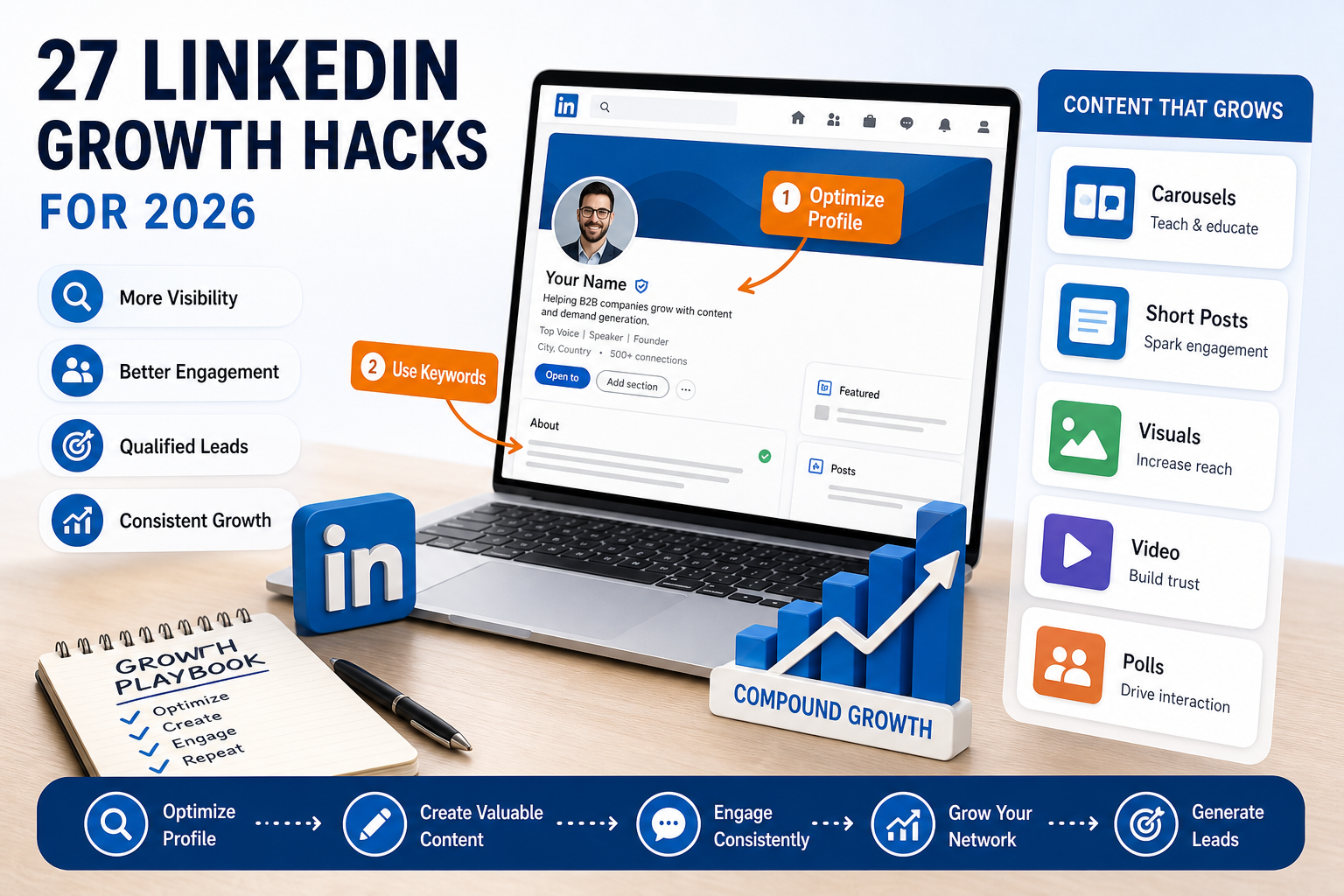
In 2026, growth on LinkedIn hinges on low-cost, high-impact actions that compound over time. The following 27 hacks are practical, field-tested tactics you can apply today to boost visibility, generate qualified leads, and deepen engagement without relying on large ad spends or expensive agencies. Think of this as a playbook for turning your profile into a conversion asset and your content into a repeatable growth engine.
Core premise
Profile optimization lays the foundation. A strong profile acts as a credible landing page that converts visitors into connections and inquiries.
Content formats matter. Carousels, short posts, visuals, and video each play a role in different stages of the buyer journey. Consistency over luck beats sporadic virality. A steady cadence compounds reach and trust over time.
The 27 LinkedIn growth hacks
- #1 LinkedIn Growth Hack – Use Relevant Keywords
Your profile is a search surface. Use keywords your target audience uses. Treat it like a micro website and study peers to discover effective terms.- Incorporate target phrases into your headline, About, and experience sections.
- Look for terms used by top performers in your niche and adapt them to your unique value.
- #2 LinkedIn Growth Hack – Custom LinkedIn Profile URL
Clean up your URL to look professional and improve discoverability in search results.- Set a simple, memorable handle that reflects your name or brand.
- Use the customized URL in all outreach and sharing.
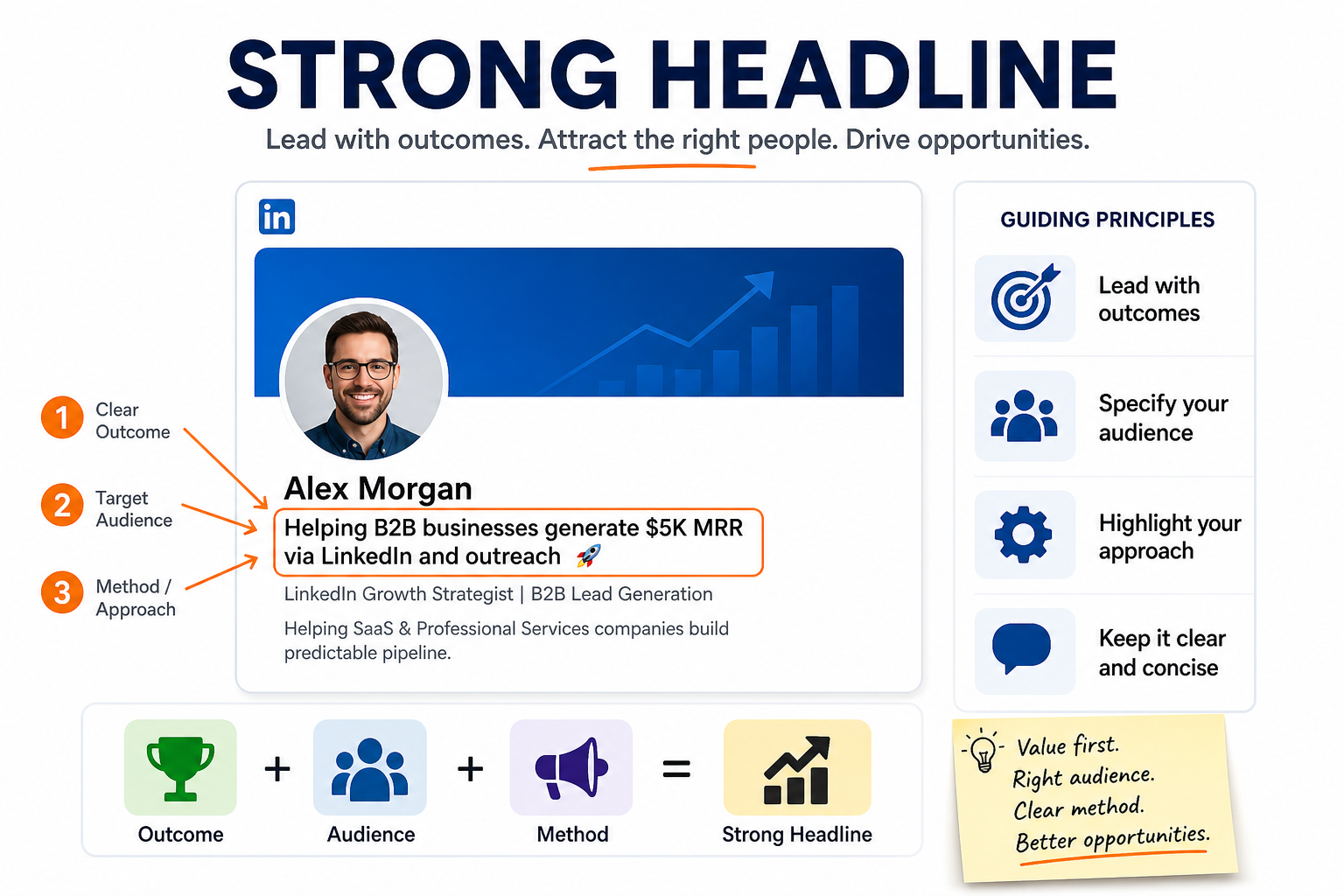
- #3 LinkedIn Growth Hack – Strong Headline
Move beyond a job title. Communicate value and outcomes you help clients achieve.- Example pattern: Helping B2B teams generate $5K MRR through LinkedIn and outreach.
- Clarify who you help, what you do, and how you do it.
- #4 LinkedIn Growth Hack – Professional Picture
A clear, friendly headshot builds trust from the first glance.- Use good lighting, a plain background, and a warm expression.
- Ensure your image scales well on mobile where most users engage.
- #5 LinkedIn Growth Hack – LinkedIn Banner
Use the banner to communicate your offer and guide visitors to action.- Include a simple value proposition and a CTA hinting at the next step.
- Keep it legible on small screens; avoid clutter.
- #6 LinkedIn Growth Hack – Featured Section
Highlight your best offers and proof in the Featured area.- Link to lead magnets, case studies, or a scheduling page.
- Pin high value items to catch attention quickly.
- #7 LinkedIn Growth Hack – Contact Information
Make it easy to reach you. Update contact details with current channels.- Use a professional email address and a calendar link if possible.
- Consider adding a short message CTA for direct inquiries.
- #8 LinkedIn Growth Hack – About Section
Treat About as a mini sales page using a value driven narrative.- Hook the reader with a pain point, then explain your unique solution.
- Include social proof and a clear CTA such as a Calendly link.
- #9 LinkedIn Growth Hack – Re-Order Sections
Place your strongest conversion areas at the top of your profile.- Move the Featured section and About above the rest to capture interest early.
- #10 LinkedIn Growth Hack – Make Your Profile Public
Public visibility drives discovery on LinkedIn and in search engines.- Enable public profile visibility for better reach.
- Check privacy settings to balance visibility with personal controls.
- #11 LinkedIn Growth Hack – Post Regularly to Keep People Interested
A steady publishing rhythm signals reliability to the algorithm and your audience.- Start with one post per week and scale up as you maintain quality.
- Use LinkedIn features to gain additional insights with Premium where relevant.
- #12 LinkedIn Growth Hack – Use Visuals in Your Posts
Scroll stopping content boosts engagement. Include images, GIFs, and short videos.- Mix static visuals with motion to maintain variety.
- Keep visuals aligned with your message and brand.
- #13 LinkedIn Growth Hack – Create Carousels
Carousels tend to outperform single text posts by inviting swipes and engagement.- Tell a story or deliver a step by step framework across slides.
- Use clear slide titles and concise copy per frame.
- #14 LinkedIn Growth Hack – Hashtags
Hashtags support discovery when used wisely in the About section and post topics.- Research relevant, niche hashtags rather than broad ones.
- Include a small set of targeted hashtags in posts and a broader set in About.
- #15 LinkedIn Growth Hack – Add Comments
Thoughtful commenting expands reach and builds visibility.- Schedule short daily windows to engage with influencers, ICPs, and peers.
- Provide insights rather than generic praise to start meaningful conversations.
- #16 LinkedIn Growth Hack – Lead Magnets
Lead magnets attract high quality leads when aligned with your services.- Offer a low friction option like a checklist or PDF, then a higher entry point like a consult.
- Promote via a post and feature in the Featured section.
- #17 LinkedIn Growth Hack – Content Strategy
Build a purposeful content plan that links back to your core value proposition.- Map topics to audience pain points and questions you frequently encounter.
- Layer formats so readers can consume quickly or dive deeper.
- #18 LinkedIn Growth Hack – Content Cadence
Establish a cadence that supports consistency and momentum.- Rotate formats: carousels, short insights, videos, and questions.
- End posts with a prompt to invite comments and saves.
- #19 LinkedIn Growth Hack – Reusable Formats
Create templates and formats that you can reuse across posts.- Develop a framework post, a case study post, and a quick tip post.
- Repurpose successful posts into new variations to save time.
- #20 LinkedIn Growth Hack – Community Focus
Build a sense of belonging by engaging with your niche community.- Highlight community challenges and feature peer contributions.
- Host mini Q and A sessions to surface collective knowledge.
- #21 LinkedIn Growth Hack – Storytelling with Data
Pair practical data with narrative to boost credibility.- Use simple charts or visuals to illustrate a result or framework.
- Explain the takeaway in one or two sentences per slide or post.
- #22 LinkedIn Growth Hack – Social Proof
Substantiate claims with client stories, metrics, and testimonials.- Incorporate a short client outcome in your About or Featured.
- Ask satisfied clients to share a brief recommendation on your profile.
- #23 LinkedIn Growth Hack – Micro-Case Studies
Quick, concrete examples of how you solved a problem resonate well.- Present the challenge, approach, and result in three to five bullets.
- Link to a longer resource for readers who want more detail.
- #24 LinkedIn Growth Hack – Morning Rituals
Start your day with intention by engaging with your network early.- Schedule a 15 minute window to review comments and messages.
- Prioritize replies that advance conversations and invite action.
- #25 LinkedIn Growth Hack – Segment Your Audience
Create tailored messages for different audience segments to improve relevance.- Develop ICP based engagement sequences for connections and messages.
- Keep core messaging consistent while adapting tone for segments.
- #26 LinkedIn Growth Hack – Analytics Lite
Track a handful of high leverage metrics to inform iteration.- Monitor profile visits, saves, comments quality, and click throughs.
- Use quick weekly reviews to adjust topics and formats.
- #27 LinkedIn Growth Hack – Automation with Caution
Use automation to scale harmless, non spamming tasks while preserving authenticity.- Automate scheduling reminders for follow ups, not cold outreach.
- Personalize templates before sending to maintain a human touch.
Putting the hacks into a simple, repeatable plan
To maximize impact, combine profile optimization with a diversified content mix. Start with a refreshed About and Featured section, a clean custom URL, and a banner that communicates your core offer. Then publish a moderate cadence that balances carousels, short posts, and visuals. End posts with a prompt to drive comments, and allocate daily time to engage with key profiles. Use lead magnets as a gateway to nurturing relationships, and measure a concise set of outcomes to guide ongoing improvement.
If you want a compact checklist to reference while you work, save this: optimize profile, publish consistently, comment strategically, use carousels and visuals, test lead magnets, and review metrics weekly. By applying these LinkedIn growth hacks in 2026, you can accelerate visibility, generate better quality leads, and grow engagement in a sustainable, repeatable way.
Keyword note: The strategies above focus on LinkedIn Growth Tactics for 2026, aiming to support profile optimization and content formats that drive tangible results without heavy ad spend.
Use Relevant Keywords
Your LinkedIn profile is a dynamic, searchable asset just like a webpage. Treat it as a storefront where the right keywords connect you with the exact audience you want to reach. The goal is to align your profile copy with the search terms your ideal clients or collaborators are typing into LinkedIn and even Google. While LinkedIn does not offer a dedicated keyword research tool, you can still uncover valuable terms by studying peers, competitors, and top performers in your niche, then adapting those terms to your unique value proposition.
Think of LinkedIn keyword optimization as a lightweight form of LinkedIn SEO. When you embed relevant phrases in strategic places, you increase the chances your profile appears in search results for those terms. This matters for professionals who rely on inbound inquiries or partnerships rather than outbound outreach alone. The process is iterative: observe what terms your ICP uses, test them in your profile, monitor visibility, and refine over time.
How to start optimizing with relevant keywords:
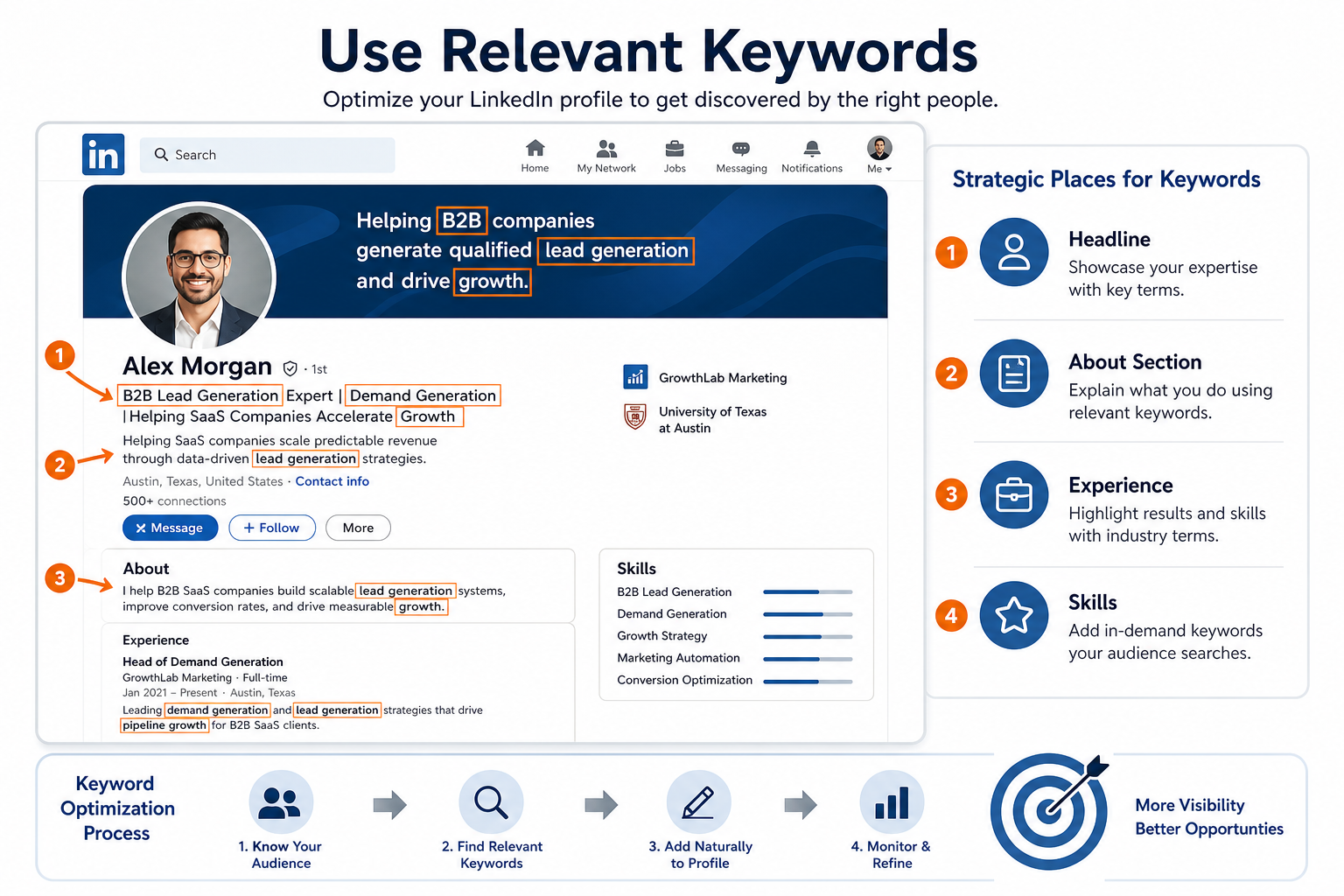
- Map target audience phrases: list the problems your audience is trying to solve and the outcomes they seek. Convert these into concrete search terms, such as “B2B lead generation,” “enterprise software adoption,” or “digital marketing for mid market.”
- Incorporate terms naturally: weave keywords into your headline, About section, experience descriptions, and Skills. Avoid keyword stuffing and prioritize readability and clarity.
- Prioritize long tail terms: long, specific phrases often convert better and face less competition. Examples include “LinkedIn outreach for SaaS startups” or “growth marketing for professional services.”
- Study high performers: examine profiles of peers who consistently show up for your target terms. Note which keywords appear in their Headline, About, and Experience sections and adapt them thoughtfully to reflect your unique value.
Where to place keywords for maximum impact:
- Headline: craft a value driven statement that includes a core keyword or phrase you want to rank for. Example pattern: Helping B2B teams generate qualified leads through LinkedIn and outreach.
- About section: open with a compelling hook that includes your primary keyword naturally, then expand with supporting keywords in a conversational, benefit oriented tone.
- Experience descriptions: describe roles and results using keyword friendly phrasing that also communicates outcomes and credibility.
- Skills and endorsements: list relevant keywords as skills and seek endorsements that reinforce your expertise in those areas.
- Projects and media: when adding featured content or samples, title and describe them with applicable keywords to improve discoverability.
Tracking and refining your keyword strategy matters. Consider a simple cadence to keep discoverability strong:
- Audit quarterly: review your top 5 to 8 search terms and assess how often they appear in key sections.
- Test and rotate: swap out one or two terms every 6 to 8 weeks to measure visibility and engagement changes.
- Monitor inquiries: pay attention to the messages and connection requests you receive. If you notice a mismatch between queries and responses, adjust your copy accordingly.
In the context of LinkedIn Growth Tactics, keyword optimization is a foundational, low effort, high payoff practice. When done thoughtfully, it helps the right audiences find you, understand your value quickly, and move toward engagement that feels natural and relevant rather than forced.
Quick checklist
- Identify 3 to 5 core keywords or phrases your ICP uses
- Incorporate them into your headline and About section with clear value language
- Embed secondary keywords in experience descriptions and media
- Keep copy natural and benefit oriented, not keyword stuffed
- Review visibility metrics and refine every 6 to 8 weeks
Custom LinkedIn Profile URL
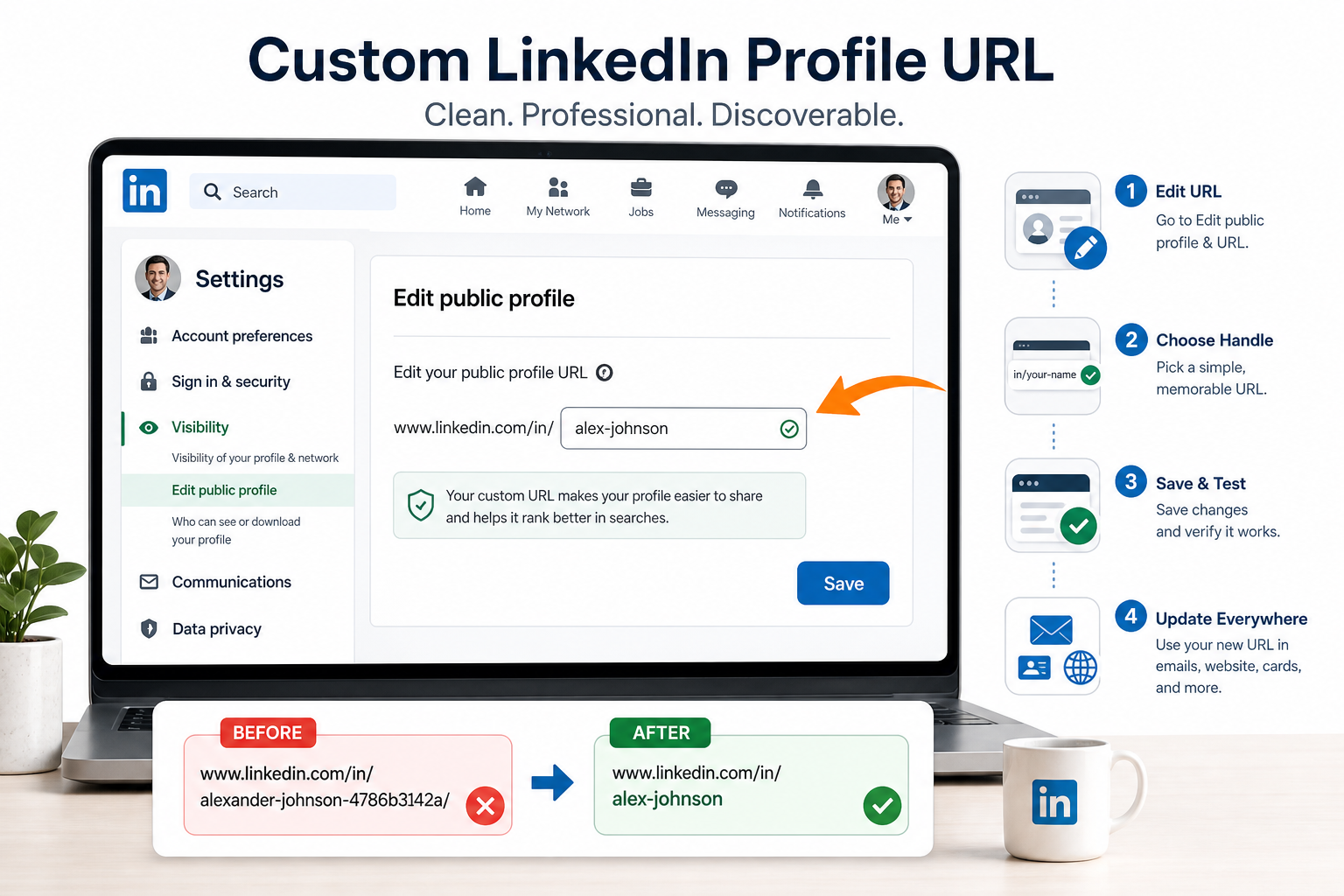
Replace a messy default URL with a clean, professional one. A customized LinkedIn profile URL not only looks more credible, it also tends to perform better in both LinkedIn searches and external search engines like Google. The result is higher trust, easier sharing, and improved discoverability when potential collaborators or clients look you up.
Why it matters:
- Professional appearance: a simple, memorable URL signals attention to detail and brand consistency.
- Improved search visibility: clean URLs are more likely to rank for your name or brand in both LinkedIn and general search results.
- Easy sharing: short URLs are easier to type, copy, and paste in emails, messages, and proposals.
How to implement a Custom LinkedIn Profile URL:
- Access the edit option:
- Navigate to your LinkedIn profile. Click the Edit public profile & URL option on the right side.
- Choose a simple, memorable handle:
- Aim for your full name if available (for example, firstname-lastname). If not, incorporate your brand or role in a clean form (for example, brandname or firstname-lastname-profession).
- Save and test:
- Save the new URL and verify it loads correctly. Check that it redirects properly from common variants you might have used.
- Update touchpoints:
- Replace old URL in email signatures, personal website bios, business cards, and any outbound messages.
- Consistently reference the new URL in outreach and content to reinforce recognition.
- Monitor for issues:
- Periodically check analytics or inbound messages to ensure the new URL is driving traffic as expected.
Best practices for a lasting impact:
- Keep it short and brand aligned: if your name is common, include a middle initial or a professional tag that remains stable over time.
- Avoid underscores and numbers when possible: they can be harder to remember and type.
- Be consistent across channels: use the same handle on Twitter, Instagram, and your website where appropriate to reinforce recognition.
Quick checklist:
- New URL chosen, simple and memorable
- Old URL redirected or noted to the new path
- Updated across email signatures, bios, and outbound materials
- Profile visibility and search appearance reviewed after change
Keyword note: A clean Custom LinkedIn Profile URL contributes to LinkedIn Growth Tactics by improving profile discoverability and credibility, supporting both direct connections and inbound inquiries.
Strong Headline
The headline is your first chance to convey value at a glance. Don’t settle for a passive job title when you can show outcomes, the target audience, and the method you use. A strong headline works like a mini value proposition that invites people to learn more.
Guiding principles for a truly powerful LinkedIn headline:
- Lead with outcomes instead of titles alone. Tell people what you help them achieve.
- Specify the audience so your message resonates with the right people from the first impression.
- Include the mechanism or approach you use to deliver results, such as a specific channel or method.
- Keep it clear and concise while packing in value. Clarity beats cleverness if it costs comprehension.
Example formats that clearly state value and target customers:
- Helping B2B teams generate $5K MRR via LinkedIn and outreach
- Generating qualified SaaS demos for mid market with automated outreach
- Helping professional services firms close more client engagements through systemized LinkedIn outreach
- Scaling enterprise software adoption for IT leaders using concise content and targeted messaging
- Transforming small business lead flow into measurable opportunities with structured LinkedIn campaigns
Tips for crafting your own headline quickly:
- Identify the primary outcome your clients or collaborators want, such as revenue, pipeline, or time saved.
- Define the ideal customer in a compact phrase (for example, “B2B startups,” “mid market enterprises,” or “professional services”).
- State your method if it adds credibility, such as a channel like LinkedIn outreach or a framework you apply.
- Iterate and test try two or three headline variations over a couple of weeks and compare profile views or inquiries.
Practical approach to a high impact headline:
- Draft several variants that follow the pattern the reader cares about: Outcome for Audience via Method.
- Choose the most actionable variant that can be immediately understood without extra context.
- Align with your About section so the promise in the headline is supported by the body copy.
Common pitfalls to avoid:
- Overloading with buzzwords that blur meaning rather than enhance clarity.
- Using vague titles like CEO or Founder without linking to value you deliver.
- Being inconsistent between the headline and what you actually offer in your services.
When the headline communicates a tangible outcome to a defined audience, you lower friction for inbound inquiries and set the stage for a deeper conversation. This focused clarity is a cornerstone of LinkedIn Growth Tactics and helps your profile stand out in a crowded feed without relying on promotional fluff.
Professional Picture
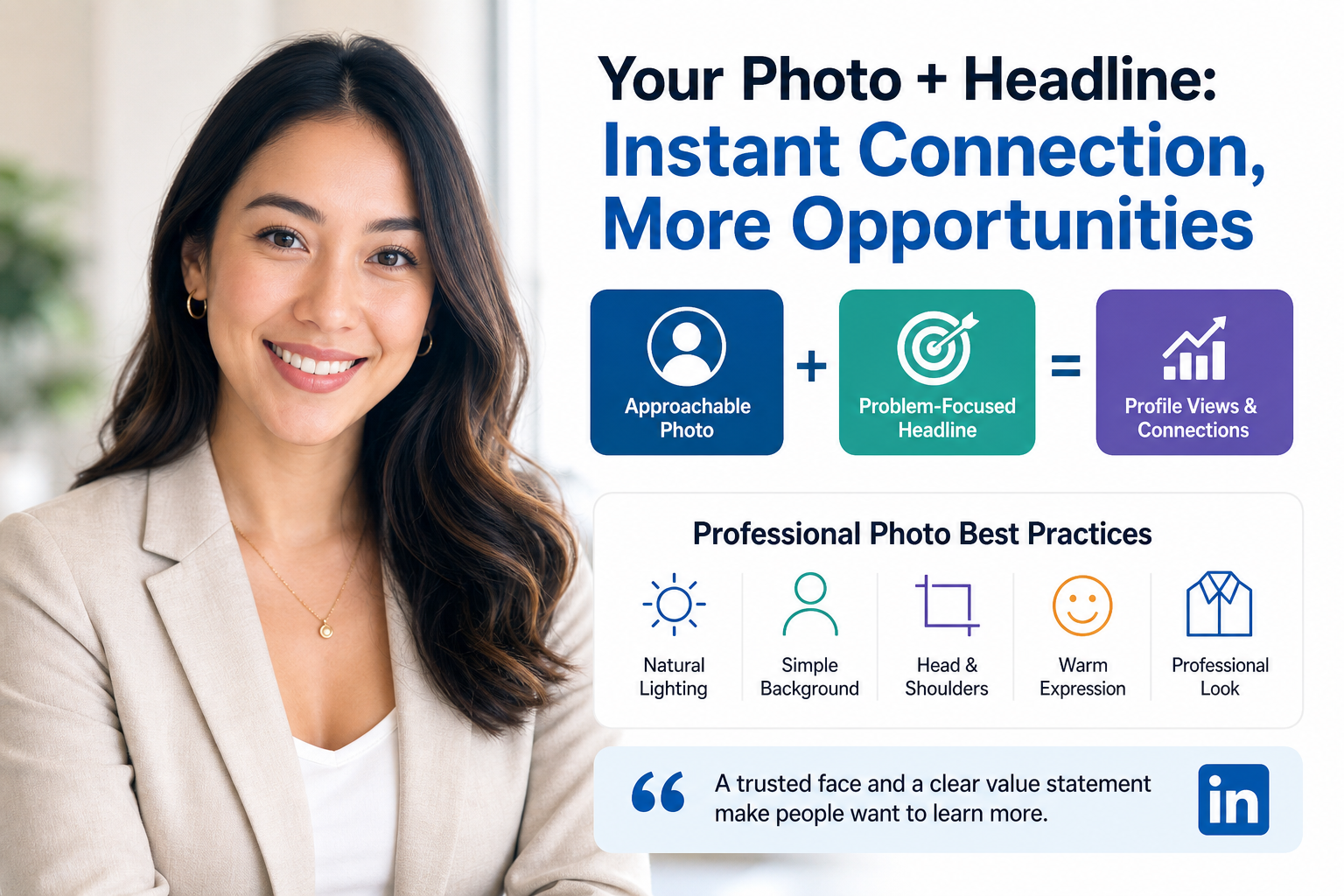
A clear, friendly headshot is the first impression you make on LinkedIn. People decide in an instant whether to pause and learn more, so your photo should convey approachability, professionalism, and authenticity. The goal is to create an instant connection that invites profile views and meaningful connections.
Key characteristics of an effective professional picture
- High resolution with natural lighting that avoids harsh shadows
- Simple, uncluttered background that keeps the focus on you
- Framing that shows your head and shoulders with your face centered
- A warm, approachable expression, ideally a genuine smile
- A wardrobe that aligns with your field and communicates credibility
Best practices for the photo
- Use a neutral or softly textured backdrop to minimize distractions
- Avoid heavy makeup or accessories that distract from your face
- Crop for mobile devices so your eyes remain near the upper third of the image
- Ensure color balance so skin tones look natural across devices
- Keep the image current and reflective of how you present yourself in real life
Pairing your picture with a problem-focused headline
When your headline centers on a problem you solve, the photo and headline work together to create an instant bridge to your value. The photo signals trust and openness, while the headline signals relevance and outcomes. This combination increases the likelihood that visitors stop scrolling and view your full profile.
Practical headline pairing ideas
- For consultants: Solving capacity planning and process bottlenecks for growing teams
- For marketers: Helping B2B teams generate qualified leads with repeatable LinkedIn workflows
- For developers: Streamlining software adoption and onboarding for enterprise teams
- For HR professionals: Reducing time to hire by accelerating candidate screening and outreach
Actionable steps to implement
- Capture or update your photo: schedule a quick headshot session or use a clean, well lit setup at home to refresh your image every 12 to 18 months.
- Test the pairing: draft two or three problem-focused headline variants and measure which profile views or connection requests increase over a two week period.
- Confirm consistency: ensure your photo, headline, and About section all reflect the same core value proposition and tone.
Quick visual checklist
- Head and shoulders framing with your face centered
- Natural, friendly expression
- Clear background and balanced lighting
- Photo reflects your current professional persona
- Headline communicates a concrete outcome and target audience
LinkedIn Banner
The LinkedIn banner sits at the top of your profile. Used well, it gives immediate context about your value and reinforces your headline. It also guides visitors toward a clear next step.
Key elements to include in your banner:
- What you do in a few words that align with your headline and About section.
- The problem you solve framed as a user outcome or pain point.
- Why it matters a brief justification of impact or relevance to your audience.
- Clear CTA or directional cue such as a signal to visit a lead magnet, schedule a call, or download a resource.
Design and copy guidelines
- Dimension awareness: ensure readability on desktop and mobile; avoid placing critical text in the extreme edges where it may be cropped.
- Typography: use a legible font stack with high contrast against the banner background.
- Brand alignment: color and imagery should reflect your personal or business brand and support the banner message.
- Minimal text: aim for 6 to 10 words of primary messaging, plus a compact subline if necessary.
Example banner copy structures:
- Structure A: [What you do] for [Audience] | [Primary outcome] | CTA e.g. Visit my resource hub
- Structure B: Turn [Pain point] into [Result] | Easy steps or framework | CTA e.g. Get the checklist
- Structure C: Helping [Audience] achieve [Outcome] | Using [Method] | CTA e.g. Book a quick call
CTA placement and behavior
- Make the CTA visually distinct, such as a subtle button-like cue or a clear, action oriented phrase.
- Prefer verbs that imply a low friction action, such as “Download,” “Book,” “Learn,” or “Check out.”
- Ensure the CTA aligns with an actual destination, such as a landing page, resource, or scheduling page that is mobile friendly.
How to test and optimize
- Run A/B tests by creating two banner designs and comparing profile interactions over two to four weeks.
- Track qualitative signals: profile visits, click through to your lead magnet, and messages mentioning the banner.
- Refine copy and visuals based on what resonates with your ICP and the questions they raise in conversations.
Practical banner optimization workflow
- Define the message: pick the core outcome you want to communicate.
- Draft banner copy: three concise options, each with a clear CTA.
- Choose visuals: select imagery or a clean geometric design that supports readability.
- Implement and monitor: apply the banner, give it a few weeks, review engagement signals, and iterate.
Remember, your LinkedIn banner is not only about aesthetics; it is a strategic prompt that preframes the visitor’s understanding and primes them for the next step in your growth funnel. Use it to deliver quick context, reinforce your headline, and set expectations for the engagement that follows.
Featured Section
The Featured section on LinkedIn is your conversion shelf. It sits at the top of your profile, often where visitors land, and it should showcase your strongest value propositions with clear, low-friction paths to take the next step. The goal is to present proof of impact alongside options that fit different levels of commitment from your audience. When used strategically, the Featured area becomes a frictionless doorway from discovery to engagement.
What to feature first is simple: lead with a low-effort, high-value item that entices immediate action, followed by a mid-tier and a high-ticket offer. This ladder makes it easy for someone to engage at their own pace while inviting progression toward deeper engagements. You can embed each item with a direct CTA that aligns with the action, such as downloading a resource, booking a session, or applying for a premium program.
Recommended structure for top offers
- Low-commitment lead magnet — a free, high-value resource that demonstrates expertise and captures contact details or opt-ins.
- Mid-tier opportunity — a one-on-one session or a structured discovery call that moves the relationship forward without a long commitment.
- High-ticket application — a formal application for a premium program or engagement that signals larger, measurable impact and a clear path to working together.
Example layout in the Featured section
| Offer | Type | Commitment | Proof of Value | CTA |
|---|---|---|---|---|
| Lead Magnet Free resource |
Downloadable | Low | Preview of framework or checklist with practical takeaways | Download now |
| 1 on 1 Strategy Session | Consultation | Medium | Qualifying questions and a short plan outline shared after the session | Book a call |
| High Ticket Program Premium engagement |
Application based | High | Case studies, metrics, and a proven onboarding path | Submit application |
How to implement the three rails in practice
- Lead magnet shows immediate value and captures interest. Examples include a checklist, a template pack, or a mini course outline. Provide a clear benefit and a quick path to access.
- 1 on 1 session offers a personalized next step. Frame it as a problem-solving session with a concrete outcome, such as a tailored action plan or a prioritized roadmap.
- High-ticket application communicates scale and impact. Use this for deeper engagements where measurable outcomes and long-term partnerships are the aim.
Proof of value is crucial in this section. Pair each item with a brief demonstration of outcomes, such as a client result, a snippet from a case study, or a one-paragraph testimonial. If possible, include a quick before-and-after fragment that makes the benefit tangible to a visitor deciding whether to engage.
By organizing the Featured section around a clear value ladder and presenting accessible, credible proof, you give every profile visitor a straightforward path from curiosity to commitment. This approach reduces friction, signals conversion potential, and turns profile views into conversations that can start a longer-term relationship.
About Section
Attention — You are here because you want a LinkedIn profile that works as hard as you do. Imagine a single about section that instantly clarifies who you help, the outcomes you produce, and the unique method you use, so that every visitor understands your value within seconds rather than minutes.
Interest — This About section is a mini sales page designed to move visitors from curiosity to consideration. It articulates your core promise in plain language, showcases the problems you solve, and lays out the exact mechanism you apply to deliver results. The goal is not to boast, but to illuminate a clear path from first glance to meaningful engagement.
Desire — You want proof that your approach works. This section pairs a concise value proposition with tangible evidence so readers feel confident in taking the next step. Expect a crisp narrative that ties your capabilities to real-world outcomes, supported by concrete results, client stories, or quantified improvements. When readers see themselves in your story, desire becomes action.
Proof and credibility — Include quick, scannable signals that reinforce trust:
- Key outcomes you have helped clients achieve (for example, revenue growth, efficiency gains, or faster time to value).
- Short client outcomes or testimonials embedded as micro quotes.
- Evidence of expertise such as relevant certifications, awards, or notable collaborations.
Action — Ready to take the next step? Schedule a no-obligation discovery session to explore how your LinkedIn growth plan could be tailored to your goals. The CTA is clear, low-friction, and aligned with what a visitor will likely do next after reading your story.
Sample structured copy you can customize
- Hook — I help B2B teams generate predictable pipeline using a focused LinkedIn strategy that combines profile optimization, targeted engagement, and repeatable content formats.
- Value proposition — You get a profile that acts as a conversion asset, a content rhythm that builds trust, and a measurable path from profile visit to outreach to opportunity.
- Proof snippet — Clients have seen a 2x to 3x increase in inbound inquiries within 90 days and a >25% lift in qualified engagement from profile visits.
- CTA — Let us tailor a plan for your business. Book a 30 minute strategy call to see how this could work for you.
CTA button —
Optional social proof addition you can insert where appropriate:
- Testimonial — “This concise, outcome-focused About section clarified our value in seconds and significantly improved our inbound inquiries.”
- Statistic — “Average time to first qualified conversation reduced by 40 percent after aligning the About narrative with audience needs.”
By framing your About section as a deliberate, benefit-driven narrative and pairing it with a clear, action-oriented CTA, you transform a standard LinkedIn summary into a powerful conversion asset that supports your overall LinkedIn Growth Tactics strategy.
Re-Order Profile Sections
The most effective LinkedIn profiles place conversion first. By reordering your sections so visitors see your value immediately, you increase the likelihood of deeper engagement and inbound inquiries. Start with the Featured section, then the About section, and follow with the remaining sections in an order that drives action.
Recommended top to bottom sequence
- Featured — showcase your best offers, case studies, or high impact resources. This is your conversion shelf and should present low friction paths to take the next step.
- About — deliver a compact, outcome driven narrative that connects your value proposition to the visitor’s needs. Tie this directly to the offers shown in Featured.
- Experience and Skills — provide credibility and context for how you deliver results, with terminology aligned to your value proposition.
- Banner and Contact Information — ensure your banner reinforces the core offer and that contact channels are easy to use for inquiries.
- Recommendations (optional) — social proof that reinforces trust and demonstrates real world impact.
Practical steps to implement the reorder
- Move Featured to the top of the profile so first impressions present a clear value ladder. Include a low friction offer, a mid tier engagement, and a high ticket option where appropriate.
- Position About next to expand on the value proposition with a narrative that connects to the Featured offers. Use a concise hook, proof, and a direct CTA.
- Align subsequent sections so each one reinforces the preceding message. Ensure your Experience descriptions and Skills mirror the outcomes you promise in Featured and About.
- Update your Banner to reflect the new top level messaging. The banner should hint at the offers and guide visitors toward the next step.
- Test and refine after a two to four week period. Look at profile views, click throughs to the lead magnet, and inquiries to determine if further tweaks are needed.
Content alignment checklist
- Value ladder consistency — ensure every top section communicates a single, coherent value proposition across all elements.
- CTA coherence — every section should present a clear next step, such as downloading a resource, booking a call, or viewing a case study.
- Visual harmony — banner, Featured items, and About copy should share a unified tone and design cues for brand consistency.
- Mobile readability — confirm that the top blocks remain readable and actionable when viewed on mobile devices.
Measurement hints
- Track time to first engagement after load, such as clicks on Featured items or the CTA in About.
- Monitor the rate of connection requests that reference the top sections in their messages.
- Watch for increases in profile visits from the top of the page compared to prior layout.
By front loading your profile with a compelling Featured section and a persuasive About section, you create a natural funnel that nudges visitors toward taking measurable actions. This deliberate ordering is a core tactic in the LinkedIn Growth Tactics framework and helps convert profile views into conversations, opportunities, and long term relationships.
Make Your Profile Public
Public visibility is a foundational growth lever on LinkedIn. When your profile is searchable and accessible to both LinkedIn and Google, you increase reach, credibility, and inbound inquiries. The goal is to ensure that when someone encounters your name or your niche topic, your profile is easy to discover, easy to read, and easy to take the next step with you.
Why public visibility matters
- Increases discoverability on LinkedIn search and external search engines like Google.
- Enhances perceived credibility because the profile is accessible to anyone, not just approved connections.
- Expands reach beyond your existing network, helping new audiences encounter your value proposition.
What to enable and check
- Public profile visibility should be turned on in Settings and Privacy. Ensure your profile is visible to everyone and not restricted to connections or network.
- Public profile content is indexable. Allow visibility of your headline, About, experience, and recommended sections so strangers can understand your value quickly.
- Profile image and banner remain high quality when crawled. Use clear visuals that reinforce your value proposition.
Steps to make your profile public
- Open Settings and Privacy in LinkedIn. Navigate to the section that controls who can see your activity and profile.
- Adjust Profile visibility to Public or the most permissive option available.
- Review what search engines see by ensuring key sections are visible and not restricted by privacy settings.
- Test accessibility from an incognito browser or a different device to confirm your profile loads without requiring a login.
- Include a clear CTA in About and Featured so visitors know the next step once they land on your profile.
Best practices for maximum impact
- Keep critical information above the fold so visitors see your value proposition within seconds of loading the page.
- Align public content with your growth goals by ensuring your headline and About reflect the outcomes you deliver for your target audience.
- Use a clean, searchable URL and a professional photo to reinforce trust and recognition from search results.
Measurement and adjustments
- Monitor profile impressions from LinkedIn search and external search engines.
- Track visits that originate from non LinkedIn sources and note any uptick in message inquiries or connection requests.
- Periodically refresh the About and Featured sections to keep the public profile aligned with your current offers.
Public visibility is a low effort, high payoff element of LinkedIn Growth Tactics. By ensuring your profile is easily discoverable and clearly communicates your value, you create a steady stream of organic inbound opportunities without relying solely on paid channels or inbound outreach.
Post Regularly and Leverage LinkedIn Premium
Consistency matters on LinkedIn because the algorithm rewards steady, reliable participation more than sporadic bursts. Rather than aiming for a single viral moment, adopt a deliberate posting cadence that gradually increases in volume as you build confidence and quality. Start by establishing a baseline of regularity and then scale up in a manageable way so you can sustain the effort over months and years.
A practical ramp plan looks like this:
- Week 1 to 2 – Post once per week. Use concise formats such as a short insight or a one slide takeaway to test resonance.
- Weeks 3 to 6 – Increase to 2 posts per week. Introduce variety with a mix of carousels and quick tips while keeping your value proposition clear.
- Weeks 7 onward – Move toward 3 to 5 posts per week as you maintain quality. Aim for a predictable cadence that your audience can anticipate and rely on.
Why this gradual approach works: it minimizes burnout, preserves quality, and trains the audience to expect value on a regular basis. When the audience learns to anticipate your contributions, engagement tends to become more stable and meaningful rather than fleeting.
Use LinkedIn Premium insights
LinkedIn Premium provides additional signals about who is engaging with your content. Use these insights to refine your posting strategy and focus on the audiences most likely to convert into meaningful relationships or opportunities.
- Identify engaged audience segments: look at who interacts with your posts, including job titles, industries, and company sizes. This helps you tailor future content to the needs of those groups.
- Track content performance by segment: compare how different formats perform with your top audience groups to determine which formats to double down on.
- Fine-tune posting times: analyze when your engaged viewers are most active and schedule posts around those windows to maximize visibility.
- Refine messaging based on insights: use engagement feedback to adjust headlines, hooks, and value propositions so they resonate more clearly with your audience.
Guiding principles for using Premium insights effectively:
- Balance quantity with quality: use Premium data to inform what to publish, not to drive you toward lower quality content in the name of quantity.
- Focus on utility: every post should aim to teach, clarify a process, or solve a real problem your audience faces.
- Maintain authenticity: insights should enhance your messaging, not complicate it with overly engineered or generic content.
Measurement and iteration play a big role. Track these lightweight metrics to stay aligned with your growth goals:
- Weekly post count and consistency of your posting schedule
- Average engagement per post, including comments and saves
- Demographics of engaged audiences (role, industry, seniority)
- Click through rate to any lead magnets or profile features you promote
- Inbound inquiries or connection requests that reference your recent content
Campaign-style approach can be effective too. Consider running short, time-bound content series (for example, a 7-day tips series) and use Premium insights to identify who should be invited to participate or comment. The goal is not to flood feeds with random posts, but to deliver repeatable value that compounds over time and informs future content choices.
In summary, post regularly to establish a dependable growth rhythm, and use LinkedIn Premium to understand who engages and why. The combination of a sustainable cadence and data-informed refinement creates a scalable growth engine where consistency and insight work together to expand reach, deepen engagement, and attract meaningful opportunities without relying on luck.
Use Visuals in Your Posts
Visual content speeds understanding, captures attention, and often expands reach beyond text-only posts. Short, engaging visuals help your audience grasp complex ideas quickly and invite more interaction as readers stop scrolling to absorb the takeaway. Incorporating images, GIFs, and videos in your posts turns static updates into dynamic learning experiences and tends to outperform text-only formats on most LinkedIn feeds.
Key benefits of using visual media in LinkedIn posts:
- Scroll stopping power: eye-catching media captures attention in crowded feeds and increases initial engagement.
- Faster comprehension: visuals convey processes, data, and outcomes more quickly than paragraphs of text.
- Format versatility: carousels, GIFs, and short videos support different stages of the buyer journey and learning preferences.
- Higher shareability: well-crafted visuals inspire saves and shares, extending reach beyond your immediate network.
Practical visual formats to include
- Carousels for step by step frameworks, checklists, and case studies that readers can swipe through.
- Short videos or micro tutorials that demonstrate a quick technique or blueprint.
- GIFs and animated slides to illustrate transitions, data movement, or before/after scenarios.
- Images and infographics that summarize key insights, metrics, or outcomes at a glance.
Guidelines for effective visual storytelling
- Keep it aligned with the message: the visual should reinforce the post’s takeaway and not distract from it.
- Use readable text: if you include captions or slide text, ensure high contrast and legible font sizes on mobile.
- Brand consistency: apply your color palette, typography style, and logo placement in a subtle way to maintain recognition.
- Caption optimization: pair visuals with a concise, benefit oriented caption that explains the context and call to action.
Structured approach to creating media
- Define the outcome: what should viewers understand or do after seeing the media?
- Choose the format: carousel, short video, or image with caption best suited to that outcome.
- Design for mobile: ensure elements are legible and layout works on small screens.
- Test and refine: iterate on formats that perform best for your audience over time.
Example media strategies by post type
| Post Type | Media Type | Primary Objective | CTA |
|---|---|---|---|
| Process explanation | Carousel | Walkthrough of a 5 step framework | Save for later and try the steps |
| Data driven insight | Infographic | Highlight key metrics and outcomes | Download the full report |
| Quick tip or hack | Short video | Demonstrate a technique in under 30 seconds | Watch the full guide |
| Customer outcome | Image with caption | Show before and after results | Comment your own results |
Best practices for media production
- Aspect ratios keep slides and video optimized for LinkedIn feed and mobile viewing.
- File size and speed optimize for fast loading; avoid heavy files that slow down the user experience.
- Accessibility include alt text for images and captions for videos to ensure inclusivity.
- Licensing and originality use Original assets or properly licensed media to avoid copyright issues.
Creative prompts to jumpstart your visuals today:
- Draft a 5 slide carousel that summarizes your latest framework, with one actionable takeaway per slide.
- Record a 15 to 20 second tip video showing a practical step your audience can implement this week.
- Design an infographic that distills a complex concept into 3 to 5 bullet points with supporting data.
If you are unsure where to start, begin with a simple carousel that presents a mini framework and pair it with a short caption that invites the audience to share their own experiences. As you accumulate media assets, you can reuse and repurpose visuals across multiple posts, maximizing the impact of every creation effort.
Create Carousels
Carousels are a powerful format on LinkedIn because they invite interaction and scrolling, effectively doubling reach when readers swipe through a sequence. By combining concise storytelling with visual progression, carousels transform complex ideas into digestible steps. Use charts, quotes, and step by step visuals to guide the audience from problem to solution in a single, scroll friendly experience.
Key benefits of carousels
- Higher engagement as users swipe through multiple slides, increasing time on post.
- Storytelling advantage to structure a narrative with a clear beginning, middle, and end.
- Educational clarity with diagrams and checklists that reinforce learning.
- Repurposing potential to reuse slides as templates for future topics.
Best practices for carousel design
- Clear hook on slide 1 to entice the swipe. Pose a question or state a compelling outcome.
- Logical flow ensure each slide builds on the previous one and ends with a takeaway or call to action.
- Minimal text per slide favor short headlines and supporting visuals to avoid cognitive overload.
- Consistent visuals maintain a cohesive color scheme, typography, and layout across all slides.
- Accessibility include alt text for images and keep high contrast between text and background.
Recommended structure for a high performing carousel
- Slide 1 Hook — state the problem or outcome.
- Slides 2–3 Context and framework — present a simple model or steps.
- Slides 4–6 Examples and visuals — illustrate with charts, quotes, or screenshots.
- Slide 7 Actionable takeaway — provide a concrete next step or checklist.
- Slide 8 CTA — invite comments, downloads, or a follow up action.
Content ideas you can adapt into a carousel
- Step by step frameworks such as a three or five step process to achieve a result.
- Before and after comparisons showing impact with simple visuals or metrics.
- Checklists that readers can download or save for reference.
- Quote slides to reinforce key insights or client outcomes.
Production checklist for efficient creation
- Outline the story in 6 to 8 slides before designing any visuals.
- Draft slide copy with tight, benefit oriented language on each slide.
- Design templates use a repeatable layout and editable components for future posts.
- Create visuals such as charts, icons, and quotes that support the message.
- Test readability preview on mobile to ensure legibility and proper cropping.
Headline and caption alignment
- Headline of the post should align with the carousel’s overarching takeaway.
- Caption on LinkedIn should summarize the story and prompt engagement, such as a question or a request for experiences.
Measurement tips for carousel performance
- Track average slides viewed per post to gauge engagement depth.
- Analyze comment quality to assess resonance of the narrative.
<liMonitor saves and shares as indicators of perceived usefulness.
When you combine a tight narrative with strong visuals and a clear next step, carousels become a repeatable engine for reach and impact. Use them to teach, persuade, and move readers along your value ladder in a single, scroll friendly experience.
Hashtags and Profile Keywords
Hashtags and profile keywords work together to improve discoverability on LinkedIn, but their impact differs by context. Hashtags are most effective when embedded in your About section to create a searchable signal about your areas of expertise. In posts, they can help reach niche audiences, but their influence on reach is comparatively smaller than the signal you build through keyword alignment across your profile. The key is to treat hashtags as a complementary asset that reinforces your core topics in a place where searchers are most likely to look for your capabilities.
Hashtags in the About section helps LinkedIn associate your profile with those topics during searches and recommended content cycles.
Hashtags in the About section
The About section serves as a macro signal of your professional focus. Incorporating targeted hashtags here helps LinkedIn associate your profile with those topics during searches and recommended content cycles.
- Select a concise set: choose 3 to 5 core hashtags that mirror your primary services, industries, or niche expertise.
- Integrate naturally: weave hashtags into a narrative that describes who you help and what outcomes you enable, rather than listing keywords alone.
- Consistency matters: use the same hashtags across your About and top-level content to reinforce the alignment of your value proposition.
Profile keywords that align with search terms
Profile keywords are the foundation for discovery. Treat them like a lightweight LinkedIn SEO strategy that guides both human readers and the algorithm toward your core value.
- Map audience intent: identify the phrases your target clients use when seeking solutions you provide, such as “B2B lead generation,” “LinkedIn outreach,” or “enterprise software adoption.”
- Distribute keywords strategically: place primary terms in the Headline and About, then sprinkle secondary terms in Experience descriptions and Skills.
- Avoid stuffing: prioritize clear, benefit oriented language. Readability should come first, with keywords supporting meaning rather than overpowering it.
Placement where it matters most
- Headline: include a key keyword or phrase that conveys the core outcome you deliver.
- About section: open with a strong value proposition that naturally contains primary keywords, then expand with related terms.
- Experience descriptions: describe roles and results using keyword friendly phrasing that demonstrates outcomes.
- Skills: add relevant keywords as skills and seek endorsements that reinforce expertise in those areas.
Quick optimization checklist
- Identify 3 to 5 core keywords that align with your ICP’s search terms
- Incorporate primary keywords into your Headline and About with clear value language
- Embed secondary keywords in Experience descriptions and media
- Place hashtags thoughtfully in About so they reinforce the primary topics
- Review visibility metrics and refine every 6 to 8 weeks
Measured optimization approach keeps your profile discoverable while maintaining a natural, inviting tone for human readers. By pairing precise profile keywords with a targeted set of hashtags in the About, you create a cohesive discovery engine that supports your LinkedIn Growth Tactics without sacrificing readability or credibility.
Add Comments Strategically
Strategic commenting is one of the most underused growth levers on LinkedIn. By designing a scheduled routine that targets influencers, your ideal customer profile (ICP), and peers, you can expand your reach, build credibility, and attract inbound inquiries. A disciplined approach transforms thoughtful commentary into a repeatable path from observation to opportunity.
Core idea — comment with intention, not volume. Each comment should advance the conversation, demonstrate expertise, and invite further engagement. When done consistently, you create a frictionless channel for inbound connections and outbound conversations that feel natural and helpful rather than promotional.
Scheduled commenting routine
- Identify three categories:
- Influencers in your niche who shape the conversation
- ICP or target accounts you want to engage with
- Industry peers who share similar interests and challenges
- Allocate time blocks:
- Block two 20 to 30 minute sessions daily for commenting and contextual replies
- Spread sessions across morning and afternoon to capture different engagement waves
- Craft value rich comments:
- Offer a specific insight, a practical tip, or a small data point
- Ask a clarifying question that invites the original poster to expand
- Balance quantity and quality:
- Aim for meaning over momentum; 4 to 6 thoughtful comments per session
- Aim for at least one peer engagement per session to keep the network dynamic
Commenting playbook
- Influencers — respond with a high signal, reference a concrete point from their post, and add an actionable takeaway you or your audience can apply.
- ICP — tailor comments to their pain points, offer a quick blueprint, and invite a short follow up conversation or a direct message for deeper discussion.
- Peers — exchange practical perspectives, share a short framework, or propose a collaboration idea that benefits both sides.
What a great comment looks like
- Specificity — name a concrete challenge and offer a precise suggestion.
- Practical value — include a mini framework, a quick calculation, or a link to a relevant resource (without self promotion).
- Openness — invite further dialogue with a question or an invitation to continue the discussion privately if appropriate.
Measurement and iteration
- Track engagement signals — note meaningful replies, new connections, and any inbound messages that reference your comments.
- Assess lead quality — evaluate whether conversations lead to profile views, calendar bookings, or content downloads.
- Refine targeting — adjust who you comment on based on the quality of responses and alignment with your ICP.
Practical example of a weekly rhythm:
- Monday — comment on two influencer posts with a unique insight and one follow up question.
- Wednesday — engage with three ICP posts, offering a framework and a short value nugget related to their industry challenge.
- Friday — participate in discussions with three peers, sharing a tactical tip and inviting cross learning.
Safety and etiquette — maintain professionalism, avoid overt self promotion, and respect community norms. If a thread becomes heated, opt for constructive, calm contributions or choose to disengage respectfully.
By systematizing your commenting activity, you create a scalable, durable channel for relationship building that complements content creation and profile optimization. This disciplined practice enhances trust, expands your network, and increases the likelihood of converting conversations into meaningful opportunities within your LinkedIn Growth Tactics framework.
Lead Magnets for Lead Generation
Lead magnets are high value, low friction offers designed to capture contact details from your audience. When positioned strategically, a well crafted magnet can generate thousands of qualified leads and boost brand visibility without spending on paid media. The core idea is to provide immediate, tangible value in exchange for an email or contact information, creating a frictionless entry point into your growth pipeline.
Effective magnets share a few common traits:
- Relevance: tightly aligned with the core problems your ICP faces.
- Accessibility: easy to access and quick to consume, with a clear next step.
- Tangibility: delivers actionable value such as templates, checklists, or frameworks.
- Credible proof: includes a mini demonstration of value through previews, samples, or social proof.
Popular magnet formats that scale
- Checklists and templates — concise, repeatable outputs readers can apply immediately.
- Templates and playbooks — structured approaches for common processes, e.g., outreach sequences or onboarding checklists.
- Cheatsheets and quick reference guides — a compact bundle of best practices, metrics, or decision trees.
- Mini email courses — a short, multi part sequence that delivers value over several days, typically delivered via email.
- Case study snapshots — a focused example showing problem, approach, and measurable result in a digestible format.
- Toolkit or resource hub access — a curated collection of tools, worksheets, and scaffolds your audience can borrow from.
Positioning and funnel integration
To maximize impact, place the magnet where it complements your value ladder and aligns with the top of the funnel. Key considerations include:
- Landing page parity — ensure the magnet’s promise matches the landing page copy and the follow up communications.
- CTA alignment — tailor the call to action to the reader’s stage, from “Download now” for a quick win to “Book a strategy session” for deeper engagement.
- Lead qualification — design magnets that elicit signals you can use to segment leads, such as industry, role, or stated objectives.
How to create high converting magnets
- Define a precise outcome: pick a concrete result the reader will achieve by using the magnet.
- Draft the magnet content: keep it actionable, scannable, and free of fluff. Use bullets, frames, and templates for quick wins.
- Design for readability: use clean typography, accessible colors, and a logical layout. Include a one line preview of the outcome on the cover.
- Set a simple access flow: require only essential information, typically an email, and provide immediate access or delivery.
- Preview and test: share a sample page or a mini demo to validate perceived value before wider distribution.
Repurposing magnets for greater lift
Once a magnet proves effective, repurpose its core content into multiple formats to scale reach:
- Blog snippets with a downloadable lead magnet embedded at the end.
- LinkedIn posts that tease insights from the magnet and link to the sign up page.
- Short videos or carousels outlining the magnet’s framework to drive interest.
- Webinar or live session invitations that follow up with the magnet as a registration incentive.
Measurement and optimization
Track the magnets with a lightweight, repeatable measurement plan:
- Conversion rate from visitor to lead (form completions vs. page visits).
- Lead quality signals such as job title, company size, or stated pain points.
- Engagement downstream including open rates, click throughs, and subsequent bookings or inquiries.
- Cost per lead if any paid promotion is used, and the organic lift from content and profile optimization.
Example magnet ladder you can adapt
| Offer | Format | Core Outcome | CTA |
|---|---|---|---|
| Starter magnet — Free quick start checklist | Checklist | Kick off a new initiative with a clear first step | Download now |
| Mid magnet — Template pack for onboarding or outreach | Templates | Apply proven patterns to save time and reduce guesswork | Get templates |
| Advanced magnet — 60 minute strategy blueprint | Guided blueprint | Collaborative plan with prioritized actions and milestones | Book strategy session |
With careful positioning, a magnet can become a scalable engine for lead generation. The goal is not a one off download, but a reliable entry point that introduces your value, builds trust, and starts a conversation that moves the lead toward the next step in your growth framework.
Content Strategy for Traffic
Content strategy for traffic centers on delivering high-value content that naturally guides readers to your LinkedIn profile or your website. The aim is to align topics with the exact needs of your audience, create predictable entry points, and establish a clear path from each piece of content to a conversion moment such as a profile visit, lead magnet download, or booked call. When done well, traffic not only increases reach but also raises the quality of inbound inquiries and opportunities.
Traffic focused content framework
| Element | What to Do | Why It Drives Traffic | Key Metric |
|---|---|---|---|
| Audience intent | Map core questions your ICP asks and create content that answers them directly. | Direct alignment with needs increases search and feed discovery, boosting profile visits. | Search impressions, keyword rankings, profile visits |
| Content formats | Mix carousels, short posts, videos, and long form insights that lead to a profile CTA. | Different formats appeal to different browsing styles, expanding reach and engagement opportunities. | Engagement by format, click through to profile |
| Calls to action | End each piece with a concrete action: visit profile, download magnet, or book a call. | Clear next steps reduce friction and convert readers into responders. | CTA click rate, profile click throughs, lead magnet conversions |
| Content sequencing | Design a content arc that builds from awareness to consideration to conversion over a quarter. | Consistent progression nurtures trust and keeps your audience returning for more. | Follower growth, return visitors, conversion rate |
Practical playbook to drive profile and site traffic
- Research audience intents:
- List the top 10 questions your ICP asks related to your niche.
- Identify common pain points, priorities, and success criteria.
- Turn each question into a miniature content piece with a single, clear takeaway.
- Create a traffic magnet content track:
- Carousels that summarize a framework with a CTA to your profile for the full guide.
- Short posts that pose a provocative, useful question and invite comments and profile visits.
- Video snippets or reels that tease a solution and direct viewers to a landing page or profile.
- Embed conversion routes in every piece:
- Profile CTA: “Bookmark my profile for the latest playbooks” or “Message me to receive a tailored checklist.”
- Content CTA: “Download the full framework here” with a link to a landing page.
- Website CTA: “See the step by step on my site” with a trackable link.
- Optimize landing points:
- Ensure your profile and landing pages load quickly and clearly answer the reader’s question.
- Balance on-page readability with the need to collect a minimal set of identifiers (email, name).
- Use UTM parameters or a simple tracking system to attribute traffic from each content piece.
Formats that reliably convert traffic to actions
- Carousels — deliver a step-by-step journey and end with a CTA to profile or a magnet.
- Short video — concise demonstrations with a direct link to a landing page.
- Checklists and templates — downloadable aids that require an email or a quick form submission.
- Case study snapshots — quick proof that leads to a deeper case study on your site or a booking page.
Content funnel mapping example
| Stage | Content Type | Primary CTA | Traffic Destination |
|---|---|---|---|
| Awareness | Carousel or short post | Follow for more insights | Profile |
| Consideration | Video tip or checklist | Download magnet | Lead magnet landing page |
| Conversion | Case study excerpt | Book a strategy session | Booking page |
Measurement cadence
- Weekly track profile visits, magnet downloads, and CTA clicks.
- Monthly analyze sources of traffic to your site from LinkedIn and identify top performing formats.
- Quarterly reassess audience intents and refresh topics that underperform.
Tip for sustaining traffic velocity: build a library of repeatable content templates that you can reuse with fresh data or examples. This reduces production time while keeping the pipeline full of high-value, audience-aligned content that consistently nudges readers toward your profile or website.
If you want to deepen the impact, pair content traffic with a lightweight lead magnet that aligns with your top offer. This combination accelerates the movement from passive reader to engaged lead, and it fits neatly into the broader LinkedIn Growth Tactics framework by turning content impressions into measurable, attributable outcomes.
Integrating LinkedIn Tactics with Linqin.ai
The integration of LinkedIn Growth Tactics within Linqin.ai brings a unified, end-to-end workflow for profile optimization, content planning, and compliant engagement. Rather than juggling multiple tools or manual processes, you gain a cohesive system that aligns every action with your strategic growth goals. This holistic approach helps you implement the tactics described in this guide with precision, consistency, and scalability.
Unified profile optimization
Linqin.ai treats your LinkedIn profile as a living conversion asset. The platform offers guided optimization that focuses on keyword alignment, headline clarity, and public visibility to maximize discoverability. This includes:
Key capabilities include:
- Keyword optimization assistance that maps target audience phrases to profile copy in real time.
- Custom URL management recommendations to ensure a clean, memorable path for outreach and inbound inquiries.
- Profile section prioritization that surfaces Featured and About content to maximize early engagement.
Content planning and execution
Planning content with Linqin.ai helps you sustain a purposeful cadence and diversified formats. The system supports:
The system supports:
- Content calendars that mix carousels, short posts, visuals, and video, tuned to your target buyer journey.
- Cadence optimization with recommended publishing frequencies and format distribution based on historical performance.
- Idea validation tools to test topics quickly before full production, reducing waste and accelerating learning.
Automated, compliant engagement
Engagement is a cornerstone of LinkedIn growth. Linqin.ai provides a framework for safe, scalable interaction that respects platform policies.
Features include:
- Commenting playbooks that guide value adding responses and prompts for deeper conversations.
- Structured outreach cadences designed to convert meaningful interactions into profile visits, messages, and bookings without spamming.
- Compliance controls to ensure engagement remains authentic, user focused, and within platform guidelines.
Analytics that scale growth
Actionable insights drive continuous improvement.
Linqin.ai provides a lightweight analytics layer that covers the most impactful metrics for LinkedIn Growth Tactics:
- Profile visibility metrics such as search appearances and profile views to gauge discovery improvements.
- Engagement quality including meaningful comments, replies, and sentiment trends to assess conversational impact.
- Content kinetics like reach, saves, and click through rates to the lead magnets or booking pages.
- Lead and conversion signals such as magnet downloads, calendar bookings, and inbound inquiries.
A practical workflow you can implement
- Audit and ingest: import current profile details, existing content, and recent performance data to ground the plan.
- Define the value ladder: map offers, lead magnets, and CTAs to your Featured and About sections for immediate conversion.
- Plan the quarter: build a content calendar with a mix of formats aimed at progressing the audience from awareness to conversion.
- Activate engagement routines: set automated yet personalized engagement cadences that feel human and timely.
- Review and iterate: use the analytics dashboard to identify high impact formats and refine messaging accordingly.
Benefits of a unified platform approach
| Benefit | What it enables | What you can expect |
|---|---|---|
| Consistency across touchpoints | Aligned messaging from profile to posts to messages | Clear value proposition and reduced friction for engagement |
| Data driven decisions | Performance data informs topic selection and format mix | Higher engagement and more qualified leads over time |
| Time efficiency | Centralized planning and automation reduce manual workflow | Less wasted effort and faster scale |
| Compliance and trust | Guided engagement that respects platform rules | Sustainable growth with fewer account health risks |
Starting guidance
Begin by aligning your profile optimization with your quarterly content plan in Linqin.ai. Set a realistic publishing cadence and establish a simple engagement routine. Establish a straightforward set of success metrics to track progress.
As you grow more confident, expand your content formats and tighten your keyword strategy to compound reach and relevance over months and years.
Our approach to Conversations and Social Proof
Our approach centers on sparking meaningful conversations and responding with immediacy to nurture trust and visibility on LinkedIn. We believe that the real growth engine is not a single viral post, but a sustained pattern of interactions that move conversations from comments to connections to opportunities. This mirrors Mark Schaefer’s emphasis on conversations as the true driver of reach and lasting influence, and it aligns with our data-driven mindset to quantify impact beyond vanity metrics.
Core principles:
- Lead with value in every interaction. Offer a concrete insight, a practical tip, or a clarifying question that advances the discussion.
- Respond promptly to comments and questions. Timely responses sustain momentum and signal attentiveness to your audience.
- Prioritize meaningful dialogue over superficial engagement. We track the quality of the conversation, not just the volume of reactions.
- Balance public and private conversations when appropriate. Use public comments to invite broader participation and private messages for deeper problem solving.
Operational playbook:
- End with prompts in posts to invite discussion and perspectives from diverse viewers.
- Establish response rituals with defined time windows to address new comments, ensuring no thread goes unanswered for long.
- Layer social proof by weaving in micro testimonials, client outcomes, or credible data points within replies or follow up posts, without overt promotion.
Analytics for conversations and social proof:
- Quality of comments: depth, relevance, and alignment with your value proposition.
- Response time: average time to first reply and time to last meaningful interaction in a thread.
- Conversation reach: the number of unique viewers who see or engage with the thread beyond your immediate network.
- Social proof signals: mentions of client outcomes, case references, or endorsements integrated into conversations.
Practical integration:
- When a post earns new questions, respond with a concise framework and an invitation to continue the dialogue in a follow up post or a direct message.
- Use comments to surface a repeatable value proposition. For example, summarize a mini framework in responses and link back to a relevant resource.
- Capture qualitative insights from conversations to inform future content topics and optimization of your About and Featured sections.
By combining a disciplined conversation routine with strategic social proof, we help you build trust, expand reach, and create a scalable path from initial engagement to meaningful opportunities. This approach is a core element of a durable LinkedIn Growth Tactics program, designed to compound impact over time rather than rely on sporadic bursts of activity.