The Science of LinkedIn Engagement
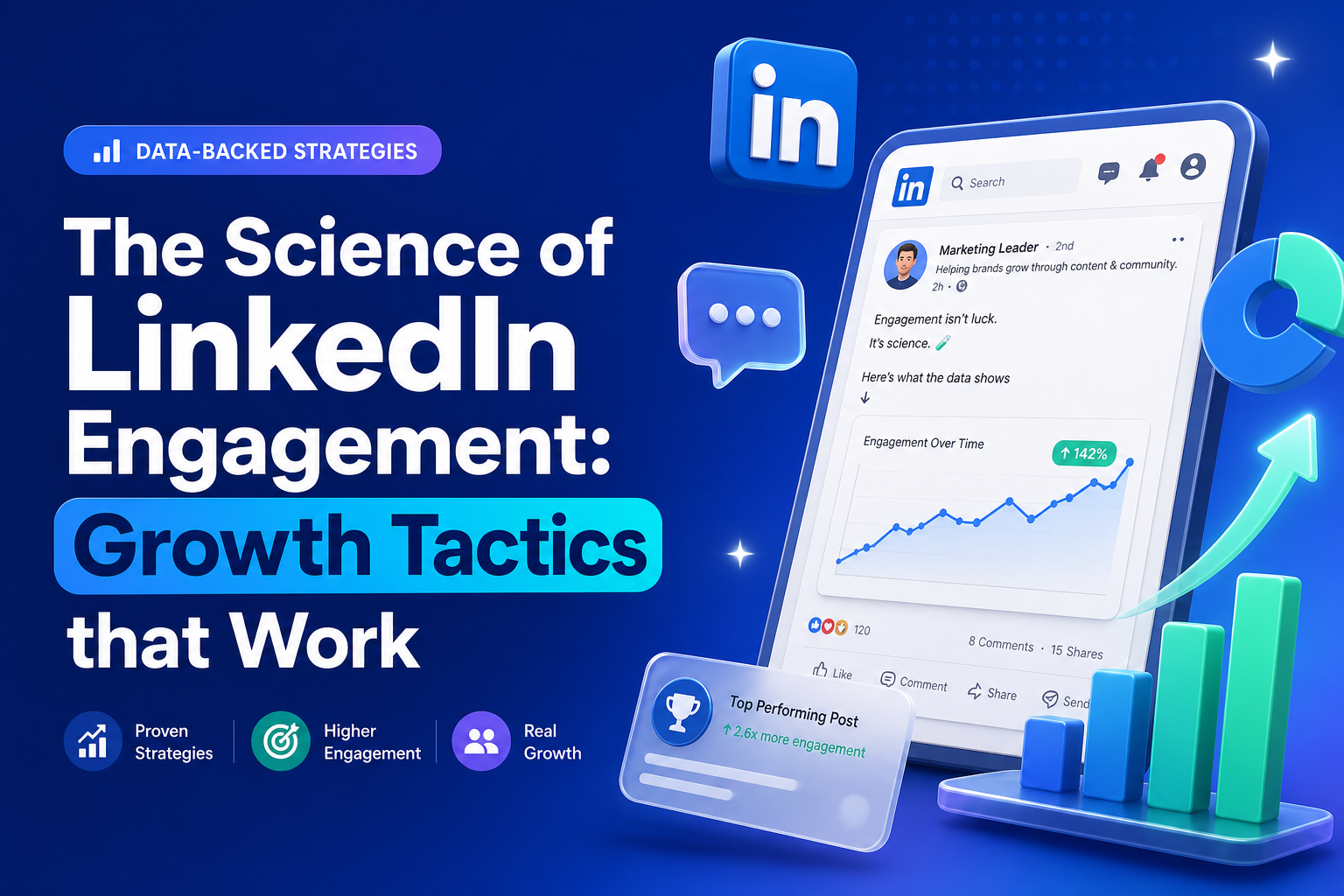
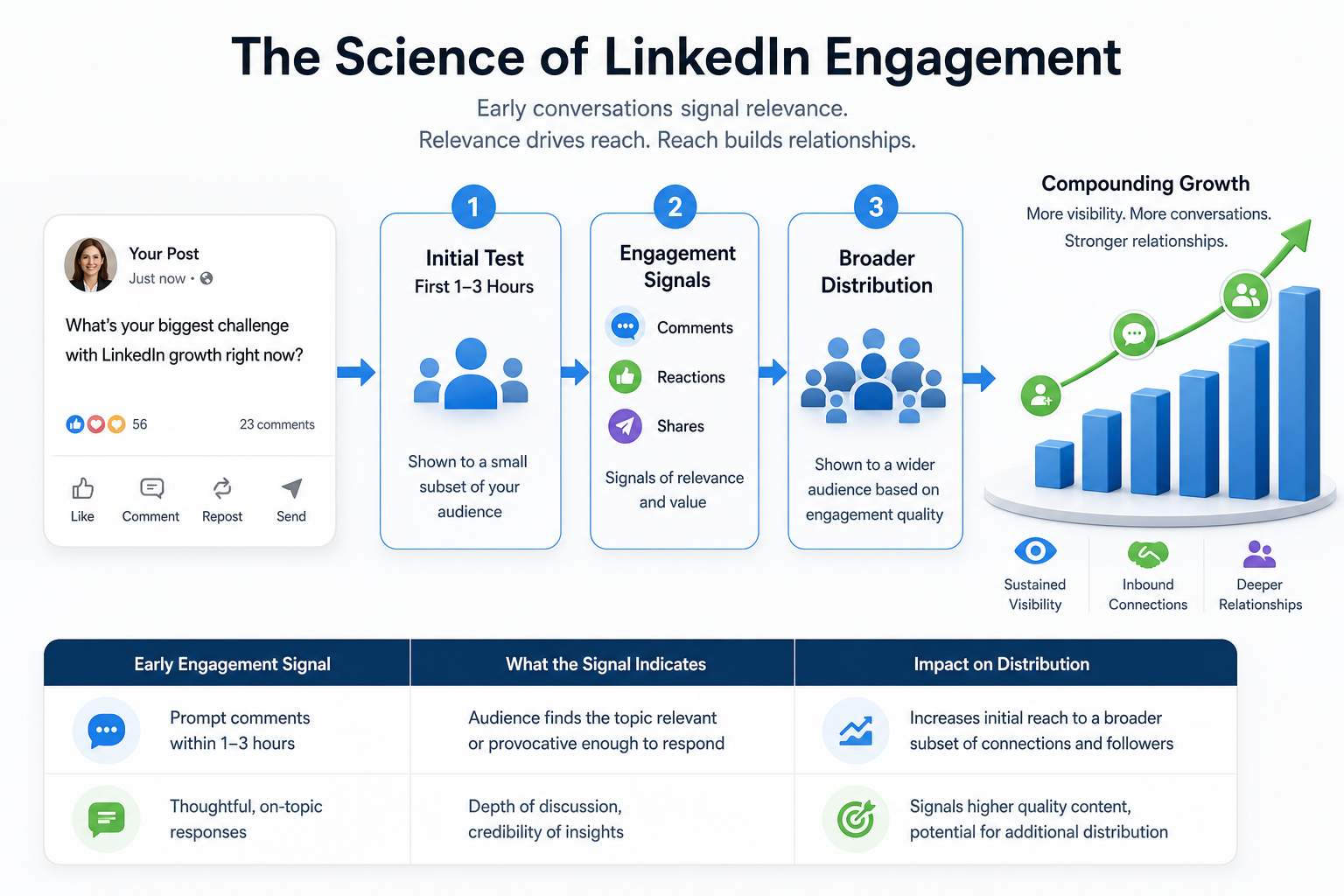
The science of LinkedIn engagement rests on a simple, evidence-based premise: conversations drive visibility. In the early moments after a post goes live, LinkedIn tests the post with a limited subset of your audience. The way people respond in those first hours acts as a signal that determines whether the content will be amplified to a broader group.
When conversations ignite — especially meaningful, on-topic comments that add value — the platform interprets this as higher relevance and willingness to engage, and it expands distribution accordingly.
| Early engagement signal | What the signal indicates | Impact on distribution |
|---|---|---|
| Prompt comments within the first 1 to 3 hours | Audience finds the topic relevant or provocative enough to respond | Increases initial reach to a broader subset of connections and followers |
| Thoughtful, on-topic responses | Depth of discussion, credibility of insights | Signals higher quality content, potential for additional shares |
| Questions asked by viewers | Content invites engagement and clarifies value proposition | Encourages continued commenting and longer viewing time |
| Early likes without comments | Surface agreement but limited active engagement | Moderate impact; helps lift initial impressions but less powerful than conversations |
| Shares from your first-degree connections | External validation and broader exposure | Significant boost to distribution beyond immediate network |
The long-term relationship effect emerges when these signals persist across multiple posts. Consistently generating conversations that matter builds a pattern of reliable visibility, which over months and years compounds into a recognizable personal brand. In this regime, your audience learns what kind of content to expect, how you respond, and when they should engage again.
To translate science into practice, consider these actionable principles:
- Open with a question or a provocative angle that invites discussion in the first sentence or two.
- Encourage dialogue by promptly replying to comments, especially early ones, to keep the feed of conversation moving.
- Anchor value with practical takeaways so readers feel compelled to add their own insights or experiences.
- Monitor early signals and loop back with follow-up posts that deepen the topic if engagement proves strong.
In the broader scheme of LinkedIn Growth Tactics, understanding the interplay between conversations and distribution helps you design content that is not just seen, but actively engaged with. By prioritizing early, meaningful interactions, you position your posts to achieve longer lifespans in feeds and to cultivate durable, trust-based connections with your audience.
The takeaway is clear: treat each post as a conversation starter, not a one-off broadcast. When you skillfully orchestrate early engagement signals, you set the stage for expansion, relationship building, and a sustainable growth curve on LinkedIn.
The 17 LinkedIn Growth Hacks
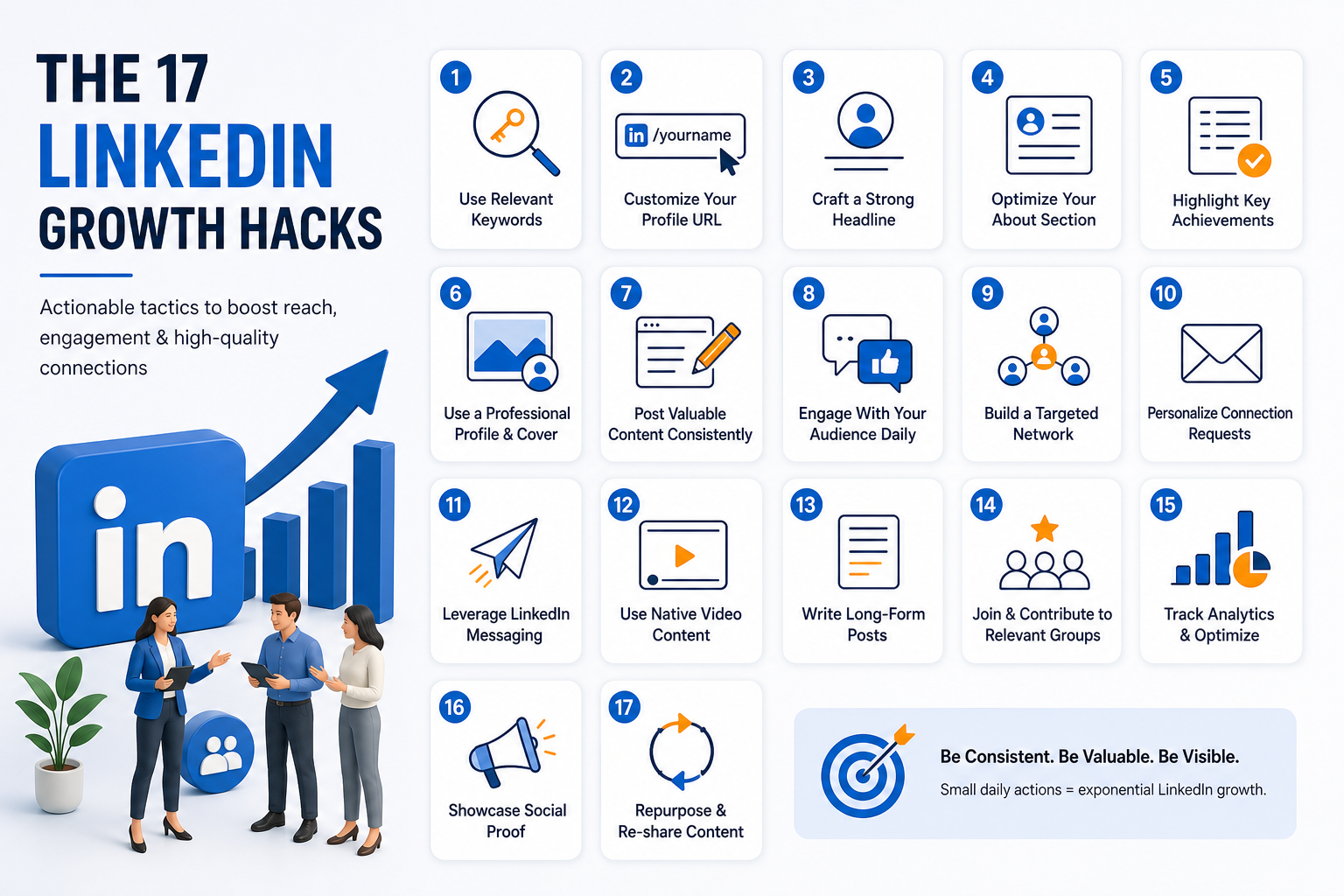
The following proven LinkedIn growth tactics are designed to be actionable, repeatable, and scalable. Each hack includes concrete steps you can execute today to boost reach, spark engagement, and attract higher quality connections. Treat this as a practical playbook you can reference week after week as you refine your LinkedIn Growth Tactics framework.
The following proven LinkedIn growth tactics are designed to be actionable, repeatable, and scalable. Each hack includes concrete steps you can execute today to boost reach, spark engagement, and attract higher quality connections. Treat this as a practical playbook you can reference week after week as you refine your LinkedIn Growth Tactics framework.
-
Use Relevant Keywords
Optimize your profile with the keywords your target audience searches for. Treat your profile like a page on which you want to rank for specific terms.
- Identify 5 to 8 core keywords for your niche by analyzing top profiles in your industry.
- Place these keywords strategically in your headline, About section, and experience descriptions.
- Audit quarterly to refresh keywords based on evolving search intents.
-
Customize Your LinkedIn Profile URL
A clean URL helps you appear credible and improves searchability.
- Replace the default URL with a concise version that includes your name or brand.
- Ensure the URL is easy to share on business cards, emails, and slides.
- Link to the customized URL from other assets to reinforce consistency.
-
Craft a Strong Headline
Your headline should convey value, not just a title.
- Format: What you do for whom, and the outcome you deliver.
- Examples: Helping B2B teams generate $5K MRR through LinkedIn and outreach
- Test variations monthly to identify which phrasing drives more profile visits.
-
Use a Professional Profile Photo
A high-quality headshot with a friendly expression increases initial trust and connection requests.
- Maintain consistent lighting, neutral background, and a clear crop.
- Smile to convey approachability and openness to conversations.
-
Leverage a Compelling LinkedIn Banner
Your banner communicates your value proposition in a single glance.
- Design a banner that highlights your services, target audience, and a clear CTA.
- Use contrasting colors and legible typography to ensure readability on mobile.
-
Highlight Offers in the Featured Section
Direct visitors to your best introductions, lead magnets, or case studies.
- Pin 2–3 items that showcase case studies, guides, or a free consult.
- Pair each item with a concise value proposition and a simple next step.
-
Keep Contact Information Current
Make it effortless for prospects to reach you.
- Update email, calendar link, and other contact channels in your Contact Info.
- Test accessibility by asking a colleague to try reaching you via LinkedIn message.
-
Structure the About Section with AIDA
Turn your About into a mini sales page that drives action.
- Attention: Open with a client pain you solve or a bold stat.
- Interest and Desire: Explain your unique approach and results.
- Action: Include a clear CTA like scheduling a call or downloading a resource.
-
Reorder Profile Sections for Impact
Make your most compelling elements first to capture attention.
- Place Featured before About, so visitors see your offers upfront.
- Follow with Results or Case Studies in the Experience or Featured sections.
-
Make Your Profile Public
Public visibility expands reach beyond your network and improves search indexing.
- Navigate to Settings and Privacy to enable Public Profile visibility.
- Back up with a consistent content posting schedule for continued reach.
-
Post Regularly and Consistently
Consistency signals reliability to the LinkedIn algorithm and your audience.
- Start with a manageable cadence, such as 2–3 posts per week, then scale.
- Track engagement metrics to determine the best days and times for your audience.
-
Incorporate Visuals in Posts
Visual content draws attention and increases scroll stopping power.
- Use high-quality images, GIFs, or short videos to accompany key points.
- Experiment with on-brand color palettes and captions to reinforce memory.
-
Create Carousels for Storytelling
Carousels are highly engaging and facilitate step by step guidance.
- Develop a 6–8 slide sequence that teaches a concept or process.
- Conclude with a strong CTA and a link to a resource or booking page.
-
Use Hashtags Strategically
Hashtags help surfaced content reach relevant audiences when used purposefully.
- Limit to 3–5 targeted hashtags per post, aligned with your niche.
- Include 1–2 niche-specific hashtags in your profile About to aid discovery.
-
Be Prolific with Thoughtful Comments
Commenting on others’ posts expands visibility and demonstrates expertise.
- Block daily or weekly sessions to engage with Influencers, ICPs, and peers.
- Provide actionable insights in your comments to attract profile visits.
-
Use Lead Magnets to Capture Contacts
Lead magnets can generate a large volume of qualified leads when executed well.
- Offer a valuable resource (checklist, template, or mini-guide) in exchange for contact details.
- Promote the magnet via posts and direct messages with a clear CTA.
-
Develop a Clear Content Strategy
Strategic content drives profile visits, builds authority, and feeds the funnel.
- Map content themes to buyer stages: awareness, consideration, decision.
- Rotate formats (text posts, carousels, videos) to keep feed activity diverse.
-
Leverage Networking with Intent
Grow your network with purpose and quality rather than sheer quantity.
- Target ICPs with personalized connection requests that reference a shared context.
- Offer value in your first message, such as a relevant resource or potential collaboration.
-
Host and Participate in LinkedIn Events
Events create real-time engagement and enable direct interaction with your audience.
- Host a short, value-packed event and promote it through posts and DMs.
- After the event, share a summary with actionable takeaways and a CTA for follow-up.
-
Analyze and Adapt with Data
Data informs what works and what does not on LinkedIn Growth Tactics.
- Track metrics such as reach, engagement rate, profile visits, and message responses.
- Run quarterly reviews to prune underperforming tactics and double down on winners.
-
Experiment with Automation Mindfully
Automation can scale outreach, but you must preserve authenticity and compliance.
- Limit automated actions to non-intrusive tasks like first-degree connection onboarding messages.
- Always personalize messages at scale and monitor for engagement quality.
By implementing these 17 LinkedIn Growth Hacks, you can build a durable presence, expand reach, and cultivate a pipeline of qualified connections. The key is to combine consistent effort with targeted optimization, so you continually improve your LinkedIn Growth Tactics and move toward measurable business results.
LinkedIn Growth Hack – Use Relevant Keywords
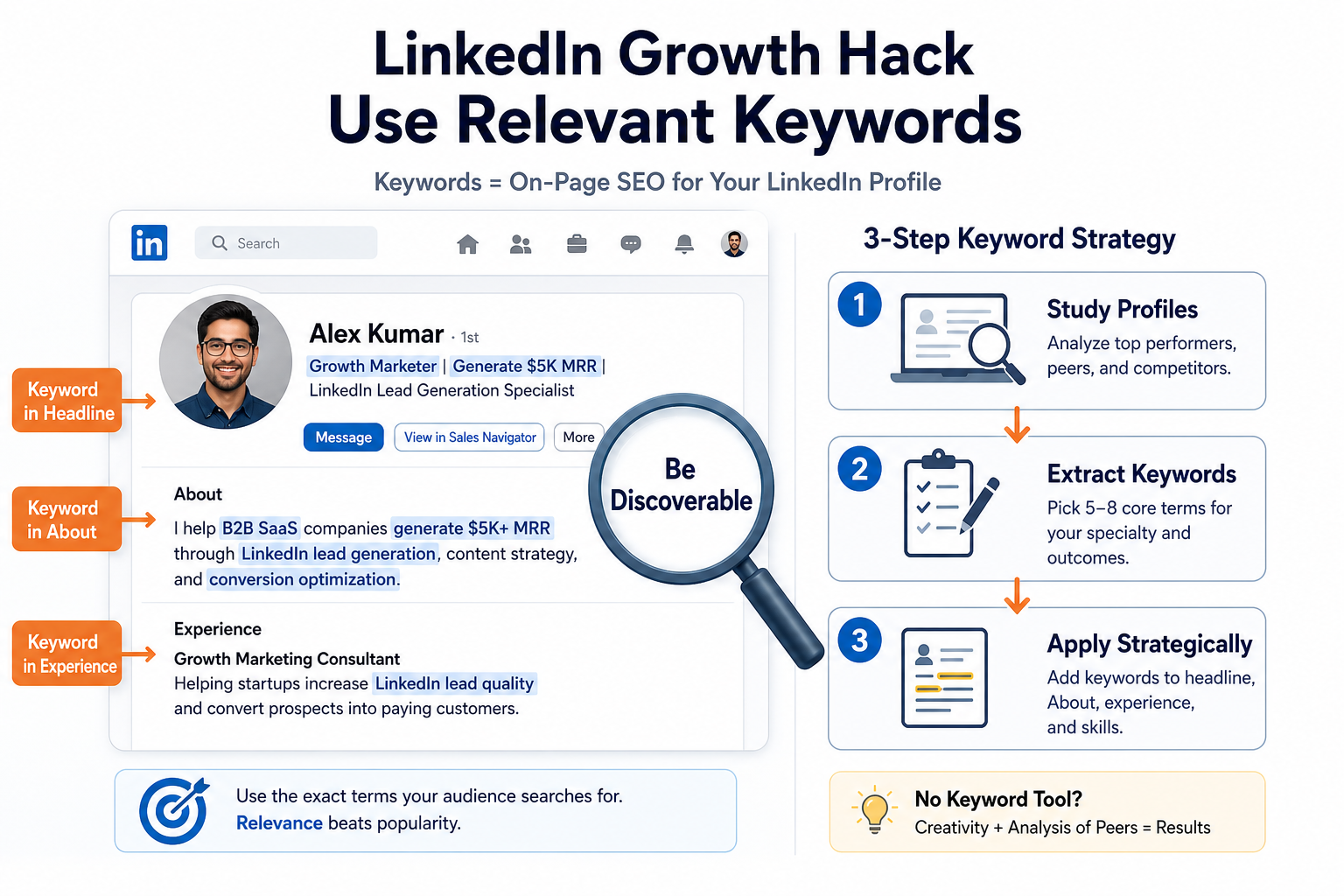
Profile keywords on LinkedIn act as the on-page SEO for your personal brand. They decide when and where your profile appears in search results on LinkedIn and in external search engines. When your target audience searches for terms that describe their challenges, your profile should surface as a relevant solution. Treat each keyword as a signal that you offer something worth considering.
How to approach keyword selection:
- Identify the exact terms your audience uses by watching industry conversations, job titles, and problem statements that surface in comments, posts, and messages.
- Map keywords to outcomes not just roles. For example, instead of only listing growth marketer, include phrases like generate $5K MRR or increase LinkedIn lead quality that describe the value you deliver.
- Prioritize relevance over popularity a keyword that aligns with what you offer will perform better for the right audience than a broad, generic term.
Practical steps you can take today:
- Study industry profiles in your niche. Look at the top performers, peers, and competitors who already attract your target audience. Note the recurring terms they use in headlines, About sections, and experience descriptions.
- Extract a list of core keywords from those profiles. Aim for 5 to 8 core terms that capture your specialty, outcomes, and audience segment.
- Incorporate keywords strategically into:
- The headline, ensuring it communicates the primary value you deliver
- The About section, weaving keywords into your narrative in a natural way
- Experience and project descriptions where relevant, to reinforce context
- Refresh quarterly to reflect shifts in demand, new services, or changes in your target audience’s search behavior.
Important note: there is no dedicated LinkedIn keyword research tool that will automatically generate the perfect list. Success comes from creative experimentation and careful analysis of peers. Be willing to iterate: swap terms, measure profile visits, and observe which searches convert to connections or inquiries.
By aligning your LinkedIn keywords with the language your audience uses, you improve discoverability and position yourself as a relevant solution in a crowded feed. This is the foundational step in the broader LinkedIn Growth Tactics framework that drives sustainable, quality lead flow over time.
LinkedIn Growth Hack – Custom LinkedIn Profile URL
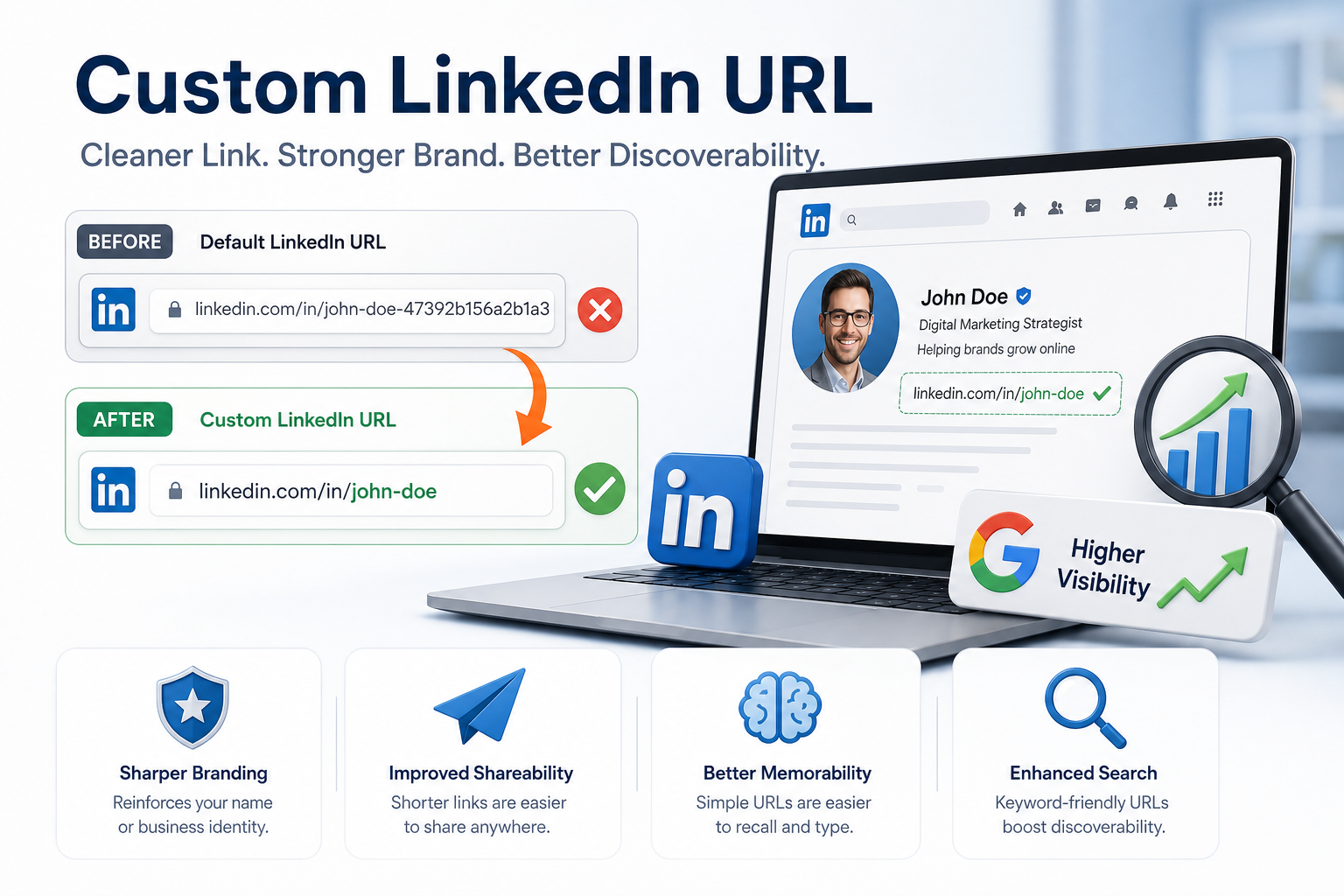
A custom LinkedIn profile URL is more than cosmetic polish. It is a practical asset that boosts credibility and discoverability. Replacing the default string of numbers with a clean, concise link signals professionalism to visitors and makes your profile easier to share in emails, presentations, and business cards. A polished URL also reduces friction for people who want to remember or type your link, increasing the chances they will revisit or recommend your profile.
From a search visibility perspective, a custom URL helps both LinkedIn search and external search engines index and surface your profile more reliably. When your URL contains recognizable elements such as your name or brand, it becomes a stable, keyword-friendly address that search algorithms can parse more easily. This can contribute to higher click-through rates when your profile appears in search results, and it supports a cohesive personal branding signal across your online presence.
Practical advantages include:
- Sharper branding: a neat URL reinforces your name or business identity in every interaction.
- Improved shareability: shorter, cleaner links are easier to paste into messages, bios, and marketing collateral.
- Better memorability: a simple URL is easier for people to recall and type without errors.
- Enhanced search performance: keyword-friendly components in the URL can support discovery on Google and LinkedIn search indices.
How to implement a custom LinkedIn profile URL:
- Check availability: go to your LinkedIn profile settings and look for the option to edit your public profile URL.
- Choose a concise format: typically use your full name, a close variant, or your brand name. If your name is common, consider adding a middle initial or a professional niche descriptor (for example, Jane-Doe-UX or JaneDoeDesign).
- Keep it consistent: align the URL with other online properties such as your website domains and social handles to create a coherent digital footprint.
- Avoid special characters: stick to letters, numbers, and hyphens to maximize compatibility across devices and platforms.
- Test and share: after updating, test the link in emails and signatures to ensure it resolves correctly for both LinkedIn users and search engines.
After you set a new custom URL, monitor its impact on profile visits and inquiries over the coming weeks. A clean URL alone does not guarantee traffic growth, but it reduces friction, strengthens your professional image, and supports the broader LinkedIn Growth Tactics framework by aligning discovery and branding across channels.
LinkedIn Growth Hack – Professional Picture
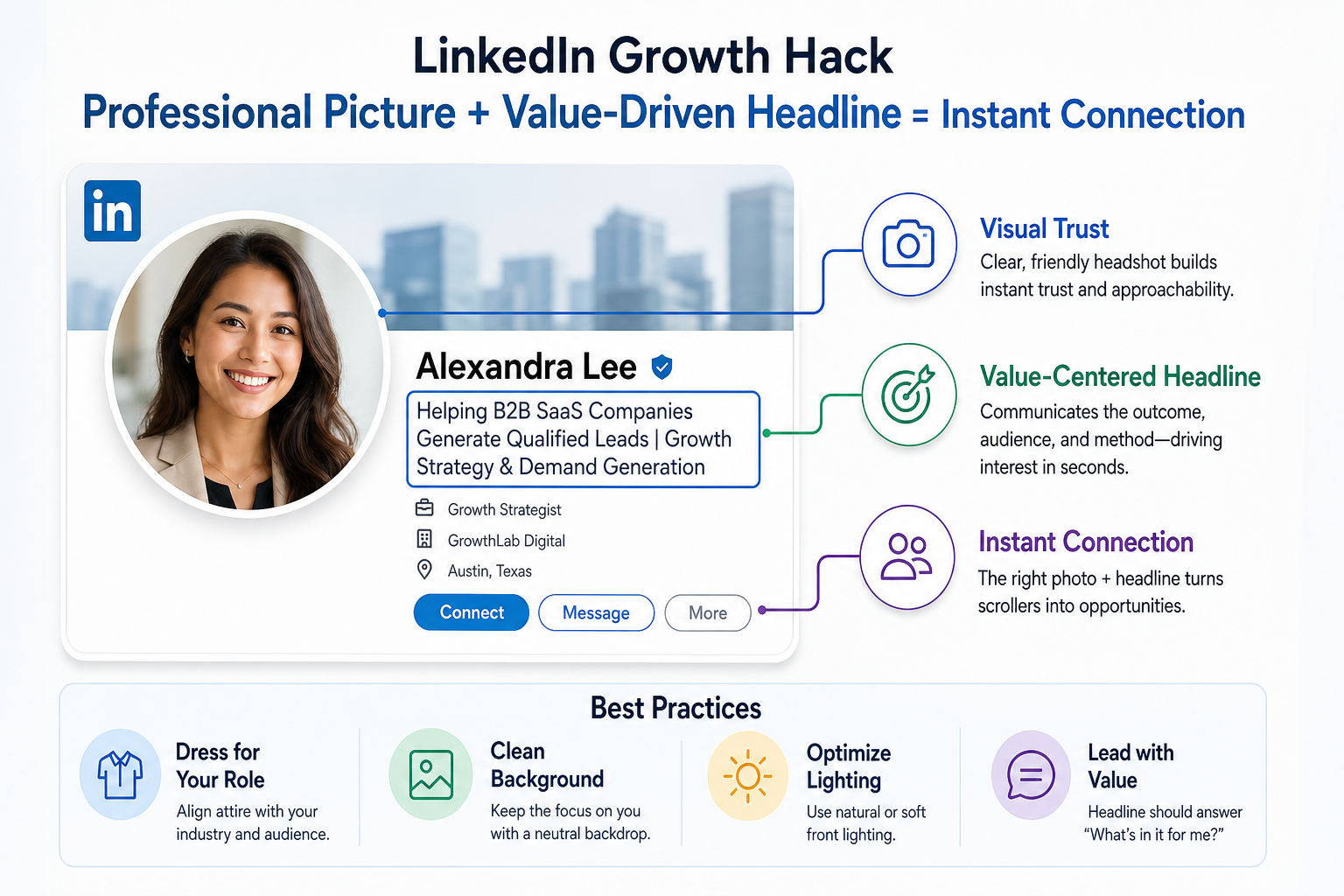
A clear, friendly profile picture is more than a cosmetic detail; it is the first handshake a visitor experiences in a crowded feed. In an instant, your headshot communicates approachability, trustworthiness, and professionalism. When paired with a headline that clearly communicates value, your profile converts passive scrolling into meaningful connection at a pace that matters for growth.
The impact comes from two synchronized elements:
- Visual trust: a high quality, well lit headshot with a warm expression signals openness to conversation and collaboration. This reduces cognitive friction and increases the likelihood that a viewer will stop and read your bio.
- Value-centered messaging: a headline that immediately answers the audience’s question of “what’s in it for me” consolidates interest created by the photo and guides the reader toward further engagement.
Practical guidelines to boost impact:
- Dress for your role: align attire with your target audience and industry norms to reinforce credibility.
- Use a clean background: a neutral or uncluttered backdrop keeps the focus on your face and reduces distractions.
- Optimize lighting: natural light or soft front lighting highlights features without harsh shadows.
When you craft your headline to accompany the photo, aim for a concise value proposition. Think in terms of the outcome you enable, the audience you serve, and the method you use. For example, a strong pairing could be: Helping B2B teams generate qualified LinkedIn conversations in 30 days or Turning LinkedIn connections into measurable pipeline for SaaS teams. The goal is to create an immediate bridge from image to promise.
In practice, test variations and observe how profile visitors respond:
- Compare engagement signals: do we see more profile visits, connection requests, or message inquiries after updating the photo?
- Experiment with expressions: a friendly smile generally outperforms a neutral look in driving initial clicks.
- Align with your brand voice: ensure the tone of your photo and headline reflects the personality you want associated with your professional brand.
The combination of a clear headshot and a value-driven headline reduces friction in the crowded LinkedIn feed, accelerates first impressions, and sets the stage for deeper engagement. This is a foundational lever in the broader LinkedIn Growth Tactics framework, helping you stand out without shouting and inviting the right conversations to begin right away.
LinkedIn Growth Hack – Contact Information
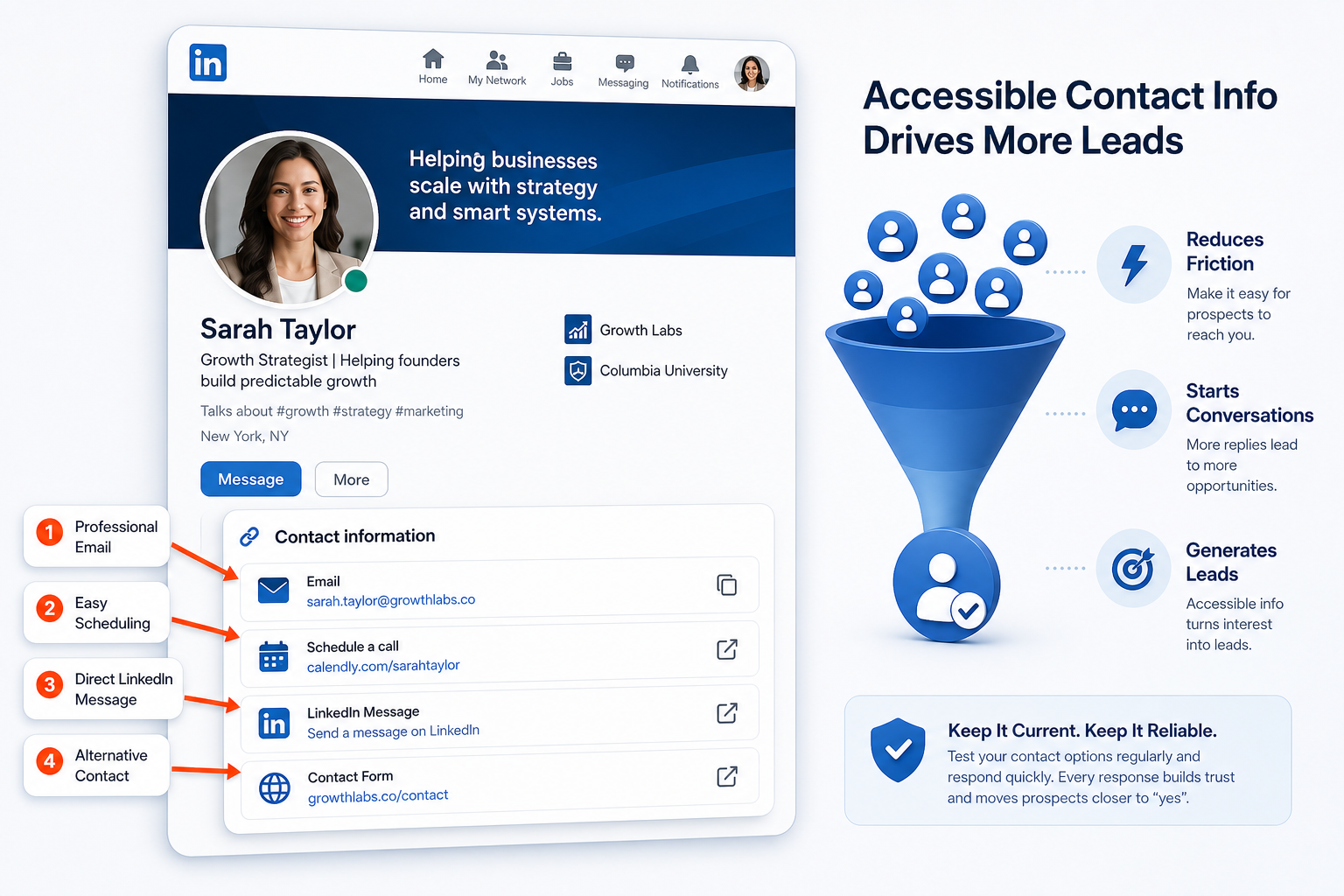
Accessible contact information is a fundamental lever in LinkedIn Growth Tactics. When prospects land on your profile, they should be able to reach you with minimal friction. A well organized contact section reduces hesitation, accelerates conversations, and increases the chance that a follower becomes a lead or client. The goal is to remove every possible barrier between curiosity and action.
Practical steps to ensure contact details are current and easy to use:
- Update primary contact channels: include a professional email address, a calendar link for scheduling, and a direct LinkedIn message path. Avoid outdated emails or generic inboxes that delay responses.
- Simplify your calendar integration: connect a single, reliable scheduling tool and display its link prominently. Consider a short, memorable booking page that you can reference in messages and posts.
- Use a dedicated business email: prefer a domain email that aligns with your personal brand or company, which signals legitimacy and improves deliverability.
- Validate accessibility: test your contact options yourself and ask a colleague to confirm messages reach you within a defined time window. Accountability reduces missed opportunities.
- Offer alternative contact paths: provide a secondary route such as a contact form or a brief DM workflow for people who prefer messaging over email.
The role of accessible contact information in lead generation is twofold. First, it lowers the friction cost of initiating dialogue. When a potential client can reach you instantly through a familiar channel, the probability of engagement rises. Second, it reinforces trust. Clear, visible contact options signal professionalism and reliability, which are essential attributes for converting profile visitors into qualified leads.
Design and placement considerations to maximize impact:
- Prominent placement: feature the contact link near your About section and within the Featured section where visitors look for next steps.
- Consistent labeling: use action oriented labels like “Schedule a Call,” “Email Me,” or “Book a Demo” rather than generic phrases.
- Privacy and boundaries: set expectations about response times and the type of inquiries you handle to maintain boundaries and quality conversations.
- Analytics awareness: if your tools offer tracking, monitor which contact channels generate the most inquiries and adjust your strategy accordingly.
A streamlined contact strategy becomes a durable asset in your LinkedIn Growth Tactics framework. By ensuring that every message or email reaches the right person quickly, you turn curiosity into conversations, conversations into meetings, and meetings into opportunities. Regularly review and refresh contact details to keep pace with changes in tools, policies, and personal availability.
LinkedIn Growth Hack – Post Regularly to Keep People Interested
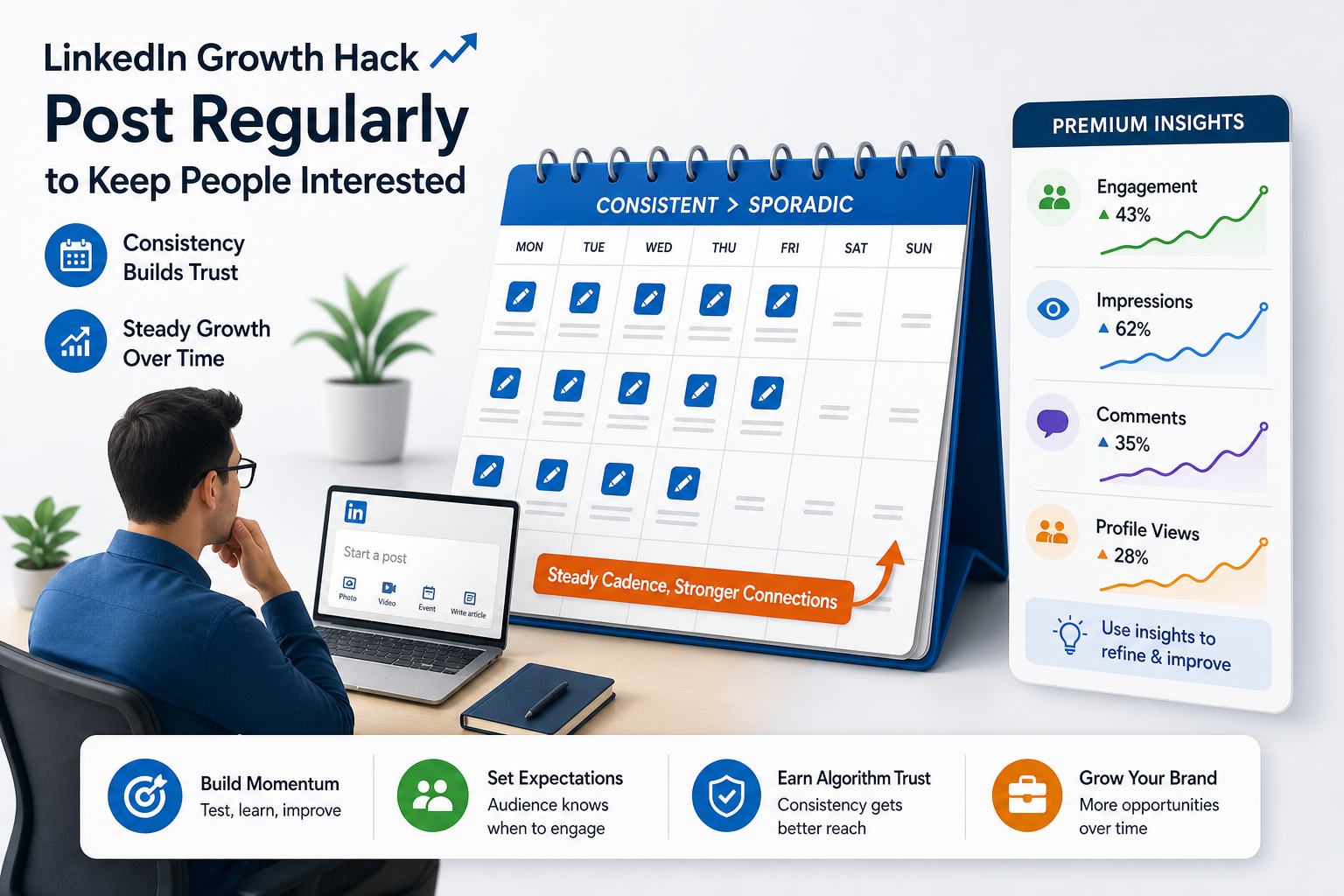
Consistency beats bursts of activity every time on LinkedIn because regular presence builds familiar rhythm with your audience. When you show up predictably, your audience learns when to expect new insights, lessons, and practical takeaways from you. This reduces the friction of engagement for your followers and increases the likelihood that they will return, comment, share, or initiate conversations. Sporadic posting often feels like a shout in the void, whereas steady posting creates a trusted cadence that compounds over weeks, months, and quarters.
The value of posting regularly goes beyond visibility. It accelerates the learning loop for both you and your audience:
- Momentum accumulation: a routine sequence of posts helps you test hypotheses, iterate formats, and refine messaging based on ongoing feedback from comments and reactions.
- Audience expectation: readers begin to anticipate the pattern, creating a sense of belonging and a reason to engage when new content appears.
- Quality signals: consistency signals reliability to the LinkedIn algorithm, which rewards creators who deliver steady value over time rather than sporadic spikes.
- Portfolio effects: a steady stream of posts builds a catalog of insights that strengthen your personal brand and support lead generation, speaking engagements, or consulting opportunities.
How often should you post to establish a healthy cadence without risking burnout? Start with a manageable baseline and scale as you gain comfort:
- Baseline: 2 posts per week to establish presence without overwhelming yourself.
- Stability: 3 posts per week once the routine feels natural and you can maintain quality.
- Scale: 4 to 5 posts per week when you have a clear content engine, a backlog of ideas, and focused audience feedback.
Premium insights can significantly improve the effectiveness of your regular posting. These tools provide visibility into who is engaging with your content, when they are online, and how long they stay with your post. Leverage these insights to refine your cadence, formats, and topics:
- Engagement visibility: Premium data reveals the demographics and professional roles of your most engaged audience, helping you tailor future topics to their interests and pain points.
- Best times to post: Insights highlight when your network is most active, enabling you to schedule posts for maximum initial reach and encouragement of conversation in the first hours after publishing.
- Content format performance: By comparing performance across text posts, carousels, and short videos, you can allocate effort to the formats that consistently yield the strongest engagement from your core audience.
- Reply velocity guidance: Premium signals encourage timely engagement; replying quickly to early comments preserves momentum and improves distribution in feeds.
To translate premium insights into action, try these practical steps:
- Create a weekly content plan: map a theme for each week, outline 2 to 3 post ideas, and reserve time for engagement after publication.
- Publish with intention: pair every post with a clear objective, whether it is to spark conversation, drive a resource download, or invite a direct message discussion.
- Monitor early signals: in the first 1 to 3 hours, observe who engages and how they respond; adapt your follow-up posts to address questions or gaps raised in comments.
- Iterate formats based on insights: if carousels consistently outperform text posts among your premium audience, incorporate more slides that tell a step by step story.
The overarching principle is that regular, value driven posting creates a reliable engine for growth. When you couple discipline with the deeper visibility offered by premium engagement insights, you can fine tune your messaging, refine your audience targeting, and expand reach more efficiently. This combination of steady output and data informed adjustment anchors your LinkedIn Growth Tactics in real world results rather than guesswork.
In the end, the most durable growth comes from a predictable rhythm, a willingness to learn, and the discipline to apply what the data reveals. Maintain your cadence, lean into premium insights to sharpen your strategy, and your audience will reward the consistency with rising engagement, stronger relationships, and a growing pipeline of opportunities.
LinkedIn Growth Hack – Use Visuals in Your Posts
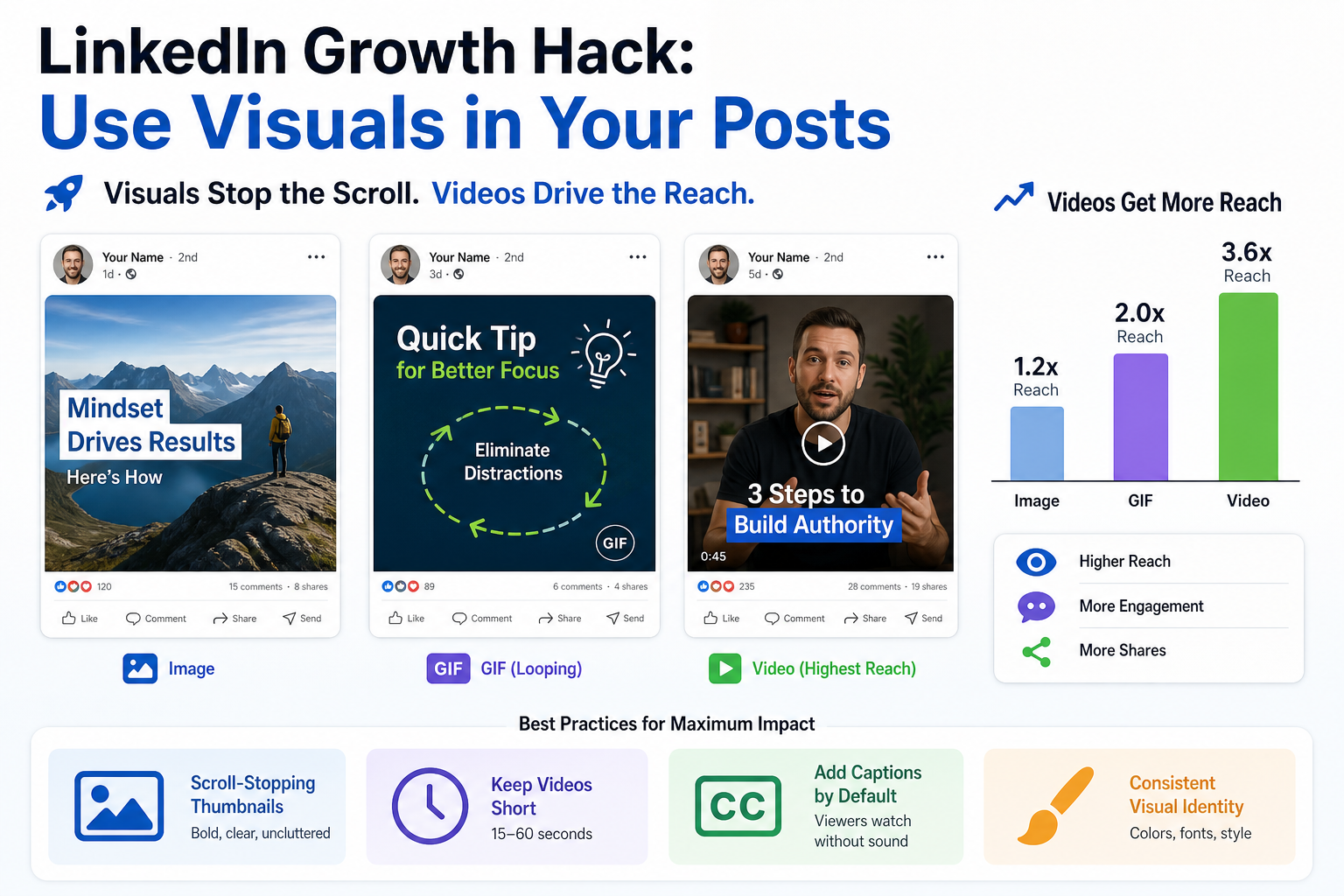
Visual content is the fastest way to stop the scroll on LinkedIn and capture attention in a crowded feed. As users scroll quickly through feeds, high quality images, short looping GIFs, and especially videos can convey complex ideas in an instant. Visuals not only attract the eye but also frame your message, making it easier for viewers to grasp the value you offer within a single glance.
The power of video on LinkedIn is well demonstrated by reach and engagement patterns. Short videos tend to keep viewers longer, increase dwell time, and prompt more meaningful interactions than text alone. When a video is informative, concise, and emotionally resonant, it is more likely to be shared and to appear in feeds beyond your immediate network. This compounds reach over time and helps establish you as a credible voice in your niche.
Practical guidelines to maximize impact with visuals:
- Use scroll stopping thumbnails: choose images that preview the idea, include a bold headline, and avoid clutter so users know instantly what they will learn.
- Keep videos tight: 15 to 60 seconds for most posts, with the core insight delivered within the first 5 to 10 seconds to ensure completion or loop views.
- Add captions by default: many viewers watch without sound, so on screen text that conveys the key point boosts comprehension and retention.
- Leverage a consistent visual identity: maintain a recognizable color palette, typography, and framing so your content is instantly identifiable in feeds.
- Prefer native formats: upload videos directly to LinkedIn rather than linking to external platforms to boost autoplay and completion rates.
When planning visuals, map each post to a clear objective and choose the format that best supports it. For example:
- Idea explanation -> short explainer video or a 6–8 slide carousel with visual steps.
- Process walkthrough -> screen recording with on screen annotations and captions.
- Data or results -> infographic or animated chart demonstrating the outcome.
Metrics to watch as you experiment with visuals include reach, view duration, engagement rate, and the ratio of comments to likes. Video often yields higher reach and engagement because it signals richer value and longer viewing time to the LinkedIn algorithm. Carousels and GIFs also perform well by encouraging swipes and active interaction, which in turn can boost distribution and visibility.
Ready to test visuals in your next LinkedIn post? Start with a simple three post experiment:
- Post a short video aligned to a single takeaway, with captions and a CTA in the description.
- Publish a visuals driven carousel that breaks down a process into 6 to 8 slides with clean visuals and supporting text.
- Share a static image or infographic that presents a key insight or data point with a concise caption.
Compare the results across formats to identify which visual approach resonates most with your audience. Over time, a disciplined mix of visuals that align with your value proposition will improve not only post performance but also memory recall, brand recognition, and your ability to attract qualified conversations and connections on LinkedIn Growth Tactics.
LinkedIn Growth Hack – Create Carousels
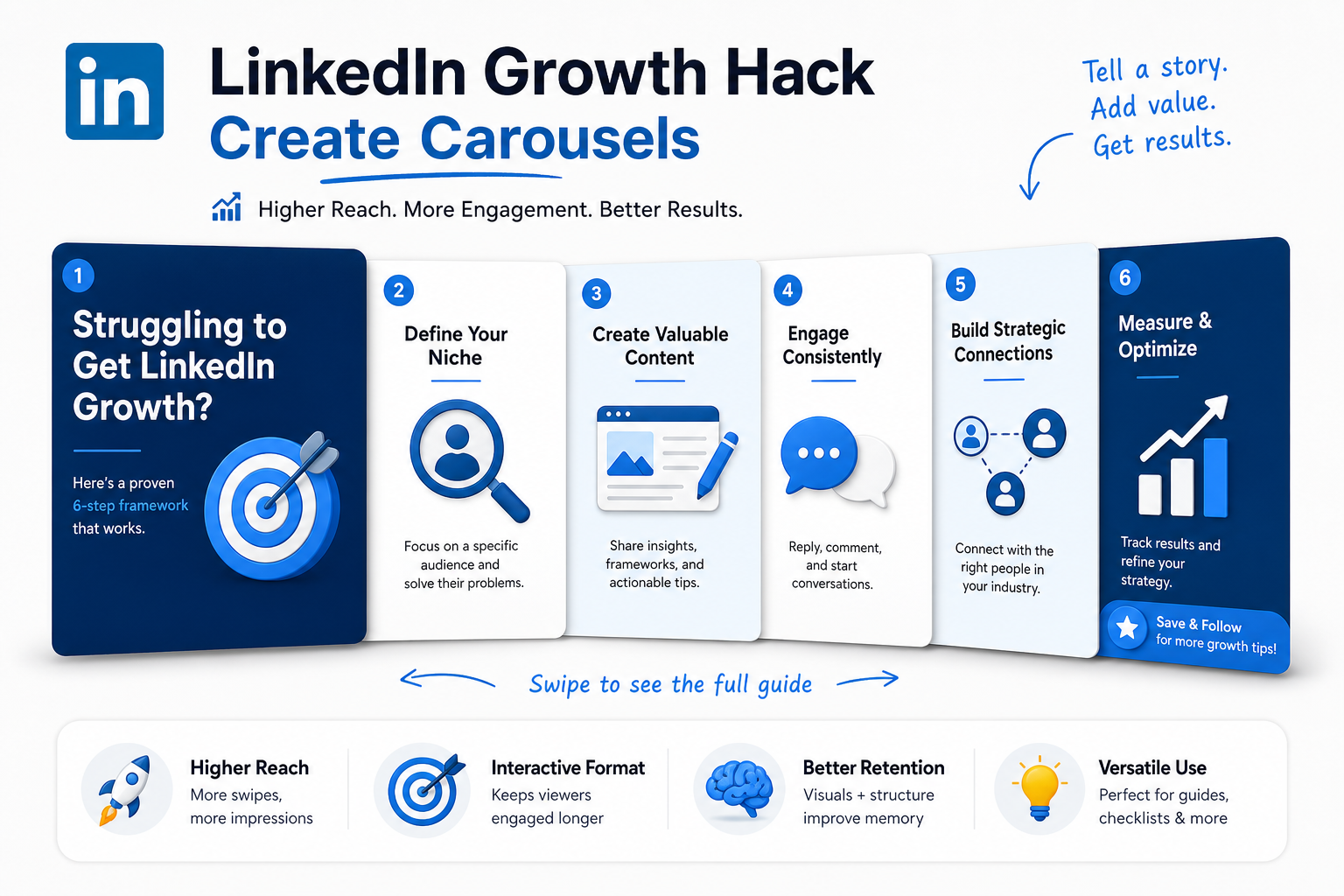
LinkedIn carousels are among the most powerful post formats for reach and engagement. They invite interaction and keep viewers swiping through a guided narrative. By combining concise text with visuals, carousels turn a single idea into a mini presentation. They prompt viewers to invest time, reflect on the content, and share their own takeaways. When designed effectively, these multi-slide experiences can outperform standard posts in reach and dwell time, signaling value to the LinkedIn algorithm.
The core advantages of carousel posts include:
- Story driven format: each slide builds on the previous one, guiding the reader from problem to solution.
- Higher reach potential: the interactive nature encourages more impressions as viewers swipe and spend longer on the post.
- Better memory retention: visuals paired with structured copy reinforce key concepts, making the content more memorable.
- Versatile use cases: ideal for process explanations, checklists, frameworks, case studies, and product walkthroughs.
How to design carousels that perform:
- Define a tight narrative arc: outline a 6 to 8 slide sequence that takes readers from a pain point to a clear outcome, including a final slide with a strong call to action.
- Lead with a compelling hook: the first slide should pose a question or a bold stat that makes people want to swipe for context and solution.
- Use a consistent visual language: maintain a recognizable color palette, typography, and layout across all slides to reinforce brand identity and readability.
- Balance text and visuals: keep copy concise and let visuals illustrate the point. Use short headlines, supporting bullets, and captions on each slide when needed.
- Prioritize scannability: design slides with generous white space, readable font sizes, and clear focal points so readers can grasp the idea at a glance.
- Include actionable steps: end with a practical takeaway and a clear next step, such as a resource download, a scheduling link, or an invitation to comment.
- Test and optimize: experiment with different slide counts (6 to 8 is common), formats (text heavy vs. image heavy), and CTA placements to identify what resonates with your audience.
Practical creation tips to maximize impact:
- Slide structure template:
Slide 1 – Hook
Slide 2–5 – Core content with visuals
Slide 6 – Case example or checklist
Slide 7 – Key takeaway
Slide 8 – CTA - Visuals that support the narrative: use diagrams, icons, or annotated screenshots to illustrate steps and outcomes without overwhelming copy on any single slide.
- Captions that add value: write a concise caption for the post that summarizes the carousel and reinforces the CTA without duplicating slide text.
- Accessibility considerations: ensure sufficient color contrast and include alt text or descriptive slide titles for readers using assistive technologies.
Example use cases you can adapt quickly:
- Process walkthrough: a 6 to 8 slide guide showing a step by step approach to a common workflow, with each slide representing a stage of the process.
- Framework tutorial: present a simple framework, break down each component on successive slides, and provide practical application tips.
- Case study snippets: outline the challenge, approach, results, and learnings across slides to demonstrate impact in a compact form.
Trackable outcomes from carousels include greater profile visits, increased saves and shares, and more direct messages from viewers seeking deeper engagement. When you pair carousels with a clear value proposition and a compelling CTA, you create a repeatable engine for growth that aligns with the broader LinkedIn Growth Tactics framework.
Ready to deploy your next carousel? Start with a 6 slide blueprint that highlights a concrete result you can deliver, craft two or three visuals that illustrate the steps, and publish with a CTA that invites comparison or a direct conversation. As you accumulate data, refine your narrative structure and visuals to consistently move readers from curiosity to action.
linqin.ai — Our Approach to LinkedIn Growth
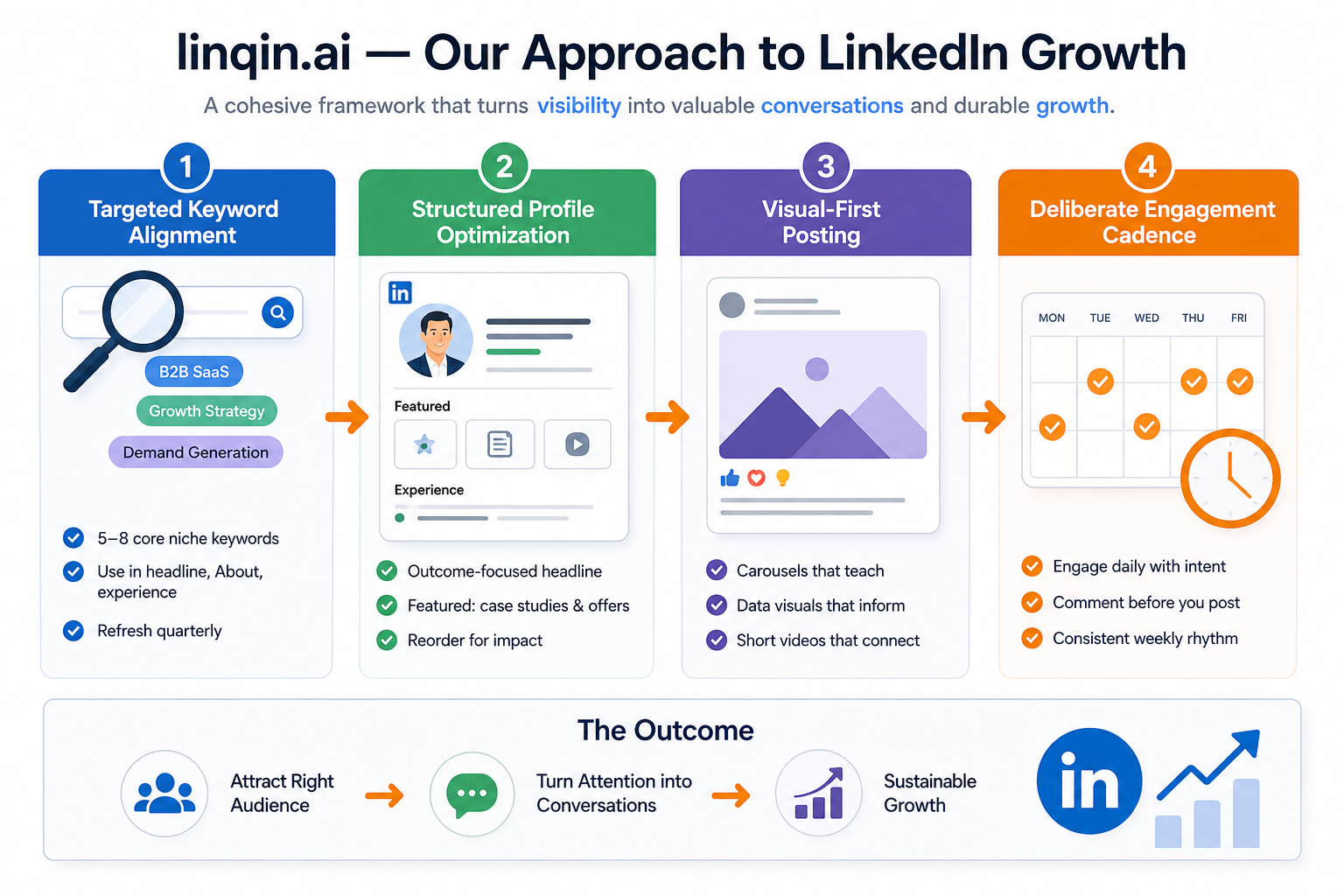
At linqin.ai we weave proven LinkedIn Growth Tactics into a cohesive, repeatable framework designed to build durable visibility over time. The core idea is to treat LinkedIn as a systems problem rather than a one-off tactic. By aligning keyword strategy, profile structure, post composition, and engagement cadence, we create a predictable engine that attracts the right audience, converts attention into conversations, and sustains growth beyond viral moments.
The framework rests on four interconnected pillars:
| Pillar | What it covers | Key practices |
|---|---|---|
| Targeted keyword alignment | Positioning your personal brand around the terms your audience actively searches for |
|
| Structured profile optimization | Transform your profile into a clear, value driven sales page |
|
| Visual first posting | Use formats that stop the scroll and communicate value quickly |
|
| Deliberate engagement cadence | Build conversations that drive distribution while managing workload |
|
The practical outcome of this four-part architecture is a growth loop. Each element reinforces the others:
- Keyword alignment informs your content topics and messaging so every post answers a real search intent.
- Structured profiles convert profile visits into meaningful conversations by clarifying value and next steps.
- Visual first posting accelerates initial engagement and expands reach through richer, more shareable formats.
- Engagement cadence creates predictable momentum, enabling scalable growth without burnout.
How this translates in practice is visible across four operational rhythms:
| Rhythm | Focus | Measurement |
|---|---|---|
| Weekly themes | Title content with a clear value proposition for the week | Profile visits, post saves, and comment quality |
| Cadence tuning | Balance posting frequency with engagement capacity | Engagement velocity, reply time, and backlog of ideas |
| Format mix | Rotate between text posts, carousels, and short videos | Format performance by audience segment |
| Feedback loops | Use comments and messages to refine topics and CTAs | Conversion rate from profile to inquiry |
A deliberate approach to keyword alignment, profile structure, visuals, and engagement is not about chasing viral luck. It is about building a durable signal that LinkedIn recognizes as trustworthy, helpful, and scalable. When you implement these practices in concert, you create a shared language with your audience, a recognizable silhouette in feeds, and a clear path from curiosity to conversation to collaboration.
In the broader context of LinkedIn Growth Tactics, our approach emphasizes:
- Consistency over intensity to compound visibility over time
- Relevance over reach to attract qualified connections and opportunities
- Quality engagement to deepen relationships without compromising focus
By treating LinkedIn as a disciplined system, you reduce guesswork and increase predictability. The result is a sustainable growth trajectory that scales with your business goals and evolves with the platform.
Measuring Success and Next Steps
Measuring success on LinkedIn Growth Tactics goes beyond counting likes or views. The true signal of progress is the quality of engagement and the progression of relationships from initial attention to meaningful conversations and measurable outcomes.
This section offers a practical framework to track engagement quality, interpret qualitative interactions, and define concrete next steps for ongoing optimization using the Hacks framework.
1) Track Engagement Quality Beyond Vanity Metrics
Vanity metrics such as reach or impressions tell you that someone saw your content, but they do not reveal interest, intent, or potential value. Use a balanced scorecard that combines behavioral signals, qualitative feedback, and outcome indicators.
| Metric Category | What It Signals | How to Measure | Target Indicator |
|---|---|---|---|
| Conversation Depth | Quality of comments and dialogue relevance | Tag and analyze comments for insight depth, problem framing, and practical questions | Average comment length > 15 words; percentage of comments that pose a follow up question or offer an example |
| Lead Intent Signals | Indications of buyer or collaborator interest | Track actions such as DMs requesting more information, resource downloads, or calendar bookings | Direct inquiries or resource downloads per 5 to 10 posts |
| Response Velocity | Timeliness of engagement and momentum maintenance | Measure time to first comment reply and subsequent follow ups within 24 hours | Reply within 2 hours for the first 3 comments if possible |
| Quality Conversions | Progress from profile visits to meaningful actions | Link clicks to resources, bookings, or form submissions; track conversion path | Conversion rate from profile visit to calendar booking or lead capture |
| Audience Shift | Growth of the right audience over time | Segment follower growth by ICP, industry, or buyer stage | Net new ICP followers per month |
To make these metrics actionable, assign a simple scoring rubric to each interaction. For example:
- Comment quality: 0 = generic, 1 = insight with a suggestion, 2 = detailed analysis or case
- Intent signal: 0 = none, 1 = asks for resource, 2 = requests a meeting
- Momentum: 0 = stall, 1 = quick follow up, 2 = multiple back and forth
Aggregate these scores weekly to gauge whether your content is moving conversations forward. A rising average score indicates that you are elevating engagement quality, not just volume.
2) Interpret Qualitative Interactions
Qualitative signals provide rich context that numbers alone cannot convey. Develop a method to interpret comments, messages, and replies in a structured way.
- Categorize Interaction Type:
- Problem Framing: the commenter describes a pain point in their own words
- Validation: agreement or resonance with a concept
- Request for Help: asks for guidance, tool, or next steps
- Opportunity Nudge: hints at potential collaboration or business need
- Identify Unspoken Needs:
- Notice recurring themes across several comments, such as price sensitivity, timelines, or decision criteria
- Look for suggested improvements or unmet expectations you can address in future content
- Assess Sentiment and Trust:
- Positive tone with specifics often signals readiness to engage further
- Constructive critiques reveal trust boundaries you can address with case studies or testimonials
Turn qualitative insights into concrete content decisions. For example, if many comments request a quick framework, plan a carousel or short video that delivers that exact framework with steps and templates.
3) Establish Next Steps for Ongoing Optimization
The Hacks framework is designed to be iterated in small, measurable cycles. Use a structured quarterly rhythm to apply learnings, test hypotheses, and lift results without burning out.
- Review and prioritize outcomes:
- Assess last quarter’s engagement quality scores and identify the top 2 to 3 themes that consistently produced higher conversation depth
- Prioritize content formats and topics that align with those themes
- Plan a focused content sprint:
- Draft 6 to 8 posts centered on a single theme that addressed the high value signals from qualitative feedback
- Allocate 2 days for creation and 1 day for engagement after publication
- Apply the Hacks in sequence:
- Keyword alignment to ensure the theme surfaces in search
- Visual first posting to maximize initial engagement
- Carousels or short videos to deepen understanding
- Deliberate engagement cadence to sustain momentum
- Set concrete targets:
- Aim for a 10 to 20 percent increase in meaningful conversations month over month
- Target a specific number of booked conversations or qualified leads per quarter
- Instrument a feedback loop:
- Create a simple dashboard to track the metrics from the earlier table
- Include a quarterly qualitative review to capture insights from comments and messages
Practical implementation tips:
- Use a labeling system: tag each post with a theme tag, format tag, and engagement goal to simplify reporting
- Schedule review sprints: set a recurring 90-minute slot every 4 to 6 weeks to evaluate progress and adjust plans
- Document learnings: maintain a living playbook with the outcomes of experiments and recommended next steps
By integrating qualitative interpretation with a disciplined measurement framework, you can transform every post into a learning opportunity and every conversation into a stepping stone toward concrete business outcomes. This approach aligns with the Hacks framework by ensuring that growth is purposeful, scalable, and sustainable over time.
4) Quick Reference: Action Plan for Hacks
- Select a hack or two to optimize this quarter and set a clear objective for each.
- Define measurement hooks by tying each objective to the metrics in the engagement quality table.
- Execute with a calendarized cadence, including content creation, posting, and daily engagement blocks.
- Review outcomes using both quantitative scores and qualitative notes, then decide which hacks to double down on.
Overall, success with LinkedIn Growth Tactics comes from decoding signals inside conversations and turning them into concrete actions. Maintain a disciplined loop of optimization.
Keep metrics paired with qualitative interpretation and a clear next steps plan to build a durable growth engine that evolves with the platform and scales with your goals.