Most advice about LinkedIn thought leadership is wrong in one important way. It treats growth like a publishing problem. Post more, post consistently, post longer, post smarter. That sounds reasonable, but it ignores how attention moves on LinkedIn.
A strong post in an empty room still underperforms. A sharp comment in a live conversation can outperform it because distribution comes first. That's why teams spend weeks polishing posts, watch impressions come in, and still can't answer the only question that matters: did any of this create pipeline?
LinkedIn is massive. By early 2025, it surpassed 1.1 billion users globally, with more than 77% of users outside the U.S. and the largest age group worldwide being 25 to 34 according to this roundup of verified thought leadership statistics. The opportunity is obvious. The execution gap is what hurts. Most brands still run thought leadership like a content calendar, not a measurable demand engine.
Table of Contents
- The Thought Leadership ROI Paradox
- Foundation First Defining Your Audience and Pillars
- The Comments-First Workflow to Borrow Reach
- Creating Content That Converts From Voice to Posts
- Closing the Loop with Analytics and Lead Tracking
- Scaling with Systems Calendars and Team Advocacy
The Thought Leadership ROI Paradox
The biggest mistake in LinkedIn thought leadership is assuming original posting is the main driver of growth. It isn't. Original content matters, but isolated posting often produces weak distribution and even weaker attribution.

The paradox is simple. Most playbooks tell you to create more original content, yet the underlying reach mechanics reward interaction. As TBH Creative's analysis notes, 95% of cited content is original, but interaction drives a significant portion of reach, and only 29% of organizations can link sales leads back to specific content pieces. That's the blind spot. Teams are publishing into a system they aren't measuring properly.
Why isolated posting disappoints
A founder writes a smart post. A sales leader shares a contrarian take. A marketing operator publishes a useful framework. If nobody sees it early, the post stalls. Good thinking doesn't rescue weak distribution.
That's why “just post consistently” is incomplete advice. Consistency helps, but it doesn't solve for discovery. Comments on high-visibility posts do.
Practical rule: If your best ideas are only living on your own feed, you're relying on an audience you may not have built yet.
Why borrowed reach changes the math
Borrowed reach means attaching your expertise to conversations that already have momentum. Instead of waiting for your own post to earn attention, you enter active discussions where the right buyers, peers, and partners are already reading.
This is also where ROI gets cleaner. A comment can trigger a profile visit, a follow, a connection request, or an inbound message. Those actions are easier to trace than vague awareness.
Three patterns usually show up when a LinkedIn thought leadership program starts working:
- Higher-quality visibility: Your name appears next to topics buyers already care about.
- Warmer profile traffic: Visitors arrive with context because they saw your thinking first.
- Better signal for sales: Replies and profile clicks tell you more than passive impressions ever will.
The practical shift is to stop thinking like a publisher first and start thinking like a strategist with a distribution model.
Foundation First Defining Your Audience and Pillars
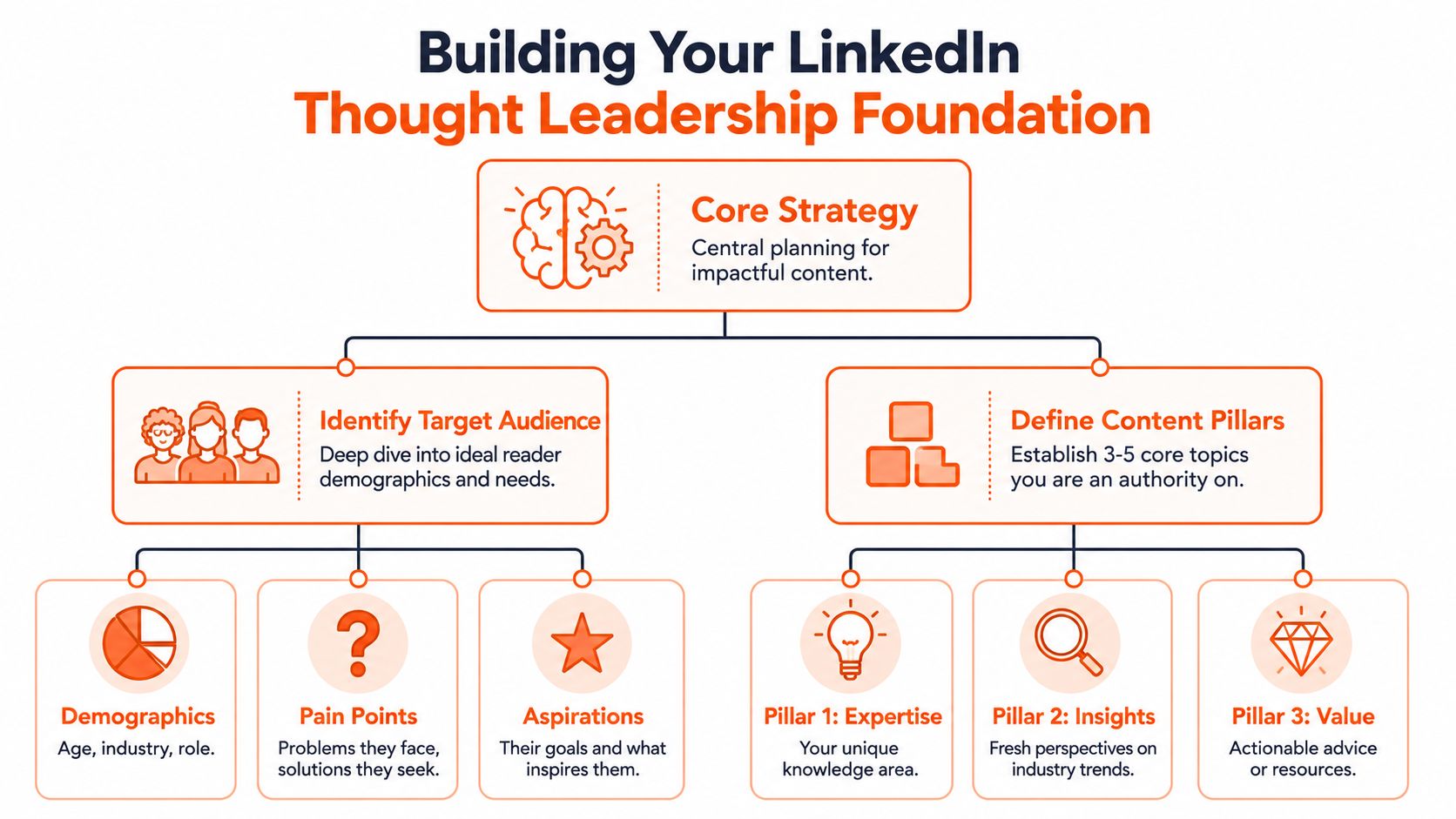
Defining an audience too broadly is a common issue. “B2B founders” or “marketing leaders” isn't enough. On LinkedIn, the useful question is where these people already gather.
Start with gathering points, not personas
Open LinkedIn and map the environment, not just the buyer. Look for five things:
- Visible creators: People in your market who consistently attract comments from the audience you want.
- Company voices: Brands whose employees publish useful takes, not product updates.
- Recurring topics: Themes that keep showing up in posts, comments, and reshares.
- Decision signals: Questions people ask before they buy, hire, switch tools, or start a project.
- Language patterns: Exact phrases your market uses when describing pain, trade-offs, and urgency.
A comments-first strategy only works if you're showing up in the right rooms. If your audience gathers around RevOps operators, SaaS founders, and category analysts, that's where your activity should cluster.
A practical audience definition usually fits on one page. It includes who you want to influence, which conversations they participate in, and what they need to believe before they trust you.
Build pillars from tension, not topics
Weak content pillars read like website navigation. Leadership. Marketing. Sales. AI. Those are categories, not points of view.
Strong pillars sit at the intersection of expertise, buyer tension, and business relevance. The easiest way to build them is to ask:
- What problem do I understand from direct experience?
- What bad advice does my market repeat?
- What decision does my buyer struggle to make?
- What belief can I defend with examples, reasoning, or evidence?
- What service, product, or capability does this naturally connect to later?
Good pillars don't just organize ideas. They create repetition with depth, so your audience starts associating you with a specific kind of clarity.
A solid setup often looks like three to five pillars. For example:
| Pillar | What it covers | Why it works |
|---|---|---|
| Market insight | What's changing in buyer behavior or execution | Positions you as a guide, not a commentator |
| Operator lessons | What worked, failed, or surprised you in practice | Builds trust through specificity |
| Decision frameworks | How to choose between competing approaches | Helps buyers make progress |
| Contrarian takes | Where conventional advice breaks down | Earns attention when grounded in logic |
Once pillars are defined, every comment and post gets easier to evaluate. If it doesn't support a pillar, sharpen your authority, or connect to a business outcome, it probably doesn't belong in the plan.
The Comments-First Workflow to Borrow Reach
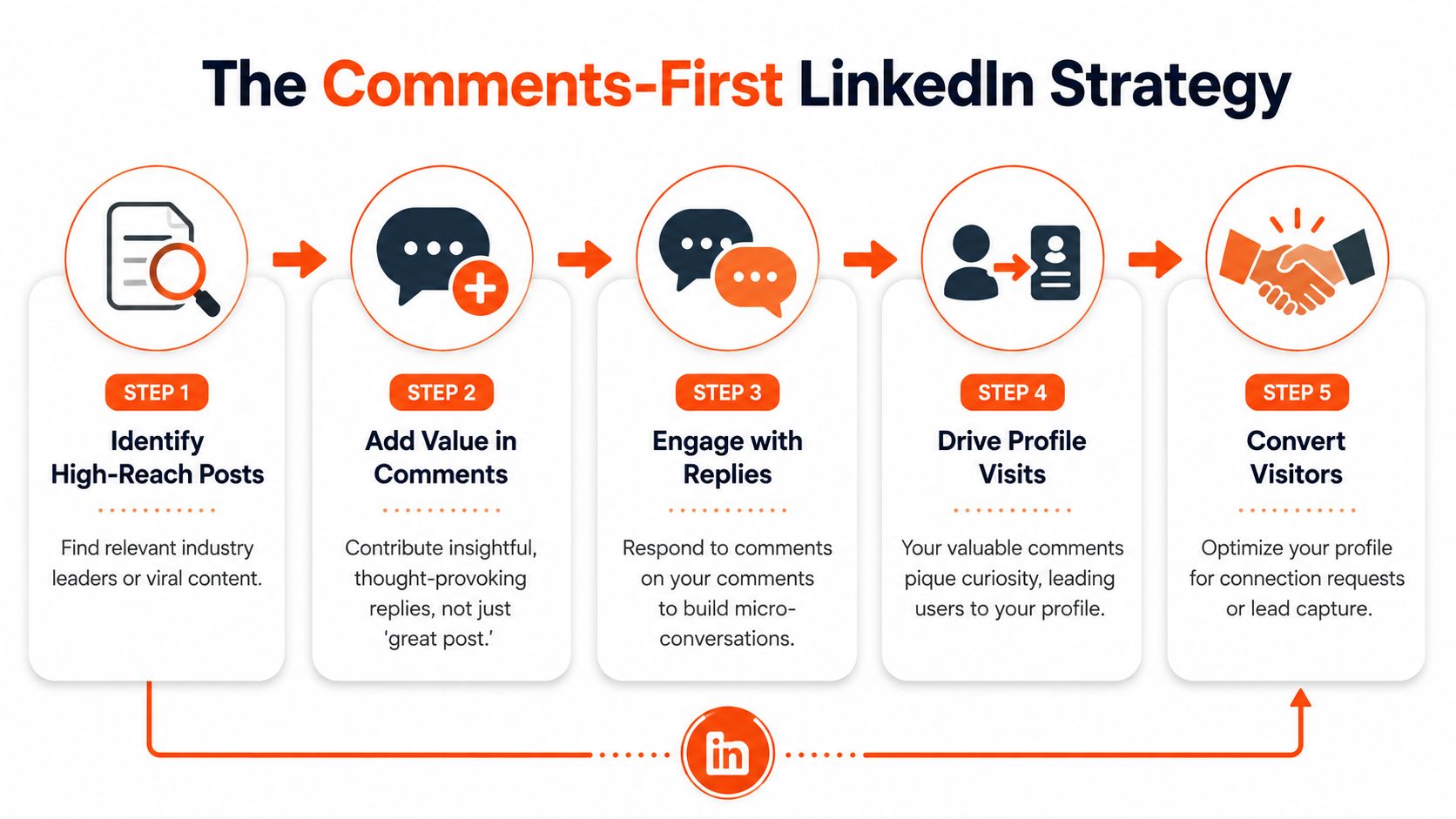
Posting more is not the fastest way to build LinkedIn thought leadership. Smart comments are.
A strong comment puts your thinking in front of an audience someone else already gathered. That matters because reach is hardest to earn at the start. A post on your own profile may go nowhere if the network is small or inactive. A sharp comment on the right post can get read by buyers, peers, and referral partners on day one.
Why comments outperform isolated posts
Comments work because they sit inside existing attention. You are not starting from zero. You are joining a live conversation where the author has already created context and the algorithm has already found an audience.
Timing matters too. According to this analysis of conversation velocity on LinkedIn, comments posted within the first 60 minutes of publication can generate up to 3x more profile visits than comments posted later. Early comments get more readers, more replies, and more second-order visibility from everyone following the thread.
That is the practical case for a comments-first strategy. It is faster to borrow attention from relevant conversations than to wait for your own posts to earn distribution from scratch.
There is also a quality gap you can use. As noted earlier, thought leadership performs better than standard brand content, but buyers still rate much of it as weak. The same problem shows up in comments. Generic praise fills the thread. Useful interpretation stands out fast.
For a tactical breakdown, this guide on how to comment on LinkedIn to get noticed is worth reviewing.
What a useful comment looks like
Useful comments add signal. They do not summarize the post or flatter the author.
The best ones usually do one of four things:
- Add a missing trade-off: “This works when the sales cycle is short, but enterprise teams often need a different handoff.”
- Contribute a field observation: “We've seen this break when onboarding is owned by a different team than the one that closed the deal.”
- Refine the claim: “I'd separate reach from intent here. Both matter, but they behave differently.”
- Ask a smart follow-up: “How would you adapt this for teams where the founder is still the primary seller?”
A weak comment could fit under any post in the category. A strong one could only come from someone who has done the work.
That distinction drives ROI. Comments are not just engagement plays. They are lightweight proof of judgment. If a buyer reads three of your comments and each one adds clarity, your profile visit is warmer and your later post has more context behind it.
Here's the embedded walkthrough that shows the approach in action:
A workflow that holds up under pressure
The mistake is treating comments like spare-time activity. If you want measurable results, run them like a distribution system.
- Track a narrow list of accounts. Follow founders, operators, customers, media voices, and category experts tied to your buyers.
- Check for posts with early traction. Fresh discussion beats stale reach.
- Read before responding. Good comments come from context, not speed alone.
- Add one useful layer. Share a trade-off, example, caveat, or question that moves the discussion forward.
- Stay in the thread. Replies under your original comment often create more trust than the first comment itself.
- Match your profile to your comments. Your headline, featured links, and recent posts should confirm the expertise people just saw.
This can be manual. I have seen simple systems work well with LinkedIn, saved account lists, and a basic tracker for target conversations and outcomes. The advantage is judgment. The downside is consistency, especially when the volume of relevant posts rises.
Software can help with monitoring, drafting support, and attribution. Linqin supports comments-first workflows, voice-adapted drafting, and lead tracking tied to originating comments. The trade-off is the same as any workflow tool. It saves time, but it still needs editorial control.
The goal is not to automate noise. The goal is to build a repeatable way to enter the right conversations early, add something worth reading, and connect that activity to profile visits, conversations, and pipeline.
Creating Content That Converts From Voice to Posts
A comments-first strategy gets you borrowed reach. Posts decide whether that reach turns into recall, profile actions, and conversations.
If someone clicks through after seeing your comments, they are not looking for polished filler. They are checking for proof that your thinking holds up outside a thread. Weak posts break that chain fast. Strong posts extend it.
As noted earlier, the gap is not content volume. It is quality. Plenty of LinkedIn content gets published. Very little of it sounds earned, specific, and useful enough to influence a buying conversation.
Train your voice before you draft
Posting gets easier once your voice is documented. Until then, drafting takes too long because every sentence becomes a style decision.
Start with raw material you already have. Sales call notes. Client emails. Webinar transcripts. Internal memos. Slack messages that explain a decision clearly. High-quality comments are useful here too, because they often contain your sharpest thinking in its most natural form.
Look for patterns such as:
- words you use without forcing them
- sentence length and rhythm
- how directly you make a claim
- whether you lead with an example, an opinion, or a question
- which trade-offs you tend to mention
Then turn that into a short voice guide your team or AI tool can use.
| Element | Example prompt |
|---|---|
| Tone | Direct, calm, not performative |
| Cadence | Short opening, then explanation |
| Vocabulary | Uses operator language, avoids jargon stacks |
| Point of view | Prefers trade-offs over absolutes |
| Evidence style | Uses examples, process detail, and cited data when available |
This step pays off because LinkedIn rewards consistency of perspective more than consistency of format. Readers remember a clear way of thinking. They do not remember another post that sounds like it came from a template.
If AI is part of the workflow, the voice guide keeps drafts from flattening into generic platform copy. That is the difference between assisted drafting and outsourced thinking.
Turn spoken insight into posts people save
The fastest route to better posts is usually voice, not typing. Record a two-minute explanation of a problem you see, a mistake you fixed, or a belief you disagree with. Then edit the transcript into a post.
This works for a simple reason. People speak with more specificity than they write. They add caveats. They mention constraints. They reveal what they believe. Those are the details that make a post credible.
Three formats hold up well because they map to how buyers evaluate expertise:
- Operator post: explain something you implemented, changed, tested, or stopped doing
- Research-backed post: start with a credible finding, then add your interpretation and what it means in practice
- Contrarian post: challenge common advice, then define the conditions where your view is right
The hook matters, but not in the usual clickbait sense. A strong opening gives the right reader a reason to care. This guide to LinkedIn post hooks that drive growth is useful if your openings sound flat or delayed.
A practical structure looks like this:
- Start with a real friction point.
- State your view in plain language.
- Add direct experience or supporting evidence.
- Name the trade-off or edge case.
- End with a useful implication, question, or next step.
One detail changes performance more than many teams expect. Keep each post anchored to one decision. Not a broad topic. Not a theme. One decision. For example: why you stopped gating certain content, why founder comments outperform company page posts early, or why a smaller target account list improved conversion quality. Specific decisions create sharper posts and stronger replies.
Write for conversion, not applause
Posts that convert usually do three things well. They make a clear claim. They show the reasoning behind it. They help the reader apply it.
That is different from writing for engagement alone. Broad motivation gets likes. Tactical specificity gets saved, shared internally, and brought into sales conversations.
I have seen this pattern repeatedly. The highest-ROI posts are often less polished than brand teams want and more concrete than founders expect. They include a hard-won lesson, one trade-off, and a useful takeaway the reader can test the same week.
Avoid broad inspiration, vague storytelling, and certainty without context. Buyers trust content that improves their judgment. That trust is what turns borrowed reach into pipeline.
Closing the Loop with Analytics and Lead Tracking
Most LinkedIn reporting is activity theater. Impressions rise, likes fluctuate, comments look healthy, and nobody can tie any of it to business impact.
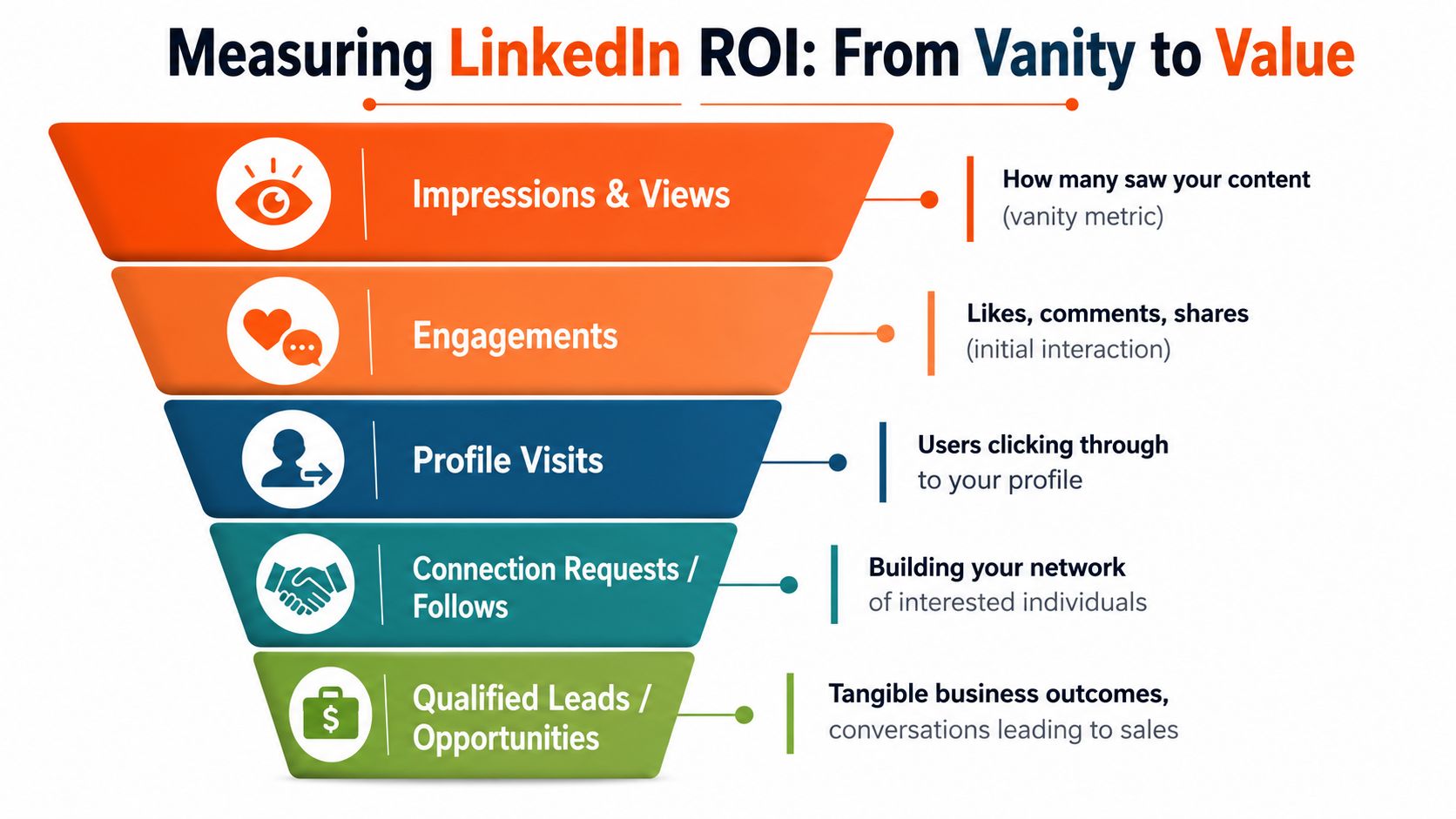
That's why ROI frameworks matter. A thought leadership ROI framework published on LinkedIn recommends tracking across reach, engagement, and conversion, and warns that the most common mistake is relying on impressions instead of leads and conversions. It also identifies bounce rate and time spent on page as stronger indicators of lead quality when content sends traffic to a website.
Stop reporting activity without outcomes
A useful LinkedIn thought leadership report answers four questions:
- Who saw your contribution?
- Who engaged with it?
- Who moved closer to your business?
- Which specific action triggered that movement?
That last question often presents a significant challenge for teams. They can show content performance in aggregate, but they can't say which comment, post, or conversation created the opportunity.
Here's the cleaner way to think about the funnel:
| Stage | What to watch | Why it matters |
|---|---|---|
| Reach | Impressions, views | Confirms distribution exists |
| Engagement | Comments, replies, shares, saves | Shows content is resonating |
| Intent | Profile visits, follows, connection requests | Indicates rising interest |
| Conversion | Site visits, form fills, meetings, qualified conversations | Ties activity to pipeline |
This doesn't require enterprise analytics. It requires consistent tagging and disciplined review.
Use a simple attribution chain
For founders and lean teams, a practical attribution chain looks like this:
- Log the original action. Comment or post.
- Note the topic and account involved.
- Track profile visits and inbound engagement after that action.
- Use tagged links when sending people to a landing page or resource.
- Review who connected, replied, booked, or returned later.
If you're building this into a repeatable growth motion, this guide to a LinkedIn lead generation strategy is a useful companion.
A few trade-offs are worth stating plainly.
- Impressions are fast to collect, but weak on meaning.
- Comments are messier to analyze, but richer in intent.
- Website traffic helps, but only if you can connect it to the originating LinkedIn action.
The goal isn't perfect attribution. It's directional confidence. You want to know which topics, which voices, and which interactions create buyers who already understand why you matter.
Scaling with Systems Calendars and Team Advocacy
Many individuals don't fail at LinkedIn thought leadership because they lack ideas. They fail because they rely on energy instead of a system.
A workable system makes room for two things at once: daily participation and periodic publishing. Comments keep you visible. Posts give that visibility a place to land.
Build a cadence people can actually keep
A practical weekly plan doesn't need to be complicated. It needs to be sustainable.
| Day | Primary Activity (30-45 mins) | Secondary Activity (15 mins) |
|---|---|---|
| Monday | Review niche conversations and leave thoughtful comments on relevant posts | Reply to notifications |
| Tuesday | Draft and publish one original post from a core pillar | Engage with replies |
| Wednesday | Comment on high-visibility posts from target creators and buyers | Update lead notes |
| Thursday | Draft a second post or refine ideas from comment threads | Review profile positioning |
| Friday | Follow up with warm connections and revisit strong conversations from the week | Save post ideas for next week |
This cadence works because it balances borrowed reach with owned content. It also reduces blank-page stress. Your comments become raw material for future posts, and your posts give people context when they click through from comments.
The easiest way to stay consistent is to stop treating comments and posts as separate jobs. Comments are research. Posts are packaged conclusions.
Turn individual momentum into team leverage
This gets more interesting when a company runs it across multiple employees. A team advocacy system usually needs four shared assets:
- A brand voice kit: Guidance on tone, claims, vocabulary, and what not to say.
- A pillar map: Shared themes with room for personal expertise.
- An approval rule: What requires review and what doesn't.
- A reporting view: A single place to see who's generating relevant conversations and warm leads.
The trade-off is real. Central control protects consistency, but too much control flattens personality. If every employee sounds like brand legal reviewed every sentence, the program will look coordinated and feel lifeless.
The strongest team programs leave room for individual voice inside a shared strategic frame. That's what keeps thought leadership credible instead of scripted.
If you want a practical way to grow LinkedIn while you sleep, Linqin helps automate comments-first outreach, voice-aligned drafting, and lead tracking so your LinkedIn thought leadership effort stays measurable instead of manual.