The 7 LinkedIn Strategies That Will Give You a Competitive Advantage
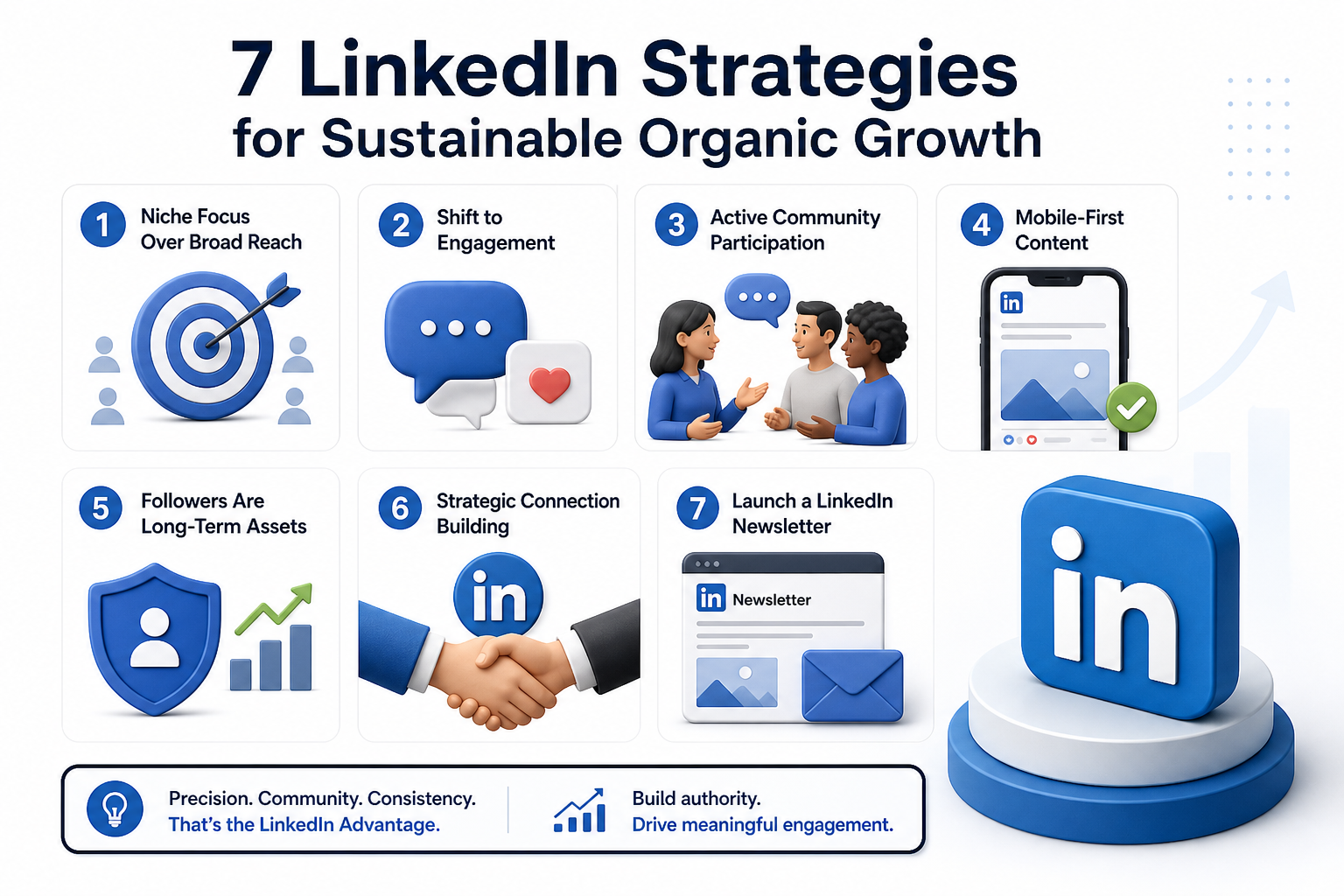
Health Launchpad outlines seven strategies designed to deliver sustainable organic growth on LinkedIn. The core idea is to move away from broad broadcast marketing toward precision, community, and mobile friendly content that resonates with a defined audience.
Below is a distilled guide to these seven approaches, framed as actionable principles you can apply to build authority and drive meaningful engagement on LinkedIn.
- Niche focus over broad reach:
Emphasize expertise for a clearly defined audience to ensure your content speaks directly to the people who most benefit from your solutions. Narrowing your focus helps you create more relevant, precise content that stands out in a crowded feed and aligns with the needs of a specific community rather than hoping for generic interest.
- Shift from impressions to engagement:
Prioritize meaningful interactions such as thoughtful comments and extended conversations over vanity metrics. The latest LinkedIn dynamics reward conversations that add value, so structure posts to invite expert input and prompts that spark dialogue, not just passive views.
- Active community participation:
Engage with others consistently, not just when you publish. Regularly comment, share insights, and contribute value in conversations across the network. Personal profiles often outperform company posts for reach, so showing up as a real participant builds visibility and trust.
- Mobile first content in multiple formats:
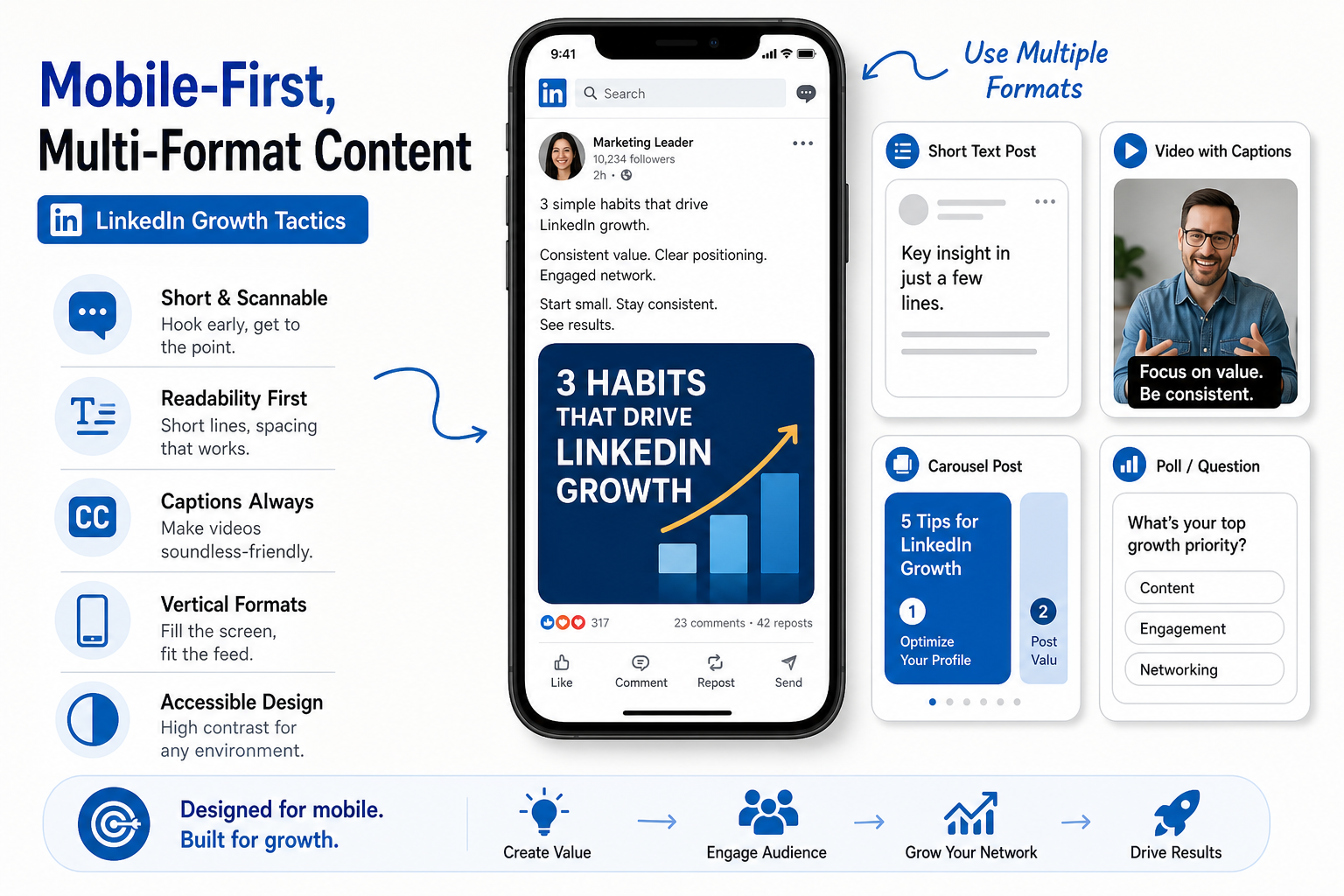
Design content with mobile readers in mind. Break ideas into short, digestible chunks and use formats such as vertical visuals, captioned videos, and succinct carousels. This approach improves readability and keeps audiences engaged as they scroll on phones.
- Treat your following as a valuable asset:
Focus on building and nurturing a loyal audience. Followers are a powerful asset because LinkedIn often prioritizes their engagement, and they represent a ready audience for future content and conversations. Consistency and quality help this group become a compound growth engine over time.
- Strategic connection building:
Move beyond random connections to purposeful networking. Use tools like saved searches and targeted criteria to connect with prospects and peers who genuinely fit your ICP. A quality network amplifies content reach and opens doors for meaningful collaborations and conversations.
- Launch a LinkedIn Newsletter:
Publish a newsletter to deepen relationships and provide value beyond quick posts. Newsletters tend to yield higher opt-in rates and longer engagement, creating a durable reference channel that compounds over time as subscribers grow and interact with your content.
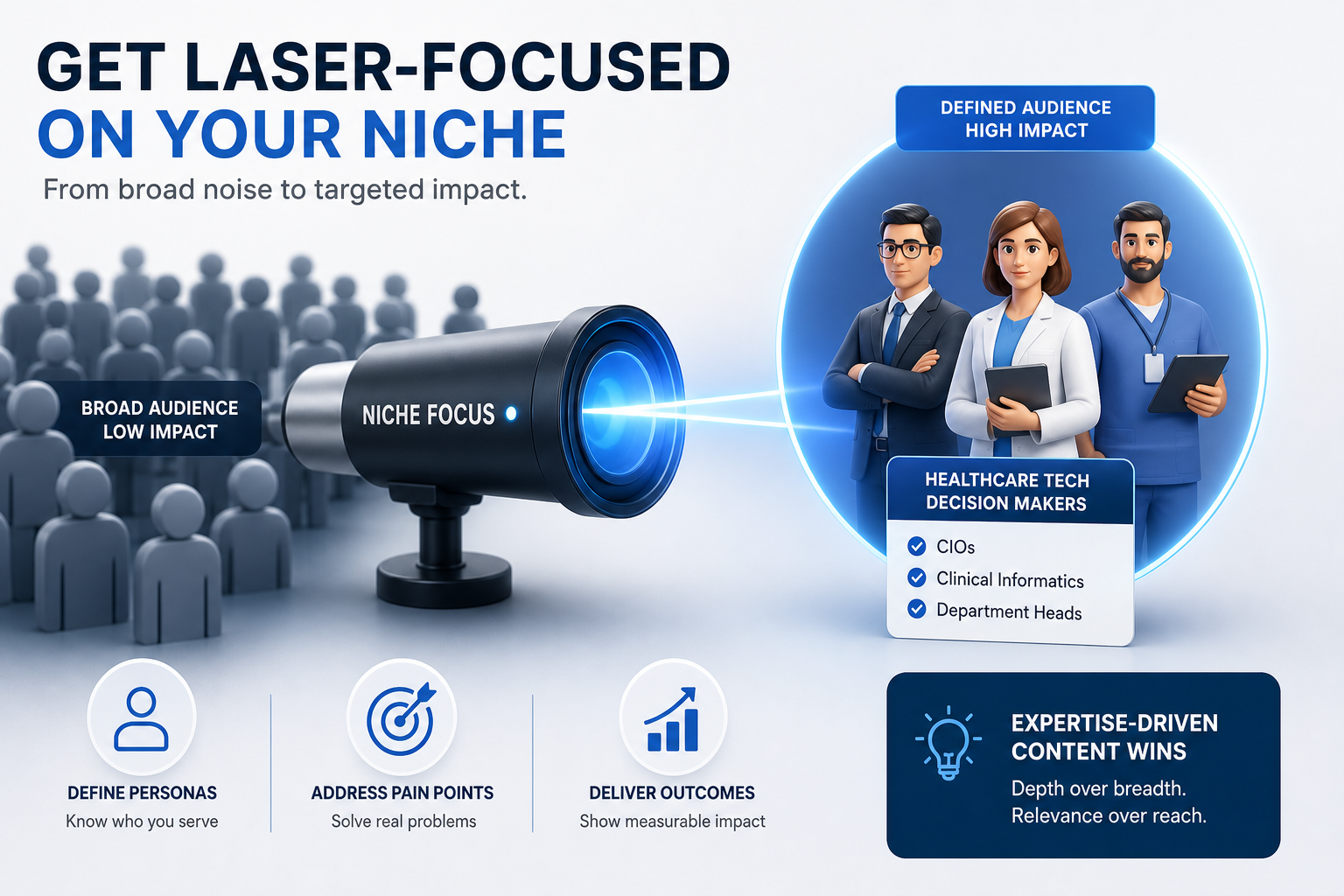
Get Laser-Focused on Your Niche
Narrowing your focus to a defined healthcare technology niche magnifies relevance and compounds impact. When you concentrate on a specific segment, your content becomes a precise signal in a crowded feed rather than a general broadcast. This shift from broad reach to targeted resonance is what transforms passive scrolls into meaningful conversations with people who truly matter to your business.
The core principle is simple: speak to defined personas with clearly articulated pain points. In healthcare technology, decision makers such as hospital CIOs, VP of Clinical Informatics, and department heads care about outcomes they can measure, fear of implementation risk, and ROI that justifies vendor selection. By framing your content around these roles and their daily challenges, you create a lift in perceived relevance that generic posts cannot match.
Expertise-driven content becomes the differentiator when you specialize. Instead of listing broad capabilities, you demonstrate depth in the problems that keep healthcare leaders up at night. Examples include reducing patient wait times with streamlined EHR workflows, improving data interoperability for value based care contracts, or ensuring regulatory compliance in fast changing environments. When your posts consistently address the exact consequences of these issues for the target personas, you position yourself as a trusted resource rather than a loud voice.
To reinforce the focus, build content that demonstrates both knowledge and application. Share case study insights, framework playbooks, and step by step approaches that readers can adapt. The result is not just awareness but a reputation for practical problem solving that decision makers can visualize using in their own organizations.
Try this practical approach to implement the niche focus:
-
Define ICPs with precision:
Write profiles for 2 to 3 decision makers within healthcare technology, including their goals, KPIs, and the obstacles they face. -
Create pillar content:
Develop 3 to 5 in depth posts per pillar that address the top 3 pain points for each persona, using concrete examples and measurable outcomes. -
Map content to buying stages:
Align posts to awareness, consideration, and decision stages, ensuring each piece moves the reader toward a specific next step.
Remember, the objective is not broad appeal but credible relevance. When your messaging consistently speaks to defined personas and their specific problems, you gain permission to be seen as an expert in a focused niche and to earn attention from the exact decision makers who can influence purchasing decisions.
In summary, Get Laser Focused on Your Niche means choosing a healthcare technology subdomain, articulating the precise personas, and delivering expertise driven content that helps leaders measure impact. This targeted approach increases engagement quality, strengthens trust, and accelerates meaningful conversations that lead to business outcomes.
Shift Your Focus from Impressions to Engagement
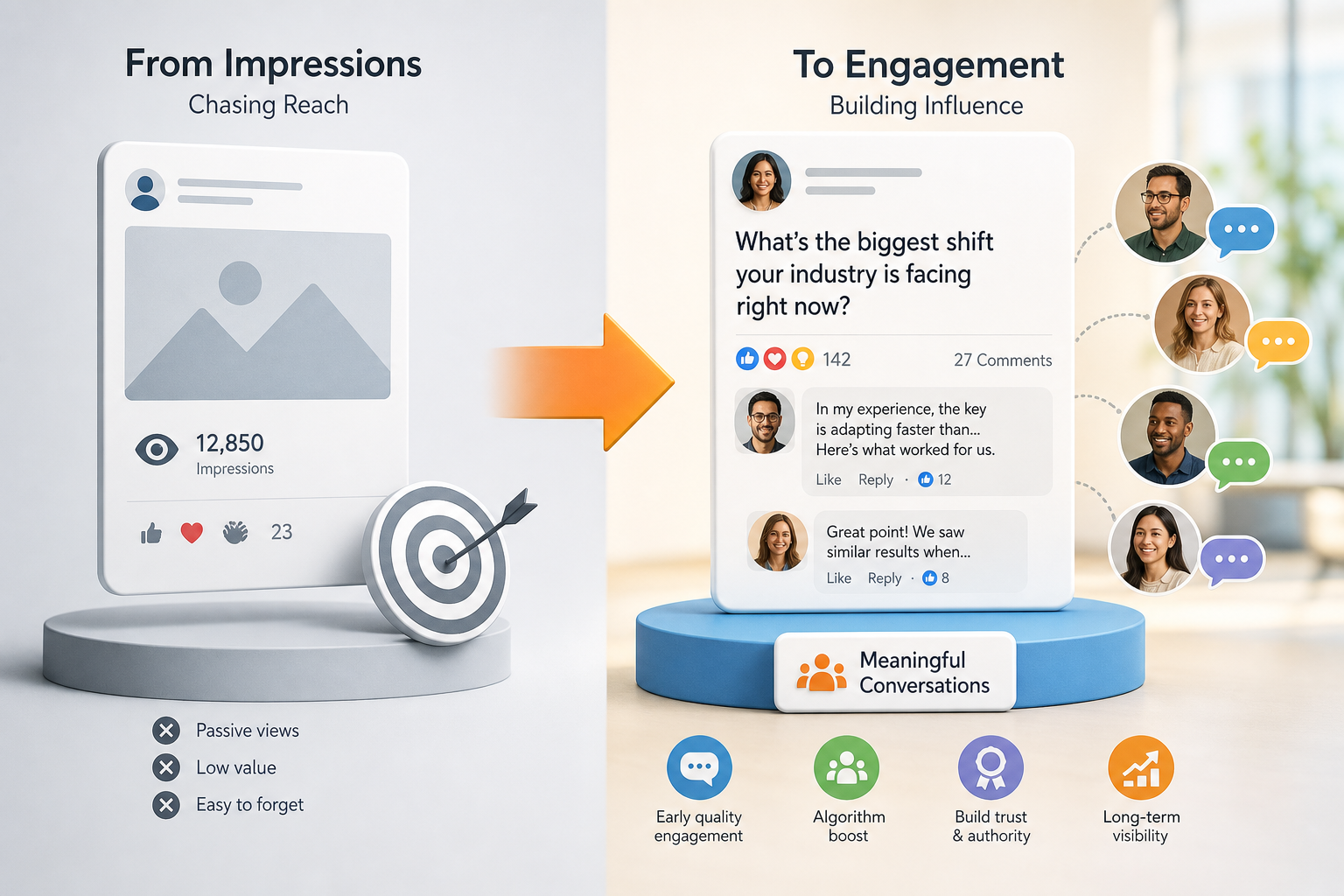
The shift from chasing impressions to cultivating true engagement is a reframe that changes both mindset and outcomes. Impressions measure reach, but engagement signals relevance and resonance. When you design content that invites conversation, you move from simply being seen to being consulted, trusted, and remembered by people who matter to your business. This shift is especially important on platforms where reach is increasingly distributed among a smaller set of high-quality conversations rather than broad, passive views.
Early quality engagement has become a critical predictor of long term visibility. LinkedIn’s algorithms prioritize posts that generate thoughtful interactions from outside your own company or network early in their life. This means you should aim to spark meaningful dialogue within the first hours after publishing. Comments, shares with context, and substantive replies help the algorithm recognize a post as valuable, which in turn expands its reach to new, relevant audiences who care about the topic.
Rather than chasing naive metrics like a high impression count, you can measure progress by the depth of conversations you start. A post that elicits 20 comments, each offering unique insights or real-world experiences, is typically more impactful than a post with hundreds of generic likes. The goal is to invite expertise, not merely appreciation, so you can accumulate a library of expert perspectives that enrich future content and expand your influence.
How to shift your approach in practice
- Lead with a specific question that invites expert input. For example, frame a post around a concrete decision you faced and ask peers how they would approach the same scenario.
- Invite detailed responses by asking for frameworks, not one-liners. Encourage readers to share a model, an example, or a calculation that demonstrates how they achieved a result.
- Respond with value to every thoughtful comment. Turn comments into mini-dialogues by asking clarifying questions, offering additional data, or sharing a quick next-step takeaway.
- Structure posts for readability by breaking ideas into short paragraphs, using bullet lists, and posing a single, clear takeaway at the end that invites further discussion.
- Measure engagement quality over volume. Track the number of quality comments, saves, and how often readers return to your content, rather than focusing solely on reactions or impressions.
Crafting compelling questions is an art and a science. The most effective prompts:
- Target a real pain point that your audience consistently faces.
- Offer a decision context so readers can relate to a concrete scenario.
- Promise expert value by implying you want to hear approaches that add measurable impact.
To illustrate the impact, consider two variants of the same idea. The impression count might be similar, but the second variant invites analysis and critique from practitioners who can contribute practical insight. Over time, this creates a chorus of voices around your content, amplifying its credibility and extending its reach through authentic, opinionated discussion.
Try this practical exercise to begin the shift today:
- Rewrite a recent post to replace broad statements with a specific question that seeks expert input.
- Publish twice weekly with one post focusing on a problem, one on a decision framework, and one that invites stakeholder perspectives from your target audience.
- Monitor the conversation for the first 24 to 48 hours and deliberately respond with thoughtful, data-backed insights that move the dialogue forward.
The throughline is clear: prioritize conversations that require expertise and experience. When you shift from chasing impressions to cultivating engagement, you build a durable signal of relevance. Over time, this leads to more meaningful connections, higher quality conversations, and a more resilient presence on the platform.
Engage More and Become an Active Community Member
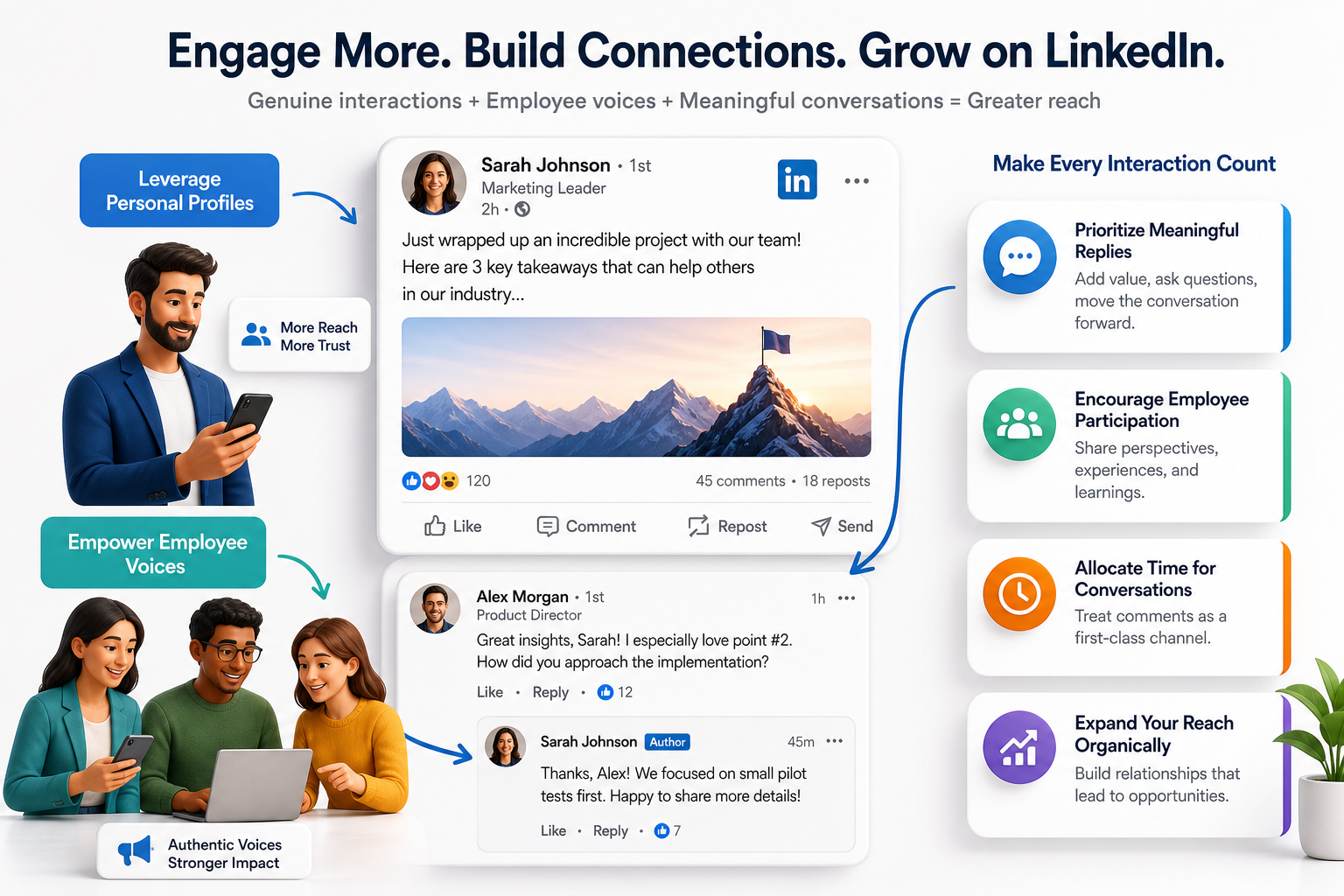
Consistent, genuine interaction is the real engine behind sustainable LinkedIn growth. Rather than treating engagement as a side effect of posting, you can amplify reach by prioritizing meaningful conversations, using personal profiles, and encouraging employees to participate with authentic, value-driven content.
Personal profiles consistently outperform company pages when it comes to reach and trust. When individuals share insights, experiences, and perspectives in their own voices, they foster deeper connections and invite dialogue that expands your network beyond your immediate followers. Employee-driven posts act as multipliers, creating a authentic chorus of perspectives that highlight your domain expertise without feeling like a marketing message.
To capitalize on this dynamic, allocate deliberate time for conversation. The most successful LinkedIn practitioners treat comments as a first-class channel, not an afterthought. A well-timed reply can turn a passively curious reader into a conversation partner, a collaborator, or a lead.
- Prioritize real, not random, interactions: aim for thoughtful replies, not generic thank yous. Add context, ask clarifying questions, and share related resources that move the discussion forward.
- Encourage employee participation: encourage team members to contribute their own perspectives, case experiences, and learnings. Provide light guidelines and a few prompts to get conversations started without feeling scripted.
- Adopt a 30 minute daily engagement habit: spend time engaging with posts from key prospects, partners, and industry peers. Consistent activity signals relevance to the algorithm and expands your visibility within relevant communities.
- Turn comments into conversations: treat high quality comments as mini posts. Expand on ideas, pose follow up questions, and invite others to share frameworks or data that support their viewpoint.
- Use employee advocates strategically: when coworkers comment on or share content, their networks see the message with more trust. Provide simple, non promotional prompts that align with your niche and add real value to the discussion.
A practical approach is to block time for two activities each day: participate in relevant conversations and craft a few thoughtful responses to existing posts. This dual focus keeps you visible in feeds while building depth in your relationships.
| Action | Why it matters | How to do it |
|---|---|---|
| Comment thoughtfully | Signals value to the algorithm and shows you engage with the right people. | Reply with context, add a data point, or share a quick framework. End with a question to invite further input. |
| Engage with targets first | Moves you into relevant networks and builds credibility through active listening. | Comment on posts from key prospects and peers in your ICP before publishing your own content. |
| Empower employees | Expands reach through authentic voices and grows the content ecosystem. | Provide simple prompts, shareable templates, and a weekly cadence for employee posts and reshares. |
| Respond promptly | Preserves momentum and keeps conversations alive, which the algorithm rewards. | Aim to respond within 24 hours with value additions or clarifying questions. |
| Filter for quality over quantity | Deepens relationships and builds a library of meaningful discussions. | Focus on comments that unlock new perspectives, case studies, or concrete next steps. |
By weaving this approach into daily practice, you cultivate a vibrant, collaborative community around your content. Personal voices become your strongest asset, and genuine engagement compounds over time, extending your reach and elevating your influence without resorting to loud sales tactics.
Try this quick exercise to start strengthening community engagement today:
- Identify 5 to 10 target individuals whose perspectives shape your ICP and who consistently contribute valuable content in your niche.
- Comment with depth on 2 to 3 posts per day from that list, each with a unique insight or question.
- Ask an internal advocate to share one practical takeaway from a recent project or client engagement, and encourage others to respond with their own playbooks.
Consistency is the key. Over weeks and months, your presence in the conversation grows from a single post to a living, influential network that sustains visibility and opportunity.
Create Mobile-First Content in Multiple Formats
In a world where most users scroll on phones during commutes or between tasks, content must be optimized for small screens from the first line. A mobile first approach means structuring ideas for quick digestion, while still delivering depth for readers who invest a moment longer. This is not a single format play but a multi format practice that respects how people actually consume content on the go.
The core idea is to break complex ideas into digestible, scannable blocks. Short paragraphs, generous white space, and clear visual cues help readers skim and then decide to dive deeper. When you design with mobile in mind, you reduce friction and increase the likelihood that readers will engage, save, and share your post.
Key considerations for mobile friendly content
- Character economy: lead with a hook in the first 125 to 150 characters, then deliver the takeaway in compact sentences.
- Line length and spacing: use short lines, 40 to 60 characters per line, and ample line breaks to improve readability.
- Captions for videos: always provide captions so readers can consume without sound.
- Vertical formats: favor vertical carousels and portrait videos that fill the screen on mobile.
- Accessible design: ensure high contrast text and legible fonts for quick reading in various lighting conditions.
Embracing multiple formats
A mobile friendly strategy uses a blend of formats to keep the feed dynamic and to accommodate different preferences. Each format should reinforce the same core idea while offering a unique pathway to engagement.
- Text posts with brief, punchy blocks and a single clear takeaway. Use bullets to guide the reader and end with a targeted question to prompt comments.
- Short videos under 60 seconds with captions, crisp framing, and a single lesson or calculation demonstrated visually.
- Carousel posts that guide readers through a step by step framework or a before/after example. Keep each slide focused on one idea and limit copy per slide to a sentence or two.
- Infographics and vertical visuals that summarize a process, KPI, or framework in a high contrast, scannable layout.
Caption and context are essential
For every format you publish, pair the asset with concise captions that give context and a direct next step. A well crafted caption bridges the gap between scrolling and action, guiding readers to read, watch, save, or comment.
Practical how to guide
- Plan for mobile first: map out your content in a vertical flow, designing each piece to live comfortably on a narrow viewport.
- Batch create for efficiency: record, edit, and design in blocks so you maintain a consistent rhythm without sacrificing quality.
- Test readability: preview posts on a smartphone to verify line breaks, image sizes, and caption length before publishing.
Try this exercise to implement immediately
- Create a 3 format mini campaign: a text post, a 60 second captioned video, and a 5 slide vertical carousel all centered on one core insight.
- Draft captions: write 2 sentence captions for each asset that include a CTA aligned with your objective.
- Publish in a cadence: release all three formats within a 7 day window to test cross format performance and learn what resonates.
By treating mobile as the default experience and embracing formats that suit on the go consumption, your content becomes more accessible, more shareable, and more actionable. The result is a measurable lift in engagement quality and a smoother path from visibility to conversation.
Treat Your Following as Your Most Valuable Asset
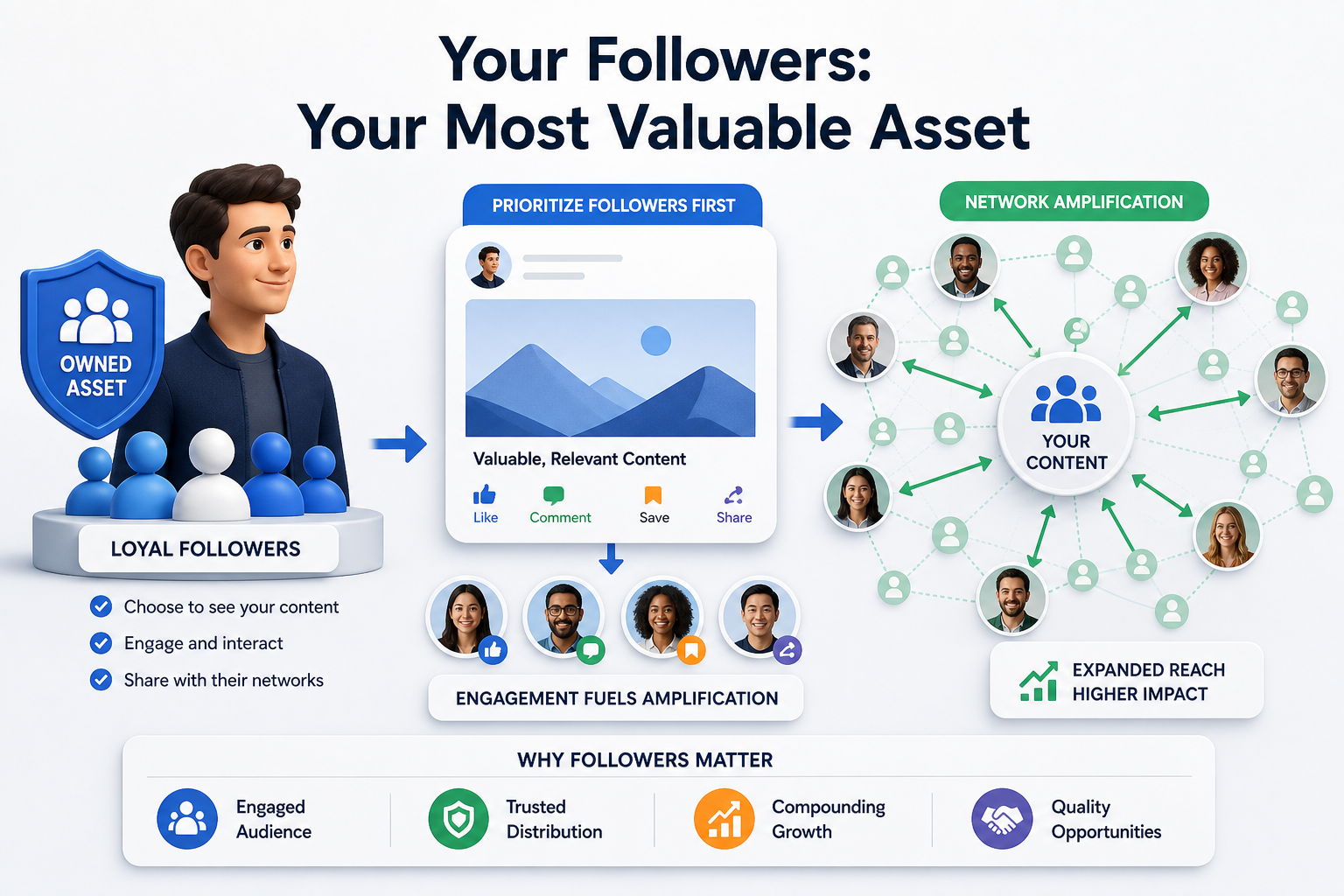
Your following is more than a count on a profile. It represents a dedicated audience that consistently chooses to see your content first, engage with it, and share it with their own networks. In many ways, a loyal follower base functions like an owned channel that you don’t have to pay to access. Unlike one-off impressions, followers create a durable, recurring signal of value that compounds over time.
When you design content with followers in mind, you activate a natural amplification engine. Each thoughtful comment, thoughtful share, or save from a follower can trigger broader distribution to their connections, expanding your reach without paid tactics. This is because LinkedIn often surfaces content to a mix of followers and highly relevant second-degree audiences who trust the perspective of someone they already follow and engage with.
Prioritizing followers first does not mean ignoring new viewers. Instead, it shifts the starting point of your content strategy. Your posts are crafted to reward the people who have already invested time with you, while still inviting fresh eyes to join the conversation. The outcome is a healthier growth curve: deeper engagement, higher quality conversations, and more reliable inquiries over time.
| Asset | Why it matters | Impact on growth |
|---|---|---|
| Engaged audience | Followers who consistently engage signal relevance to the algorithm and to peers. | Higher reach with lower cost per impression, more meaningful conversations, and better lead quality. |
| Trust equity | A loyal base develops trust through repeated exposure to your perspective and outcomes. | Increases likelihood that followers take next steps, such as messaging, commenting, or sharing your content. |
| Content compounding | Engagement from followers helps your content reach their networks over time. | Exponential growth in visibility as each action compounds across connections. |
| Feedback loop | Followers provide real world input, questions, and use cases that sharpen your messaging. | Stronger content resonance and more precise positioning in your niche. |
To turn followers into a sustainable growth engine, treat their needs as the starting point for every piece of content. Lead with insights that answer their questions, provide tangible takeaways, and demonstrate results. When you earn their ongoing trust, their networks become an organic force multiplier.
- Cultivate a consistent posting cadence: deliver reliable value so followers know when to expect helpful insights.
- Invite participation from within the follower base: pose questions, request case studies, and encourage sharing of lessons learned.
- Provide actionable next steps: every post should offer a clear, doable action that a follower can take and potentially share with others.
Try this quick exercise to start treating followers as your most valuable asset today:
- Audit your last five posts: identify whether each piece rewarded your current followers with a clear takeaway and an invitation to engage.
- Create a follower-focused content plan: outline 3 pillars that address common follower questions, with 1 post per pillar per week for the next month.
- Launch a simple engagement prompt: end a post with a specific question that invites detailed, experience-based responses from your followers.
In summary, your followers are not just a audience segment; they are a strategic asset that drives engagement, trust, and amplification. By prioritizing their needs, you unlock a self reinforcing cycle where quality conversations, network expansion, and opportunities follow naturally.
Be strategic about connection building
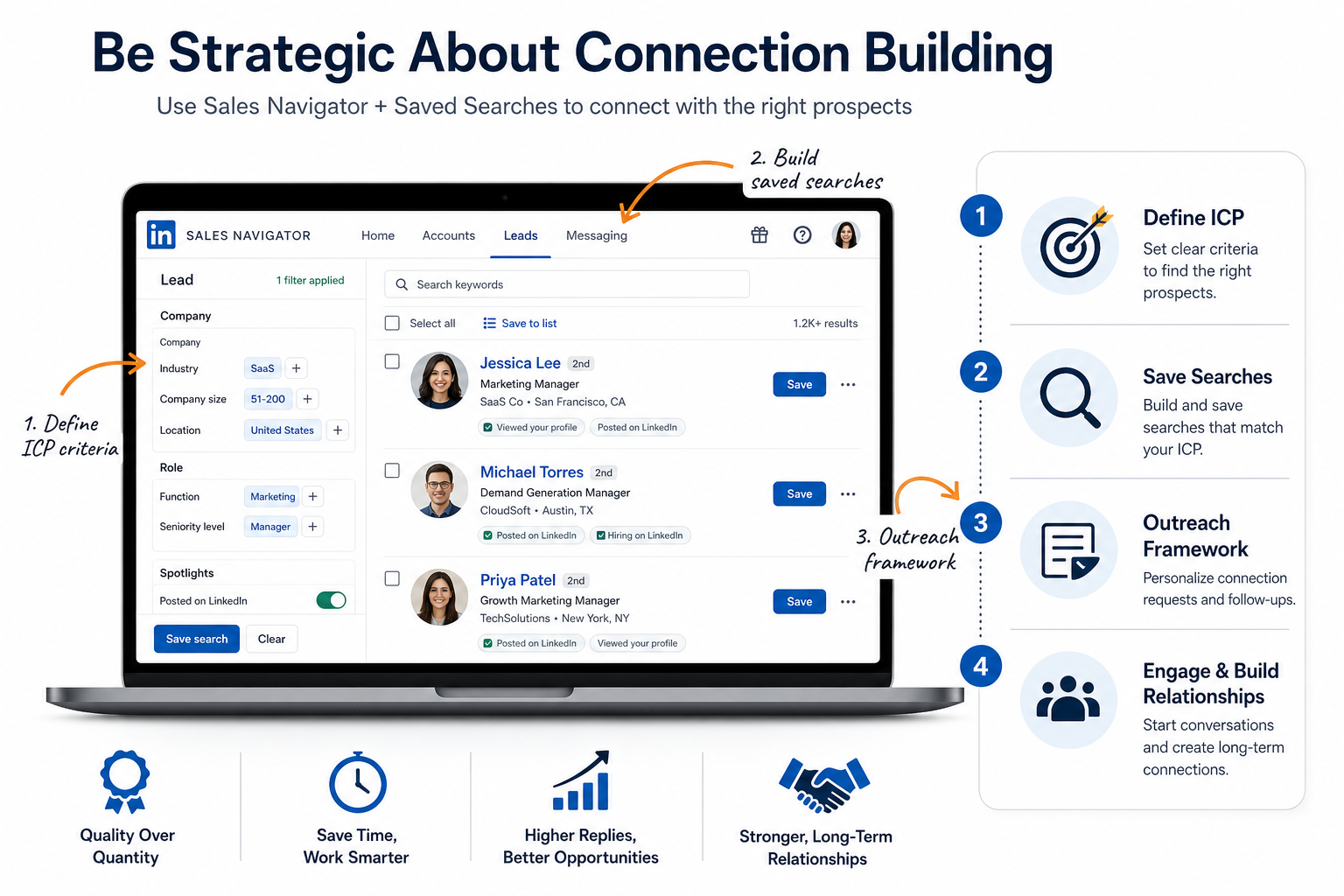
Be strategic about connection building means moving away from random profile views toward a purposeful, scalable approach that aligns with your ICP. The goal is to grow reach efficiently by connecting with people who are most likely to benefit from your content and potential collaboration. LinkedIn Sales Navigator, paired with saved searches, is a powerful combination for this disciplined outreach.
Why this approach matters:
- Quality over quantity: a smaller, highly relevant network often delivers more meaningful engagement and faster opportunities than a broad, indiscriminate connect spree.
- Efficient use of time: saved searches automate the discovery process, so you spend less time scrolling and more time engaging with prospects who fit your ICP.
- Predictable reach: targeted connections tend to yield higher reply rates, better conversation quality, and stronger long term relationships.
How to implement using Sales Navigator and saved searches:
-
Define your ICP criteria:
Create a precise profile that includes job titles, industries, company size, geography, and common pain points. This clarity keeps your outreach focused and saves time. -
Build saved searches:
In Sales Navigator, configure saved searches that reflect your ICP. Save multiple searches to cover adjacent roles or related buying centers who influence decisions. -
Document an outreach framework:
Develop a consistent sequence for connecting, followed by a value rich message tailored to each ICP segment. Use a brief, personalized hook that references a visible pain point or recent industry shift. -
Prioritize high potential signals:
Look for indicators such as recent company milestones, role changes, or active participation in relevant conversations. These signals increase the likelihood of a positive response. -
Measure and iterate:
Track acceptance rates, response quality, and the subsequent engagement. Use those insights to refine search criteria and messaging.
What to include in your outreach messages:
| Element | Purpose | Example |
|---|---|---|
| Personalized hook | Capture relevance and show you did a bit of homework. | “I noticed your team recently expanded the analytics function at Acme Corp, and I help leaders scale data literacy in similar setups.” |
| Contextual value | Offer a concrete benefit or insight tailored to their role. | “We mapped a quick 3 step framework to improve data storytelling for executive dashboards.” |
| Clear next step | Give a low friction action that invites a reply. | “Would you be open to a 15 minute call to review a use case you’re prioritizing this quarter?” |
Practical workflow to scale reach:
- Set weekly targets: define a realistic number of targeted connections per week per Navigator search.
- Batch outreach sessions: schedule 2 to 3 blocks of 30 minutes to review new results, refine filters, and send messages.
- Leverage engagement signals: when a prospect engages with your content, follow up with a tailored note referencing their interaction to deepen the conversation.
Metrics to watch:
- Connection acceptance rate by ICP segment
- Reply rate and quality of initial conversations
- Progression from connection to conversation to meeting or demo
By applying a disciplined approach with Sales Navigator and saved searches, you can scale your reach with intention rather than random discovery. This strategy helps you build a high quality network that accelerates content reach, increases relevance, and turns connections into meaningful opportunities.
Launch a LinkedIn Newsletter
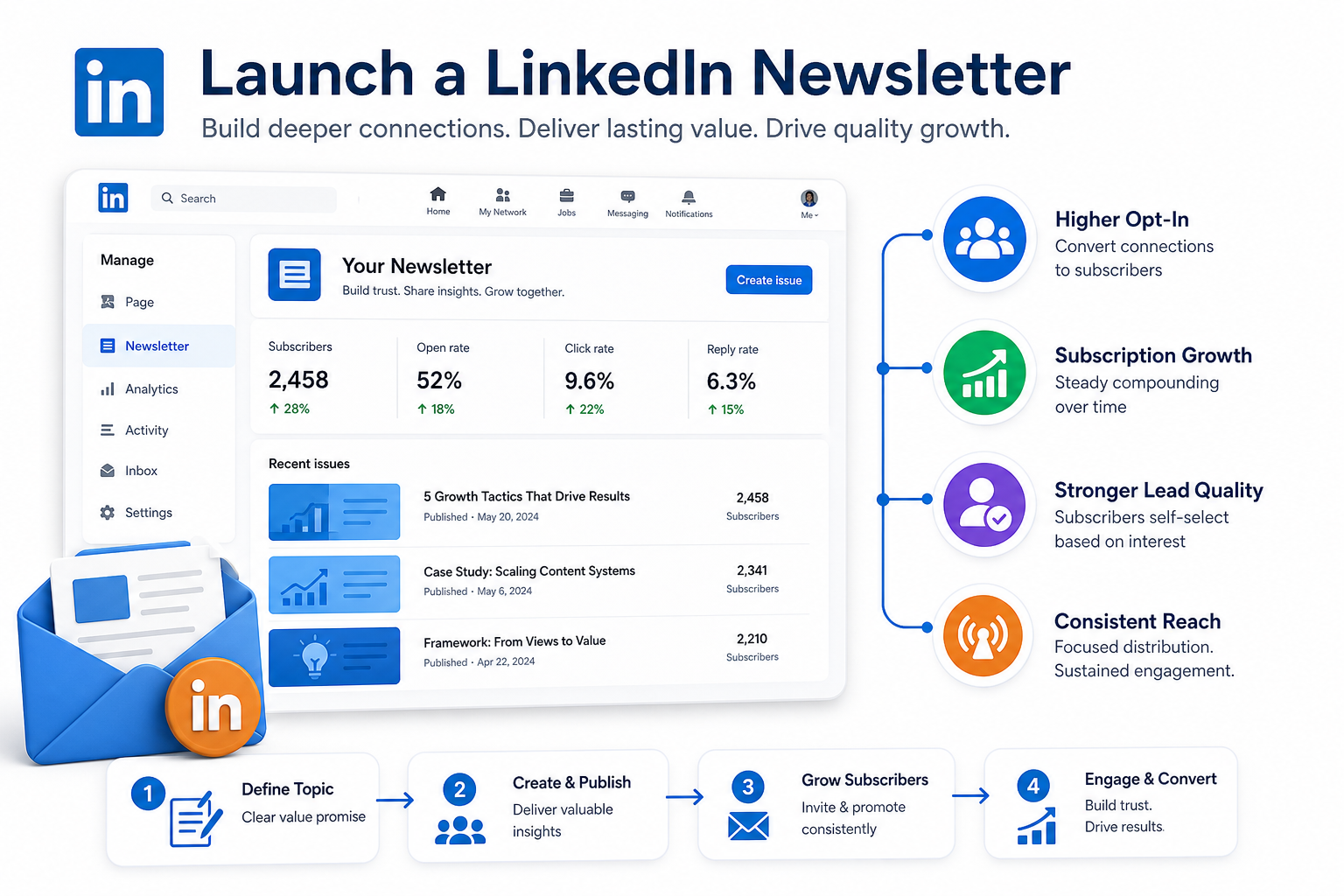
Launching a LinkedIn Newsletter is an effective way to deepen relationships with your audience and extend the shelf life of your content. Newsletters create a dedicated, opt-in audience that expects thoughtful analysis, actionable frameworks, and long form exploration. Because subscribers opt in, these readers tend to engage more deeply, share more readily, and convert at higher rates than average post viewers.
Compared with one-off posts, newsletters compound value over time. Each issue becomes a reference point that readers bookmark and revisit, turning your content into a durable asset rather than a fleeting moment in a scroll. Over time, this leads to higher quality leads, because subscribers have explicitly expressed interest in your topic and outcomes, not a broad, generic feed.
What makes a LinkedIn Newsletter impactful:
- Deeper engagement: long form analysis, case studies, and data-driven insights invite thoughtful responses and ongoing dialogue.
- Higher opt-in rates: newsletters typically convert connections to subscribers at a higher rate than public posts convert followers or page visits.
- Improved lead quality: subscribers self select based on interest, meaning their readiness to explore solutions is higher than that of general feed readers.
- Consistent reach: LinkedIn surfaces newsletters to your network in a focused way, creating steady growth in subscribers with less paid amplification.
To maximize impact, treat the newsletter as a standing content pillar that complements your short form posts. Align topics with your ICP and buyer journeys, so each issue moves readers toward a meaningful next step, such as joining a webinar, downloading a resource, or scheduling a conversation.
Metrics that demonstrate sustained value:
- Subscriber growth: track net adds per issue, cohort growth, and the rate of new subscribers over time.
- Open and read rates: monitor unique opens, average read time, and scroll depth to gauge depth of engagement.
- Click-through and conversion: measure click-through on CTAs within the newsletter and subsequent actions such as downloads, form submissions, or demo requests.
- Lead quality indicators: assess the progression of subscribers to qualified conversations, sales conversations, or meeting requests.
Practical implementation steps:
- Define a manageable cadence: start with biweekly or monthly issues to maintain quality over volume.
- Create a clear value proposition: articulate the core benefit readers should expect in each issue, such as a proven framework, a fresh dataset, or a practical playbook.
- Anchor on pillars: choose 3 to 4 content pillars that align with your ICP’s priorities and rotate topics within those pillars each issue.
- Leverage repurposing: convert a long-form interview into a structured newsletter, extract key takeaways into a micro post series, and embed a downloadable resource within the issue.
- Promote within the platform: invite your network to subscribe through a simple post, a pinned banner, and a brief explanation of what makes each issue valuable.
Try this quick exercise:
- Outline 3 pillar topics: list 3 themes that address the top questions your ICP faces this quarter. For each pillar, draft 2 to 3 newsletter ideas that offer distinct value.
- Draft a welcome issue: compose a 1,000 to 1,500 word welcome issue that introduces your newsletter’s purpose, presents one core framework, and includes a clear next step for readers.
- Set a subscription goal: commit to a realistic target for new subscribers over the next two issues and map out the promotional plan to reach it without paid media.
By integrating a LinkedIn Newsletter into your growth playbook, you create a durable channel that rewards thoughtful depth, strengthens lead quality, and accelerates the path from visibility to conversation. It turns readers into engaged subscribers who anticipate your ideas, contributing to a steady, scalable growth engine.
Your Linkage to Health Launchpad: Newsletter Growth and Engagement
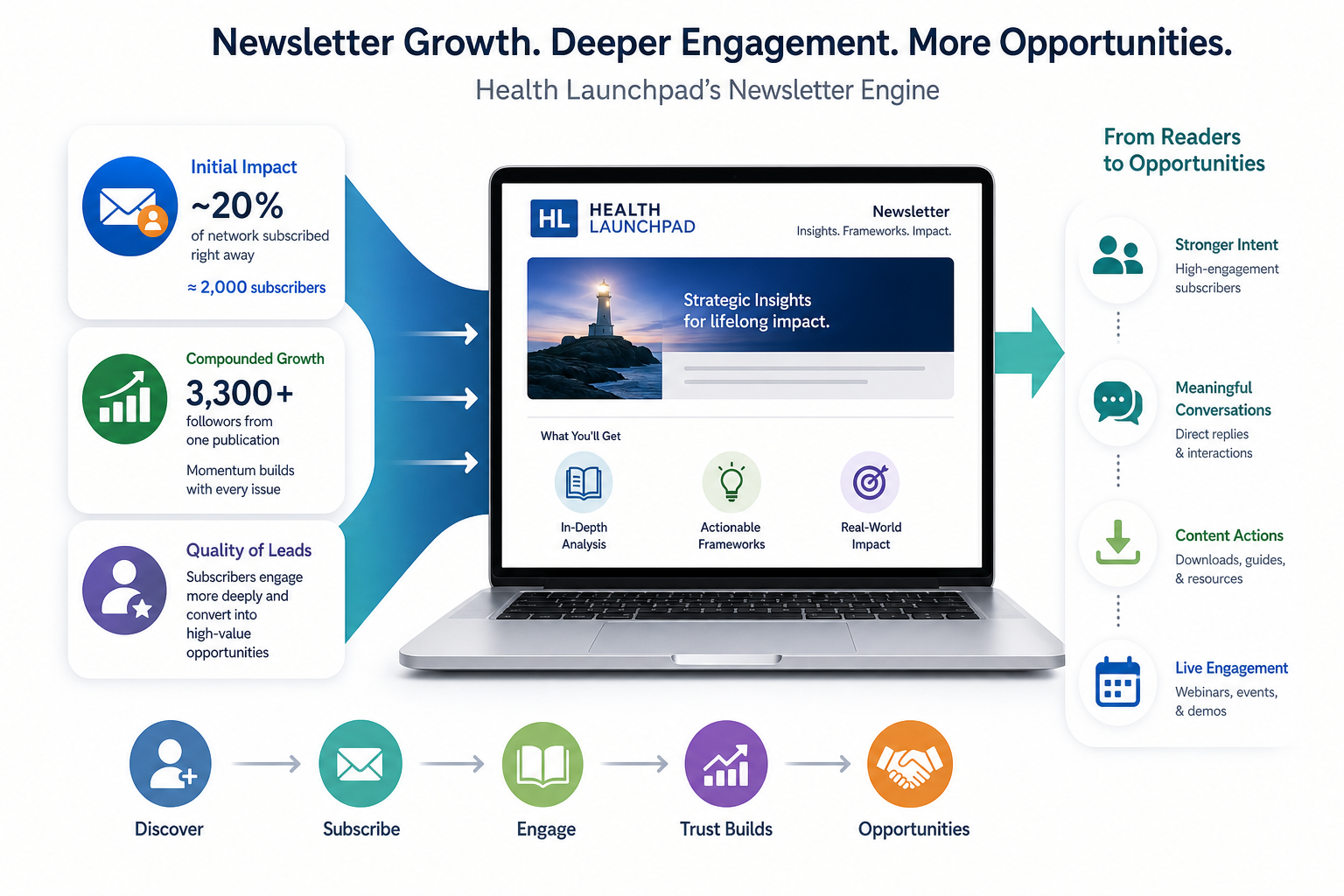
Newsletter growth and engagement become a formalized relationship engine that sustains depth beyond daily posts. Health Launchpad’s experience demonstrates that newsletters turn casual readers into committed subscribers, and subscribers into highly qualified opportunities. By treating the newsletter as a standing content pillar, they transformed a one-off moment into a durable, scalable channel for deeper analysis. It produced measurable outcomes.
A key practical outcome is the shift from broad reach to targeted relevance. Newsletters attract readers who explicitly opt in because they want structured frameworks, long form insights, and actionable takeaways. This opt in quality translates into higher engagement, stronger intent signals, and a smoother path from content consumption to direct conversations or activities such as webinars, downloads, or demos.
Health Launchpad provides concrete growth and engagement examples that illustrate the math of newsletter momentum:
- Initial impact: their first newsletter issue generated immediate interest, with roughly 20 percent of their network subscribing right away. This equates to roughly 2,000 early subscribers from a single invitation.
- Compounded growth: over time, one newsletter publication grew to more than 3,300 followers, indicating that each subsequent issue reinforced engagement and attracted new readers through referrals and shares.
- Quality of leads: subscribers tended to engage more deeply than typical post readers, producing higher-quality inquiries and more thoughtful interactions around topics like ROI, data storytelling, and implementation outcomes.
- Editorial discipline: maintaining a steady cadence and clear pillars helped readers anticipate value, increasing open rates and long term retention as a core habit rather than a sporadic event.
When viewed as a durable asset, a newsletter offers several crucial advantages:
- Deeper relationships: long form analysis and case studies invite readers to invest time and thoughts, which strengthens trust and credibility.
- Improved lead quality: subscribers self select based on interest, yielding higher readiness for conversations, demos, or trial engagements.
- Predictable reach and compounding: newsletters surface to networks in a targeted way, creating steady growth with moments of compounding interest as archives accumulate.
- Content longevity: each issue becomes a durable reference point that readers bookmark and revisit, turning a single publication into a recurring touchpoint.
Practical implementation notes drawn from Health Launchpad’s experience:
- Define 3 to 4 pillars: align topics with ICP priorities such as ROI storytelling, framework spawn, and practical case analyses to ensure each issue delivers measurable value.
- Anchor on a predictable cadence: start with a manageable schedule (for example, biweekly or monthly) to preserve quality and reliability.
- Repurpose and promote: convert long form interviews or webinars into newsletter content, then repurpose highlights into micro posts to drive subscription growth.
- Measure the right signals: track subscriber growth, open and read rates, click-through actions on CTAs, and the progression of subscribers to conversations, demos, or webinars.
A practical takeaway for teams starting a health tech newsletter is to treat it as a formal outreach program rather than a passive content channel. Build a clear value proposition for subscribers, provide actionable playbooks, and invite readers to take meaningful next steps such as joining a webinar, downloading a resource, or scheduling a discussion. When readers perceive tangible value point by point, their engagement becomes a durable asset that accelerates opportunities across the sales and partnerships funnel.
Try this quick exercise:
- Outline 3 pillar topics: list three themes that address the top questions your ICP faces this quarter, and draft 2 to 3 newsletter ideas for each pillar.
- Draft a welcome issue: compose a 1,000 to 1,500 word welcome issue that outlines your newsletter purpose, introduces one core framework, and includes a clear next step for readers.
- Set a subscriber goal: commit to a realistic target for new subscribers over the next two issues and map out a simple plan to reach it without paid media.
In summary, newsletters provide a reliable mechanism to formalize relationships, deepen trust, and convert readers into actionable opportunities. By establishing pillars, maintaining cadence, and focusing on subscriber quality over sheer volume, teams can unlock a durable growth engine that compounds over time.
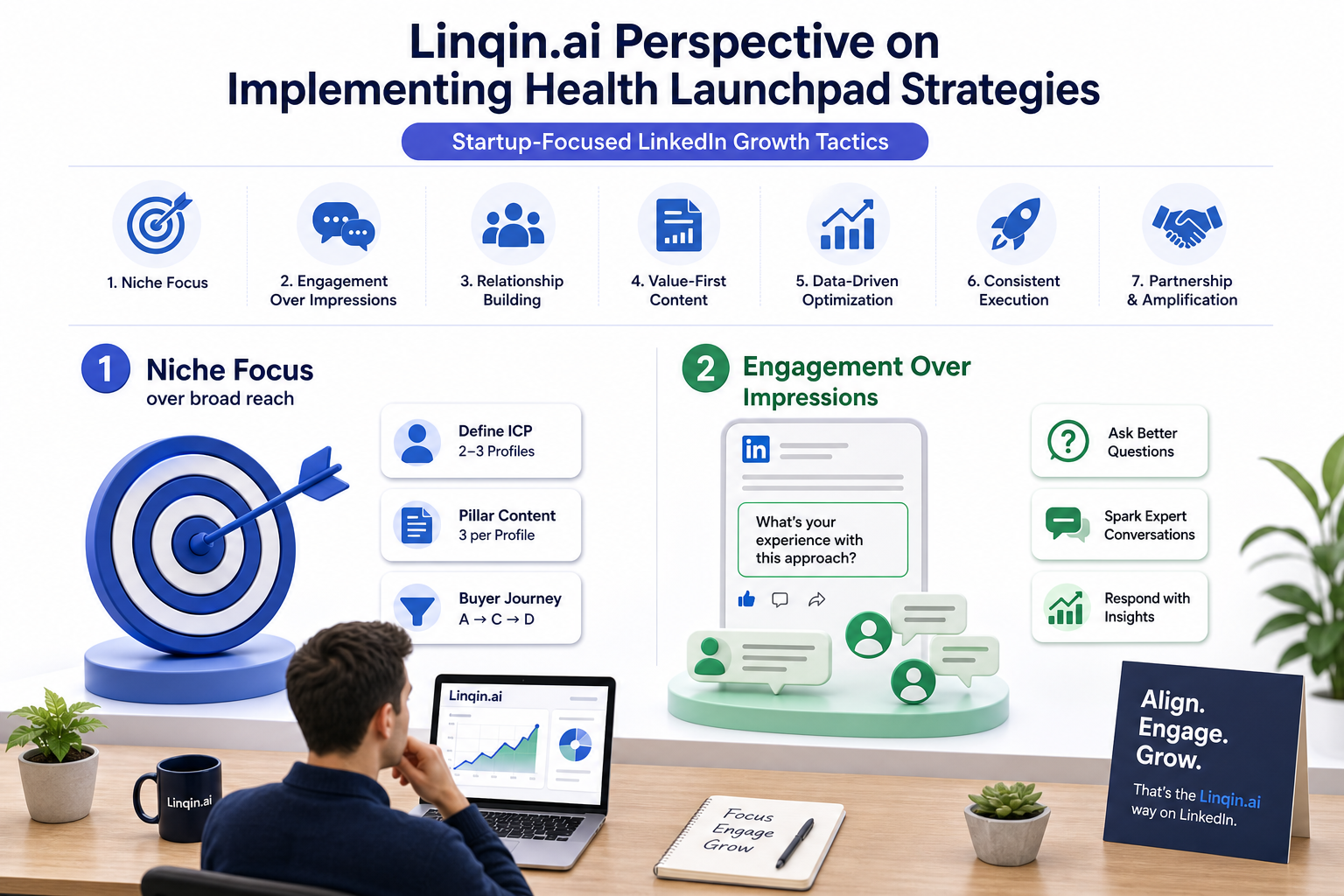
Linqin.ai Perspective on Implementing Health Launchpad Strategies
Below is Linqin.ai perspective on implementing Health Launchpad strategies through a startup friendly LinkedIn growth lens. The goal is to align our approach with Health Launchpad seven strategic pillars while tailoring tactics to a fast moving, resource constrained environment.
| Health Launchpad Strategy | Linqin.ai Perspective | Starter Tactics |
|---|---|---|
| 1. Niche focus over broad reach | We anchor on a clearly defined ICP with measurable outcomes. Our content signals deep domain relevance and practical impact for a specific buyer persona, not a generic audience. |
– Define 2 to 3 decision maker profiles within a chosen vertical. – Develop 3 pillar posts per profile that demonstrate tangible value. – Map posts to awareness, consideration, and decision stages. |
| 2. Shift from impressions to engagement | Engagement quality drives long term reach. We design prompts that invite expertise, not surface reactions, and cultivate ongoing conversations. |
– End posts with specific questions that demand practitioner input. – Encourage multi-comment dialogue by offering frameworks and mini case studies. – Respond to comments with data backed additions and follow up questions. |
| 3. Engage more and become an active community member | Personal voices beat corporate posts for reach. We empower founders and team members to contribute authentic perspectives that extend the content ecosystem. |
– Create a 30 minute daily engagement habit focused on target prospects. – Encourage employee advocates with lightweight prompts and templates. – Turn high quality comments into mini conversations by expanding on ideas. |
| 4. Create mobile first content in multiple formats | We design for mobile from the start, using vertical formats and concise storytelling that travels well on small screens. |
– Plan a 3 format mini campaign per pillar: text post, captioned video, and vertical carousel. – Write captions that clearly contextualize the asset and include next steps. – Batch create and preview on mobile to confirm readability. |
| 5. Treat your following as a valuable asset | Followers form a durable, high quality base. We treat this asset as a central growth engine, not a vanity metric. |
– Build a consistent posting cadence that rewards followers with practical value. – Invite follower participation via prompts and case studies. – Design CTAs that move followers toward conversations, demos, or downloads. |
| 6. Be strategic about connection building | We move from random connections to disciplined, ICP driven outreach using advanced search and messaging frameworks. |
– Define ICP with clear job titles, industries, and pain points. – Use saved searches to surface-fit prospects and related influencers. – Develop a message sequence with a personalized hook, contextual value, and a clear next step. |
| 7. Launch a LinkedIn Newsletter | Newsletters are a durable content pillar that compounds depth and lead quality over time. |
– Establish 3 to 4 pillars aligned to ICP priorities. – Set a sustainable cadence, starting biweekly or monthly. – Repurpose long form content into newsletter issues and micro posts to drive subscriptions. |
Key takeaways for a startup first approach:
- Focus first on ICP clarity before scaling volume. A precise niche simplifies content planning and accelerates trust with decision makers.
- Batch and systematize your content and engagement routines. A repeatable engine creates compounding growth even when resources are limited.
- Leverage authentic voices from within your team. Personal perspectives build credibility and widen reach beyond company pages.
Practical exercises to start implementing now:
- ICP audit: document 2 to 3 decision makers within healthcare technology, including their top metrics and friction points.
- Content pillar map: choose 3 pillars per ICP and outline 3 posts per pillar that demonstrate measurable outcomes.
- Newsletter pilot plan: draft a biweekly issue outline, including a long form feature, a practical framework, and a companion micro post series.
By integrating Health Launchpad strategies with a startup oriented mindset, Linqin.ai emphasizes disciplined niching, engagement quality, and sustainable content architecture. The result is a growing, high intent audience that can be nurtured into conversations, partnerships, and measurable outcomes without relying on broad broadcast tactics.
LinkedIn Tools and Platforms Mentioned in the Health Launchpad Framework
The Health Launchpad framework leans on a purposeful toolkit that complements the organic growth playbook on LinkedIn. Below is a concise map of the key tools cited in the framework, how they support growth activities, and practical ways to apply them without turning your process into a tech stack chaos.
| Tool | Primary purpose | How it enables Health Launchpad strategies |
|---|---|---|
| LinkedIn Sales Navigator | Advanced prospecting and ICP targeting with saved searches and lead recommendations. |
– Define precise ICP criteria and save multiple searches to surface high-potential prospects. – Use targeted outreach sequences that align with the framework’s outreach messaging and follow up on engagement signals. – Track engagement and progression from connection to conversation to meeting, enabling disciplined pipeline development. |
| Sprout Social | Social advocacy, engagement measurement, and cross channel social listening. |
– Activate employee advocacy programs by coordinating prompts, templates, and reshare workflows. – Measure earned media value and engagement quality across posts from advocates and the company page. – Monitor conversations, sentiment, and topic resonance to refine content pillars and responses. |
| LinkedIn Analytics and Newsletter Analytics (within LinkedIn) | Performance insights for posts, articles, and newsletters to inform optimization. |
– Assess impression quality, engagement depth, and follower growth to validate the content engine. – Use newsletter open rates, read time, and click-through data to prioritize pillars and topics. – Align metrics with KPI goals such as qualified conversations and demo requests. |
| Content Creation and Scheduling Tools (as referenced in the framework) | Streamlined ideation, batching, and publishing cadence for mobile first formats. |
– Centralize idea capture from calls, emails, and Slack into a content queue. – Batch produce text, video captions, carousels, and infographics to sustain the content engine. – Schedule posts to align with optimal windows informed by platform insights. |
Practical guidance for using these tools in concert:
- Coordinate ICP targeting with Navigator: build 2 to 3 precise ICP profiles and create saved searches that reflect decision maker roles, company sizes, and domains relevant to healthcare technology. Use results to personalize outreach hooks and value propositions.
- Pair advocacy with measured impact: run an employee advocacy program in Sprout Social with lightweight prompts that encourage sharing frameworks, case studies, and macro insights. Track how advocacy correlates with reach, saves, and inbound conversations.
- Close the feedback loop with analytics: review post and newsletter metrics weekly. Identify which pillars drive meaningful conversations and refine themes accordingly. Use insights to sharpen ICP definitions and messaging cadences.
A lean, integrated approach prevents tool fatigue. By pairing precise ICP oriented outreach (Sales Navigator) with authentic employee amplification and solid measurement (Sprout Social plus LinkedIn analytics), teams can execute Health Launchpad strategies with clarity and accountability.
Try this quick alignment exercise:
- Map ICPs to tools: for each ICP, assign a primary Navigator search, a set of advocacy prompts in Sprout Social, and a newsletter topic that would most resonate with that group.
- Define a measurement plan: specify 2 to 3 metrics per tool that signal progress toward your goals, such as target connection acceptance rate, engagement quality score, and subscriber growth.
- Run a 4 week pilot: deploy Navigator outreach, publish a pillar post series, activate a small group of employee advocates, and monitor results to decide on scaling the program.
When applied with discipline, these tools bolster the Health Launchpad framework by enabling precise targeting, authentic amplification, and rigorous learning loops. They help transform strategy into repeatable actions that accumulate impact over time without overwhelming your team.