Beyond "I'd Like to Add You to My Network" The default LinkedIn connection message is where promising opportunities go to die. Sending a generic, zero-effort request is the digital equivalent of a limp handshake. It signals you have nothing to say and no real reason to connect. This guide changes that. We'll break down 7 strategic message templates that get replies because they are built on value, research, and genuine curiosity. These aren't just words. They are conversation starters for founders, sales pros, and anyone who understands that their network is their most valuable asset.
The popular advice is wrong in one important way. It's common to obsess over the template and ignore the intent behind it. A strong LinkedIn message for connection doesn't work because you found the perfect wording. It works because the recipient instantly understands why you reached out, why it matters to them, and why replying won't waste their time. That's the bar.
Short beats clever. Specific beats polished. Relevant beats flattering. If your message could be sent to fifty other people unchanged, it probably shouldn't be sent at all. The good news is you don't need some magical script. You need a repeatable way to match message type to context.
Table of Contents
- 1. The Value-First Introduction
- 2. The Mutual Connection Warm Intro
- 3. The Problem-Aware Curiosity Message
- 4. The Social Proof and Results Message
- 5. The Industry-Specific Insight Message
- 6. The Specific Use-Case Question Template
- 7. The "I Admire Your Work" + Specific Collaboration Message
- Comparison of 7 LinkedIn Connection Messages
- Automate Your Outreach, Not Your Relationships
1. The Value-First Introduction
This is the best cold opener when you actually know something about the person. Not fake familiarity. Real familiarity. You saw a post, read an article, noticed a hiring move, or found a resource that fits what they're working on.
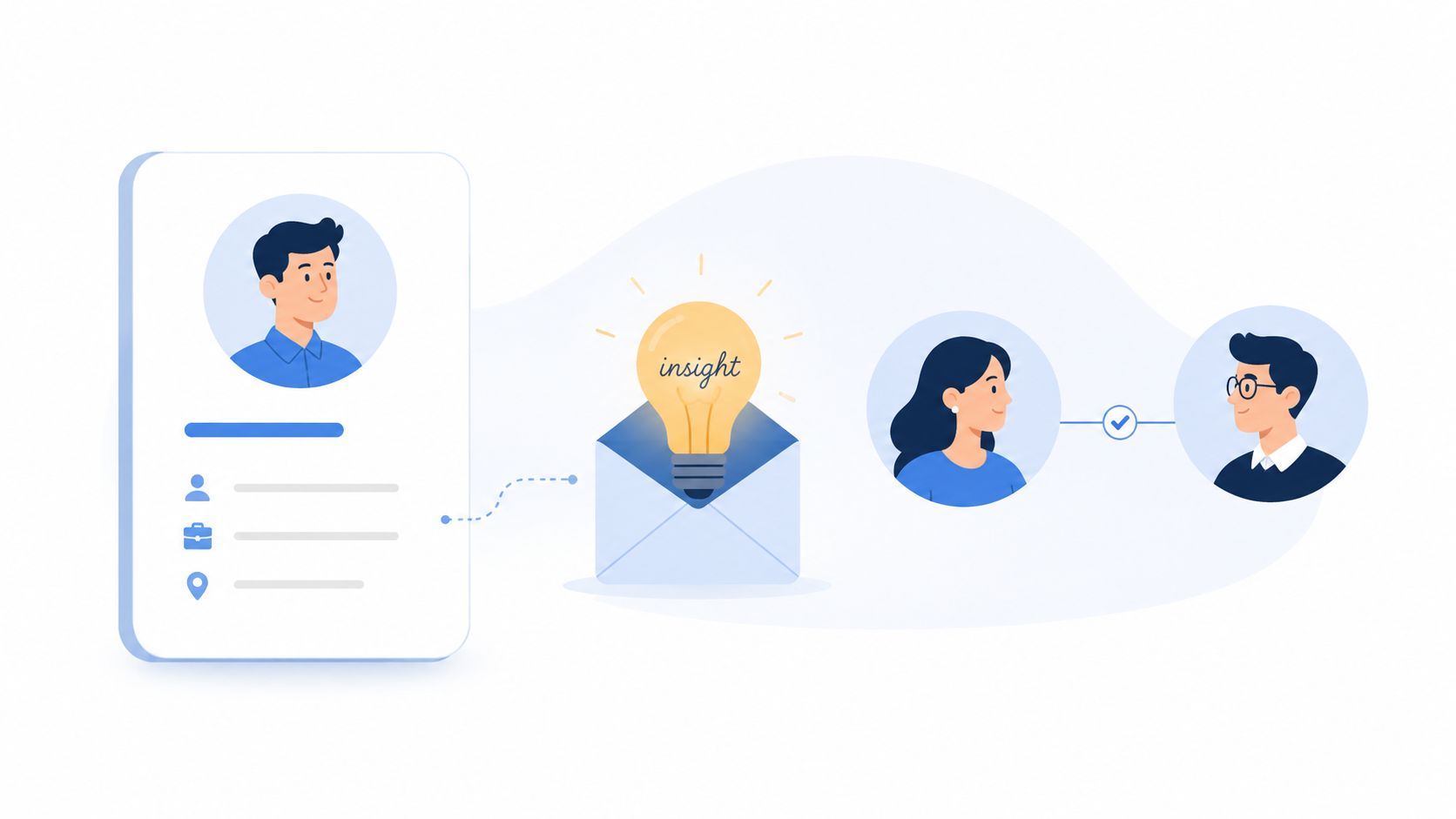
A value-first LinkedIn message for connection lowers resistance because it doesn't ask the other person to do all the work. You're not dropping into their inbox with "pick your brain" energy. You're saying, "I paid attention, and I brought something useful."
Lead with usefulness
Try a structure like this: mention the exact trigger, add one relevant insight or resource, then make a light connection ask. Keep it tight.
Practical rule: If the message still makes sense after replacing their name with someone else's, it isn't personalized enough.
Example:
"Hi [Name], I read your post on sales onboarding and liked your point about manager-led coaching. We see the same issue when teams rely too heavily on docs alone. I thought you might find this useful. [resource] Happy to connect."
That works because the "why" is obvious. You referenced something specific, added context from your own experience, and didn't force a meeting ask into the first touch.
A few trade-offs matter here:
- Reference one thing well: Pull one concrete detail from their profile or post. Don't dump a list of everything you noticed.
- Give usable value: Send a framework, article, teardown, or tactical observation they can apply now.
- Stay brief: Two or three sentences usually lands better than a mini essay.
If your profile is weak, even a good message can stall. Before doing this at scale, tighten your headline, banner, featured section, and proof points with a proper LinkedIn profile optimization guide.
Use Linqin's Brand Voice training if you want these messages to sound like you, not like a junior SDR rewriting internet templates. That's important. A polished message in the wrong voice feels off faster than people realize.
2. The Mutual Connection Warm Intro
Warm intros work because people trust familiar paths more than random approaches. However, these introductions are frequently misused. They name-drop a mutual and assume that's enough. It isn't.

The mutual connection is just the door opener. The primary reason they accept is that your message still feels relevant once the door is open.
Borrow trust carefully
A solid version sounds like this:
"Hi [Name], I noticed we're both connected with [Mutual Contact] and both spent time in rev ops circles. I also saw you spoke at [event/community]. Your work on process design stood out. Would love to connect and follow your perspective."
The psychology here is simple. Shared context reduces uncertainty. People want to know whether you arrived through a credible path or a random list.
What works:
- Use respected overlap: A real mutual contact, professional community, cohort, or event is enough.
- Add a second signal: Mention the talk they gave, the post they wrote, or the role they hold.
- Keep the mutual mention short: If half the message is about the mutual contact, it starts to feel manipulative.
What doesn't work is pretending closeness that isn't there. If you barely know the mutual connection, don't write as if you were former teammates. If you both attended a webinar, mention the event and one detail from it. Don't act like you shared a hotel bar conversation.
Mentioning a mutual connection creates permission, not trust. Relevance still has to earn the accept.
A good real-world scenario is founder outreach after an industry event. Instead of "we both attended," mention the panel topic, a takeaway, and why their angle matters to your work. That turns a generic warm intro into a conversation starter.
3. The Problem-Aware Curiosity Message
This one works best when you're reaching out to operators, heads of function, or founders dealing with visible complexity. The key is curiosity without performance. You aren't trying to show how smart you are. You're showing that you understand the terrain.
Ask the kind of question a peer would ask
Use a message like:
"Hi [Name], I noticed you recently stepped into a sales leadership role at [Company]. I'm curious how you're handling coaching consistency across a distributed team. That's one of the hardest parts to systematize. Would love to connect and compare notes."
This message type succeeds because it feels peer-level. It doesn't corner the other person into a demo call or ask them to educate you from scratch. It gives them a thoughtful prompt they can answer from lived experience.
The strongest questions have three traits:
- They fit the person's actual context: Role change, company stage, hiring motion, market shift.
- They aren't Googleable: Ask about trade-offs, execution friction, or what has stuck internally.
- They leave room for opinion: Good connection messages invite perspective, not yes-or-no replies.
A common mistake is disguising a pitch as curiosity. People can smell that immediately. "How are you solving attribution?" can work. "How are you solving attribution since it's a common challenge without proper tooling?" is an ambush.
If you're building repeatable outreach from conversation signals, map your prompts before writing the DM. A structured LinkedIn DM outreach strategy guide helps you avoid random one-off messaging that never compounds.
Ask a question you'd still want answered even if they never became a customer.
A practical scenario: you're selling into fintech compliance teams. Don't ask whether compliance is hard. They know that. Ask how they balance speed with review friction after a product launch. That's the kind of question that earns responses because it respects the complexity of the job.
4. The Social Proof and Results Message
This is the easiest template to overdo and the fastest way to sound like every other seller in their inbox. Social proof helps, but only when it's restrained and relevant.
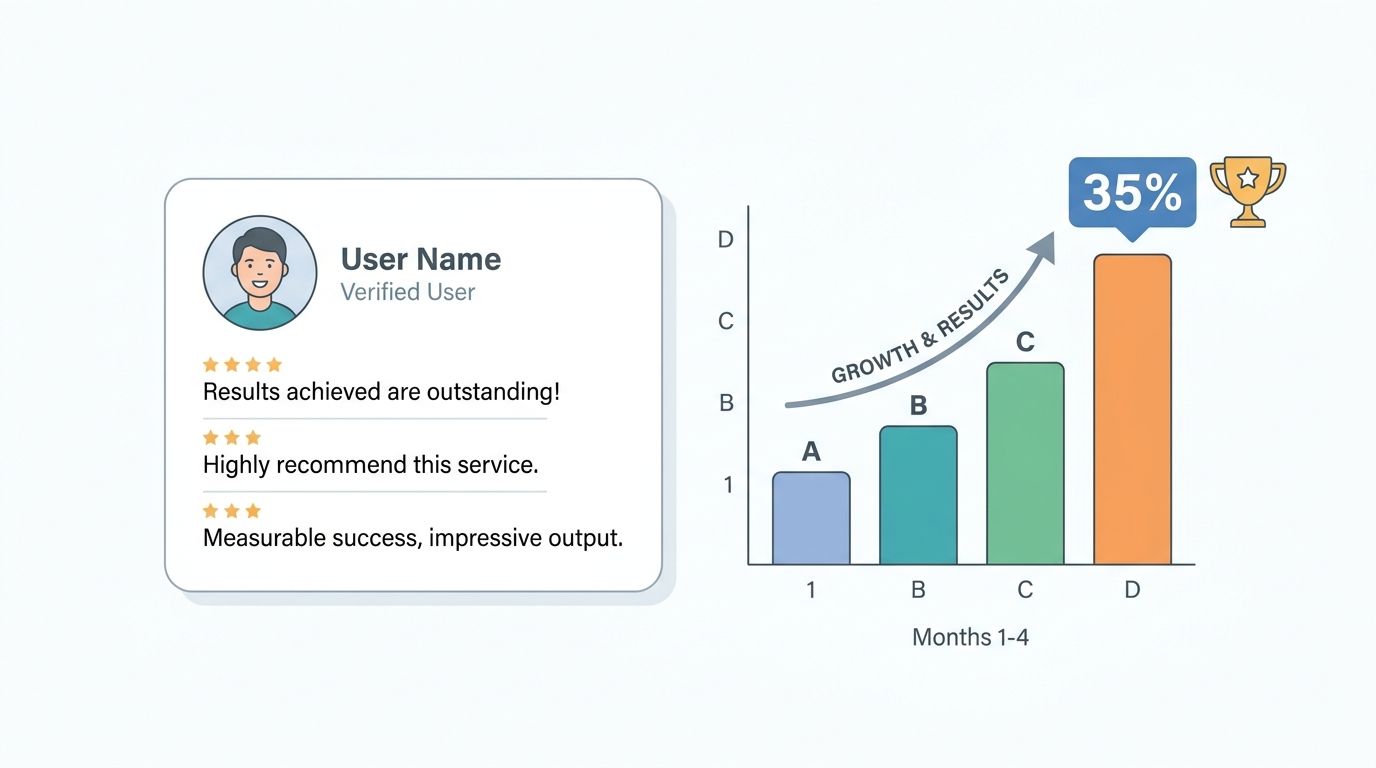
Since you shouldn't invent numbers or toss around vague performance claims, the move here is to describe similarity and outcomes qualitatively. Show that you've helped people in adjacent situations. Don't turn the connection request into a brag sheet.
Credibility without chest-thumping
A clean version:
"Hi [Name], I work with B2B teams building founder-led LinkedIn pipelines, and your profile caught my attention because you're already doing the hard part well. We've seen strong results when operators in your position pair content with targeted engagement. I'd be glad to connect and swap notes if useful."
That message does three things well. It establishes category relevance, ties your experience to their context, and avoids a hard close.
Use this format when you have legitimate pattern recognition from your work. Maybe you help sales leaders build personal brands. Maybe your team supports employee advocacy. Maybe you've seen what happens when outbound relies only on DMs and ignores comment-led visibility.
What usually fails:
- Empty social proof: "We've helped many companies like yours" says nothing.
- Aggressive certainty: "I know exactly how to fix this" is too much for a first touch.
- Premature offer framing: If you pitch the solution before the person sees themselves in the problem, acceptance drops.
Linqin users have an edge here because they can connect outreach to actual engagement context. The platform's lead tracking, analytics, and comment-first strategy make it easier to speak from observed patterns instead of generic promises. That changes the tone of the message. You're not claiming expertise in the abstract. You're speaking from work tied to real conversations.
5. The Industry-Specific Insight Message
This is the smartest option when the person cares about market context as much as personal networking. Think founders, strategy leads, investors, consultants, and senior operators. They respond well to people who notice the same shifts they do.
Show pattern recognition
An effective message sounds like:
"Hi [Name], I've been tracking how procurement conversations are changing in AI software buying, especially around evaluation speed and internal sign-off. Given your role at [Company], I thought that shift might be relevant. Would love to connect and compare what you're seeing."
This works because insight creates authority without forcing a credential flex. You aren't saying, "I'm impressive." You're saying, "I'm paying attention to the same market forces you're probably dealing with."
The trade-off is precision. If your insight is too broad, it sounds like recycled newsletter talk. If it's too niche, it can feel contrived. Aim for one market observation tied directly to their role or company motion.
A few ways to sharpen it:
- Tie the trend to their decisions: hiring, positioning, category framing, pricing conversations, partnerships.
- Use timely hooks: a product launch, funding news, a conference theme, a public post from their team.
- Share interpretation, not trivia: people don't need more headlines. They need signals that help them think.
The best industry insight messages don't just say what is happening. They imply why it matters to that person now.
A real-world scenario here is outreach to a VP of Marketing after a category shift. Instead of sending "saw the market is changing," mention the exact tension they're likely managing, such as demand capture versus category education. That's specific enough to feel informed and open-ended enough to invite discussion.
6. The Specific Use-Case Question Template
This is the highest-upside template when you can point to an actual tactic, system, or implementation detail from their visible work. It signals competence fast.
Lead with something concrete from their world. A workflow they mentioned. A process their team shared. A campaign approach visible on their company page. Then ask the kind of question only someone who understands the work would ask.
Make the question hard to fake
Example:
"Hi [Name], I saw your team mention moving toward a multi-touch measurement approach. I'm curious how you're handling offline touchpoints once the lead enters sales. That's where reporting usually gets messy. Would love to connect."
That message works because the use case is specific and the question isn't generic. It invites a real answer, not a polite emoji reaction.
A few rules keep this strong:
- Point to evidence: their post, team update, company blog, or interview.
- Ask for judgment, not documentation: avoid questions they could answer by sending you a help-center link.
- Stay close to the implementation: the more operational the question, the more credible the outreach feels.
Here's a practical walkthrough on how message quality changes when specificity goes up:
This template is especially good for product marketers, growth leads, revenue ops teams, and technical founders. They often ignore broad networking asks but respond to smart, bounded questions about execution. That's because a sharp question feels respectful. It says you understand the craft and won't waste their time with basics.
The trap is turning this into interrogation. One question is enough. If your message reads like a consultant discovery doc, you've gone too far.
7. The "I Admire Your Work" + Specific Collaboration Message
Most admiration-based messages fail because they're soft, vague, and one-sided. "Love your content" isn't memorable. Neither is "Would love to pick your brain." If you're going to lead with appreciation, make it specific and attach it to a credible next step.
Turn admiration into a concrete next step
A better version:
"Hi [Name], I really liked your recent interview on founder storytelling, especially your point about clarity over polish. It changed how I think about executive content. I think there's real overlap between our audiences, and a short content swap or live conversation could be useful for both of us. Open to connecting?"
That works because the compliment is earned. You named the exact work, explained why it mattered, and proposed a low-friction collaboration.
This format is powerful for creators, founders, consultants, recruiters, and operators building in public. It feels generous when the collaboration is mutual. It feels opportunistic when the ask is lopsided.
What improves acceptance:
- Anchor the praise in a real artifact: episode, post, talk, launch, hiring decision, or campaign.
- State the impact: tell them what changed in your thinking or action.
- Make the next step small: connect first, swap ideas, share audiences, or explore fit.
If you're building your own authority on LinkedIn, this type of outreach gets stronger as your positioning gets sharper. A practical LinkedIn personal branding growth guide helps you make that collaboration ask from a place of clarity, not wishful thinking.
Respect the asymmetry. If they're much more established than you, the collaboration angle still needs to offer something concrete.
A real scenario: you run a niche newsletter for sales operators and reach out to a RevOps creator whose post influenced your latest issue. Offer a specific guest exchange, quote contribution, or audience crossover. That's much better than asking for a vague coffee chat.
Comparison of 7 LinkedIn Connection Messages
| Approach | 🔄 Implementation Complexity | ⚡ Resource Requirements | 📊 Expected Outcomes | 💡 Ideal Use Cases | ⭐ Key Advantages |
|---|---|---|---|---|---|
| The Value-First Introduction | Medium, personalized research per prospect | Moderate, time per message, a relevant resource to share, engagement tools | Higher acceptance and credibility; foundation for deeper conversations | Growth/marketing operators, sales leaders, B2B founders | Differentiates from generic requests, builds trust and long-term engagement |
| The Mutual Connection Warm Intro | Low–Medium, verify and reference mutual ties | Low, network mapping, event/community lists | Dramatically higher acceptance; easier follow-ups | B2B sales leaders, event-attending founders, employee advocates | Strong social proof and immediate context, quick rapport |
| The Problem-Aware Curiosity Message | High, requires deep domain understanding | Moderate, listening, analytics, authentic questioning | Peer-level credibility; more engaged, inquiry-led conversations (slower sales) | Founders, growth operators, sales leaders | Positions sender as a thoughtful peer, sparks genuine dialogue |
| The Social Proof and Results Message | Low–Medium, gather verified metrics and case studies | Moderate, analytics, documented outcomes, concise framing | Fast credibility and quick qualification; risk of seeming salesy | Sales leaders, growth operators, founders seeking partnerships | Clear, outcome-focused message that resonates with time-poor prospects |
| The Industry-Specific Insight Message | Medium, ongoing research and trend monitoring | Moderate, access to reports, curated links, timely timing | Positions as thought leader; creates strategic follow-up topics | C-suite, senior operators, B2B sales leaders | Adds immediate intellectual value and relevance to the prospect |
| The Specific Use-Case Question Template | High, requires technical familiarity and substantive questions | Moderate, research into tech stack, earned context via engagement | Leads to deep, tactical conversations and longer engagement cycles | Growth operators, B2B SaaS founders, technical sales leaders | Demonstrates domain expertise and invites detailed collaboration |
| "I Admire Your Work" + Specific Collaboration | High, genuine, specific praise plus aligned proposal | Moderate–High, time to craft sincere compliment and workable collaboration | High potential for partnership and sustained relationships | Creators, founders seeking partnerships, employee advocates | Low-friction asks with mutual benefit; often yields lasting connections |
Automate Your Outreach, Not Your Relationships
The best connection message feels personal because it is personal. That's the part too many teams get backwards. They try to automate the sentence, not the prep. The smarter move is to automate the research, signal collection, drafting support, and follow-through so you can spend your time on judgment.
That's where these seven templates are useful. They're not scripts to blast. They're categories for matching context. If someone posted a thoughtful take, use value-first. If you share a credible overlap, use the warm intro. If their role creates obvious operational tension, use curiosity. If you've earned relevant proof, use it carefully. If you spot a market shift, bring insight. If they revealed a real tactic, ask a use-case question. If their work moved you and there's a mutual upside, propose collaboration.
Users often fail on LinkedIn because they force the same message into every situation. That creates volume, not momentum. Recipients can tell when they're just another name in a sequence. They can also tell when you've done the work.
The practical challenge isn't understanding this. It's doing it consistently. Founders are busy. Sales leaders don't want to spend their evening researching profiles. Growth operators already have enough channels to manage. That's why the best systems handle the repetitive parts in the background. Tools like Linqin can identify relevant conversations, help write in your actual voice, turn engagement into warm lead context, and show which actions are driving replies, profile visits, and inbound interest.
That matters because good networking starts before the connection request. If someone's seen your comments, your posts, or your point of view, your LinkedIn message for connection lands warmer even if you've never spoken. You're not arriving cold. You're arriving familiar.
If you want to grow LinkedIn while you sleep, don't automate relationships. Automate the work around them. Ready to start? Sign up for Linqin and let your AI agent build your pipeline.
If you want to grow LinkedIn while you sleep, Linqin gives you the advantage others often lack. It helps you find relevant conversations, write comments and posts in your voice, track warm leads from engagement, and keep outreach tied to real context instead of generic scripts. Use it to make every LinkedIn message for connection feel timely, informed, and human.