LinkedIn Growth Strategy for 2025–2026: Overview
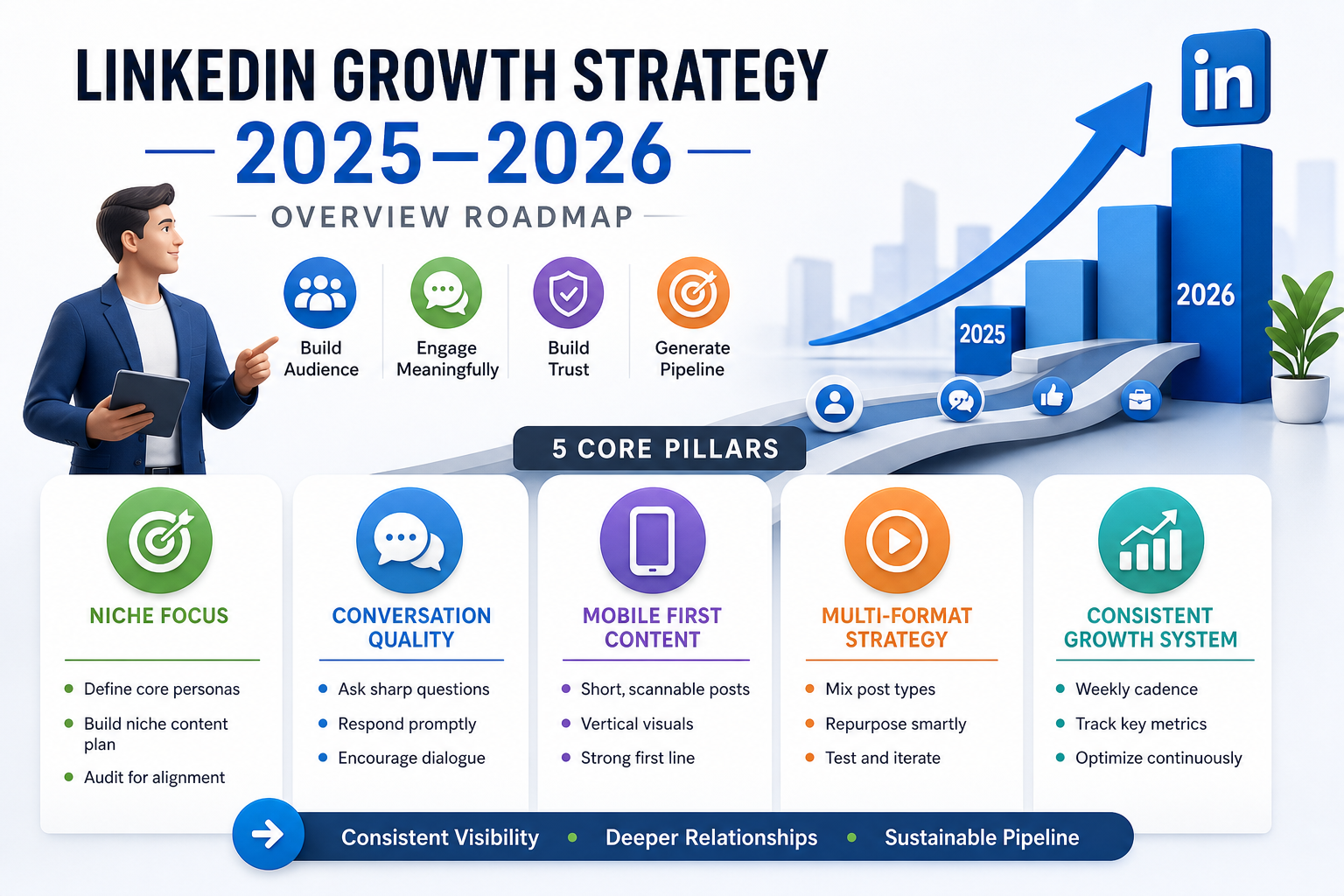
Crafting a solid LinkedIn Growth Strategy for 2025 and 2026 means balancing long term audience development with high quality engagement and a steady, scalable pipeline. The landscape has shifted toward more deliberate, value driven activity where Linkedin Growth Tactics emphasize niche authority, authentic conversations, and multi format content. This overview stitches together conclusions from leading LinkedIn strategists and a range of modern growth hacks to outline a sustainable path for consistent visibility, trust, and inbound opportunities.
This overview stitches together conclusions from leading LinkedIn strategists and a range of modern growth hacks to outline a sustainable path for consistent visibility, trust, and inbound opportunities.
Core pillars of the strategy
| Pillar | Why it matters | Key actions |
|---|---|---|
| Niche Focus | Algorithms reward relevance. Narrow focus drives deeper value and faster recognition within a target audience. |
|
| Conversation Quality | LinkedIn prioritizes meaningful dialogue over sheer volume. |
|
| Mobile First Content | Most users read on mobile; readability and scannability boost retention and action. |
|
| Relationship Building | Active networking and personal profiles outperform broad page posts for reach and credibility. |
|
| Asset Harvesting | Followers, newsletters, and value offers compound over time into pipelines. |
|
These pillars guide creators toward focused audiences. They shape daily work and long term outcomes.
Consistent effort across niches builds trust and visibility over time.
Strategic sequence for 2025–2026
- Audit and calibrate your profile for relevance and credibility. Ensure headline communicates outcomes, not titles alone; optimize for search with careful keyword placement; set a public profile with a clear value proposition.
- Define your growth pathway by mapping content to the buyer journey: awareness, consideration, decision. Build a content cadence that supports each phase with formats that resonate locally on mobile.
- Launch a multi format content mix that includes short post hooks, carousels, and captioned video. Use carousels to teach step by step and stories to illustrate outcomes.
- Embrace active community participation by commenting thoughtfully on relevant posts, joining conversations, and building meaningful relationships with a core network of prospects, partners, and peers.
- Scale with smart tools and systems using LinkedIn features like newsletters, Featured sections, and saved searches to maintain consistency without increasing manual workload excessively.
This sequence guides you from profile credibility to a repeatable growth routine. Start by aligning your profile with clear outcomes, then plan content that travels with the buyer, and finish by setting up tools that keep you consistent.
As you scale, focus on genuine engagement and formats that perform well on mobile, avoiding rote posting. The goal is steady progress, not a quick burst of activity.
Recommended tactics at a glance
- Profile optimization: keyword rich About, relevant experience, strong banner, and a public, accessible URL.
- Content cadence: aim for a stable rhythm such as 3–5 posts per week, with high quality batch content that addresses niche pain points.
- Engagement strategy: dedicate 30 minutes daily to engaging with key prospects and industry peers, then publish with confidence.
- Format mix: mix text posts with carousels and short videos, ensuring captions and accessibility are built in.
- Lead generation: deploy lightweight lead magnets inside the Featured section and test newsletters for deeper relationships.
Use this snapshot to guide your setup and daily routine. The aim is to keep momentum while delivering content that matters to your audience.
Small, consistent actions over time yield visible results. Prioritize clarity, relevance, and accessibility in every post.
Measurement and iteration
To sustain growth, track the right signals beyond vanity metrics.
Focus on quality engagement, profile visits from target ICPs, saved posts, newsletter subscriptions, and inbound messages that convert to conversations. Use a simple dashboard to compare weekly and monthly results and adjust the mix every 6 to 8 weeks.
Quick-start checklist
- Refine your niche and personas.
- Craft a value driven headline and About section with a clear hook.
- Plan a mobile friendly content calendar emphasizing short reads and visual formats.
- Set a daily engagement routine with a 30 minute minimum.
- Open a LinkedIn Newsletter and prepare at least 2 initial issues.
- Publish a feature rich post every week and track the performance signals.
By aligning your output with these LinkedIn Growth Tactics and maintaining a patient, disciplined approach, you can build a resilient personal brand and a sustainable pipeline on LinkedIn for 2025 and beyond.
Consistency over time compounds visibility and trust, helping you attract the right connections and conversations.
Key principle from Mark Schaefer: Start Conversations to Drive Growth
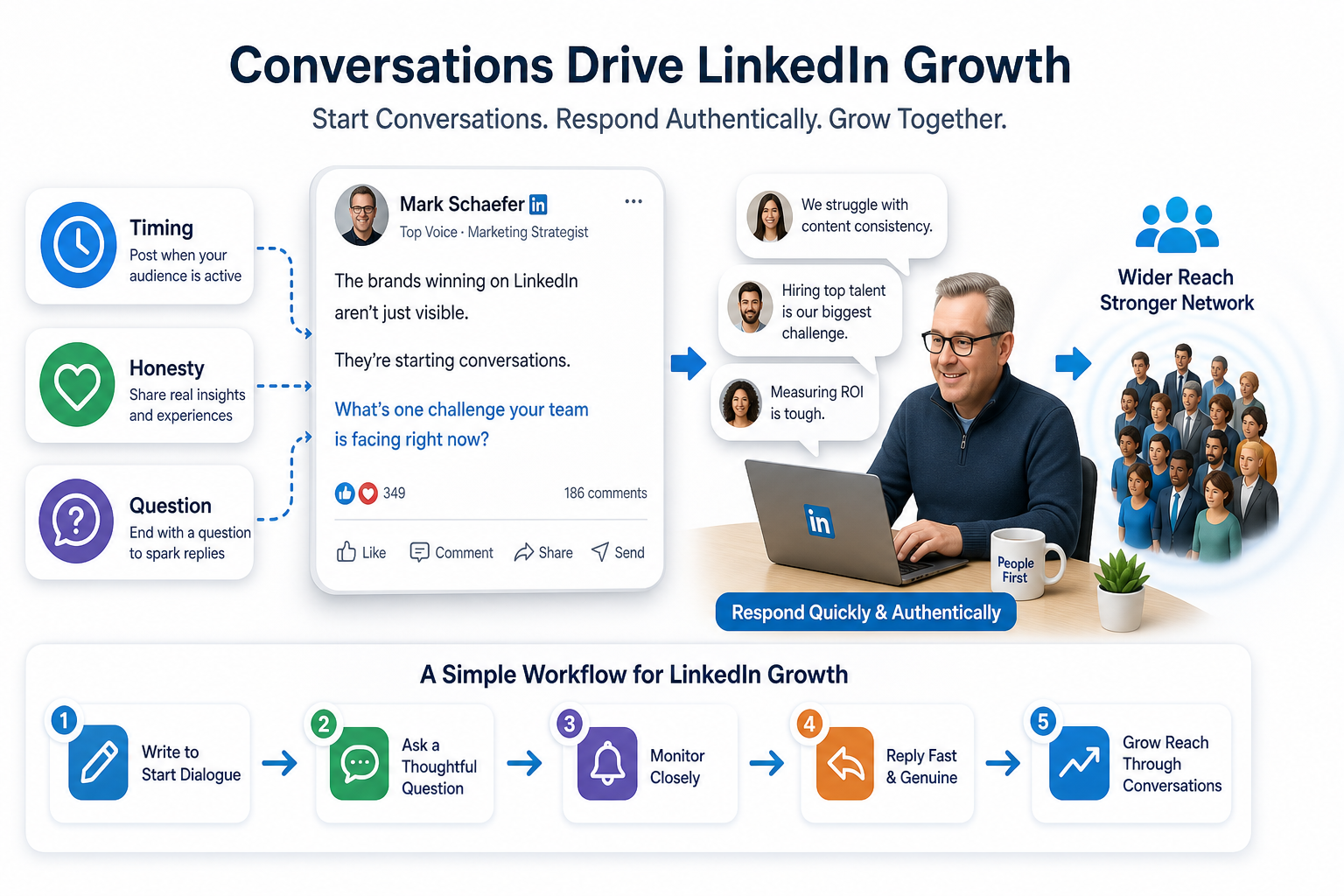
One of the most enduring insights from Mark Schaefer is that growth on LinkedIn pays off when you prioritize conversations over sheer visibility. Likes and shares are useful signals, but they do not move the needle in the same way that meaningful dialogue does. When your content invites discussion, the platform recognizes the engagement as a signal of relevance and begins to distribute your post beyond your immediate network.
A viral moment often hinges on three elements: timing, honesty, and a compelling close that invites reply. Timing matters because LinkedIn tends to surface conversations when people are most likely to engage. An honest, human post cuts through recycled marketing language and resonates with readers who crave authenticity. Ending with a thoughtful question serves as a spark that invites responses, turning a passive read into an active conversation.
The author’s quick, authentic responses are equally critical. Prompt replies maintain the momentum, encourage additional commentary, and demonstrate approachability. When you respond with clarity and empathy, you validate contributors and keep the thread moving, which signals to the algorithm that this conversation is valuable and worth showing to more people.
In practice, this principle translates into a simple but powerful workflow. Instead of posting as a broadcast, publish as a dialogue starter. Then, monitor the thread closely and engage in real time. The result is a widening circle of reach driven by genuine interactions rather than static impressions.
- Lead with a human voice: share a moment of vulnerability or a candid observation that invites empathy and reflection.
- End with a specific question: craft a closing line that requires expert insight or a concrete experience to answer.
- Respond promptly and authentically: reply early with thoughtful comments, avoiding canned responses, to keep conversations alive.
- Encourage ongoing dialogue: pose follow-up prompts and acknowledge new perspectives to sustain momentum.
When you embed the start conversation mindset into your Linkedin Growth Tactics strategy, you shift from chasing engagement metrics to cultivating evolving conversations that expand reach, trust, and long term opportunity. The goal is not a one off viral moment but a durable pattern of value driven exchanges that attract the right audience over time.
Understanding the 2025 LinkedIn Algorithm with Richard Van Der Blom insights
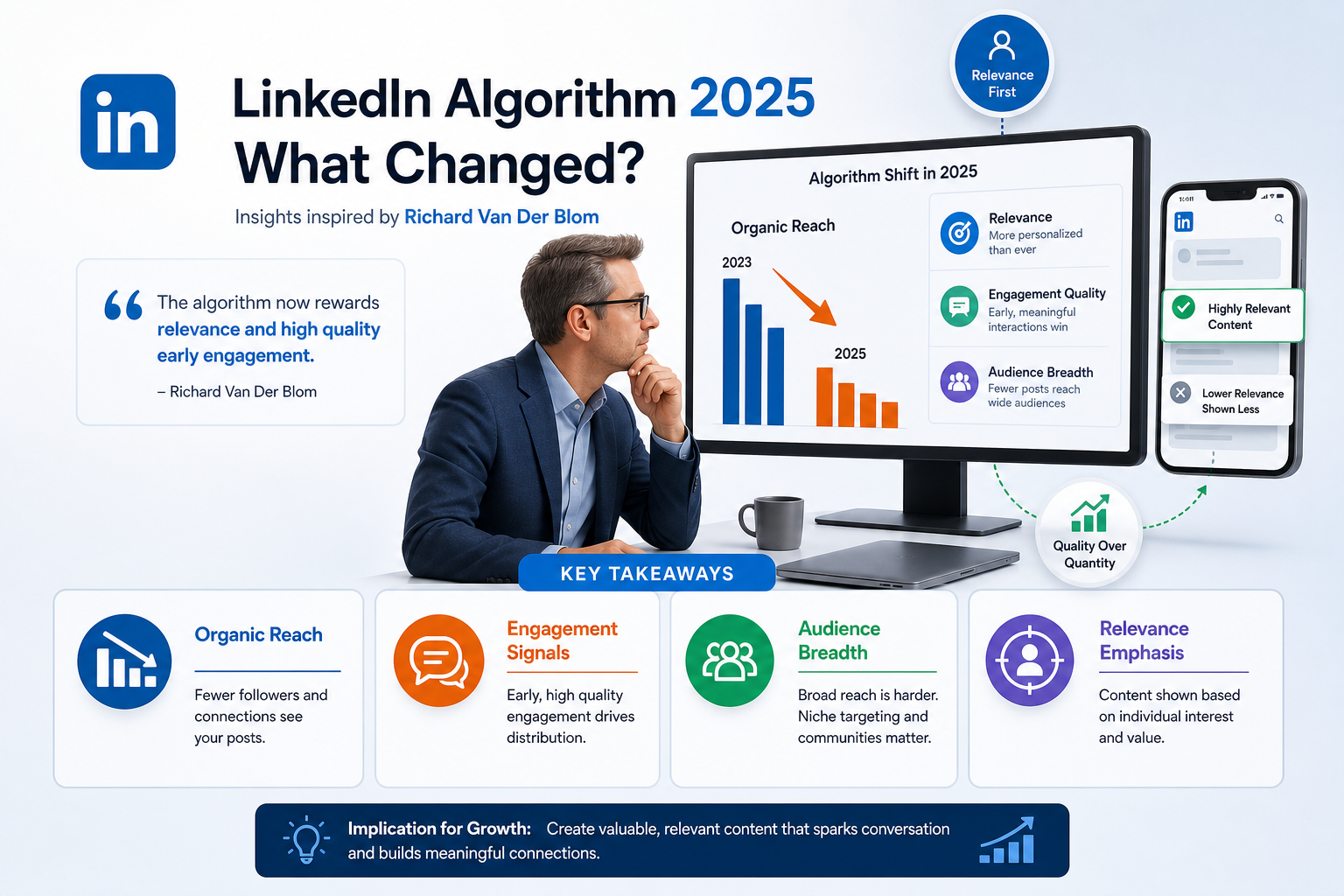
Industry observers like Richard Van Der Blom have documented clear shifts in how LinkedIn surfaces content in 2025. The landscape shows a notable pullback in organic reach for many creators, accompanied by a tighter distribution of visibility as the algorithm refines its relevance signals. Engagement quality matters more than sheer volume, and fewer posts reach a broad, platform-wide audience compared to previous years. Understanding these dynamics is essential for crafting Linkedin Growth Tactics that remain effective in a more selective feed.
Engagement quality matters more than sheer volume, and fewer posts reach a broad, platform-wide audience compared to previous years. Understanding these dynamics is essential for crafting Linkedin Growth Tactics that remain effective in a more selective feed.
Key takeaways at a glance
| Aspect | What changed | Why it matters |
|---|---|---|
| Organic reach | Declines in how many followers and connections see a given post in their feeds. | Creators must prioritize relevance and value to trigger meaningful distribution beyond incumbents. |
| Engagement signals | Early, high quality engagement like thoughtful comments and sustained conversations are weighted more heavily. | Encourages content designed to spark dialogue rather than quick impressions. |
| Audience breadth | Content from many creators does not reach broad audiences as readily as before. | Strategic partnerships, niche targeting, and community building become more important for reach. |
| Relevance emphasis | The algorithm increasingly prioritizes relevance to individual users based on interests and behavior. | Creators should align topics closely with the needs and contexts of precise audience segments. |
Practical implications for your content plan
- Niche over broad appeal: Focus on tightly defined topics and personas to boost relevance signals and meaningful interactions.
- Prioritize early conversations: Design posts to invite thoughtful comments and extend the discussion in the first hours after publication.
- Quality over quantity: A smaller number of high value posts can outperform a larger batch of mediocre content.
- Leverage long form and formats that encourage engagement: Carousels, rich media, and serialized insights tend to foster deeper conversations.
Actionable tactics you can implement now
- <strongTailor topics to your ICP: Validate each topic against explicit audience pain points and measurable outcomes.
- <strongEnd with a thoughtful question: Close posts with a question that prompts expert commentary and diverse perspectives.
- <strongEncourage comments with prompts: Use prompts that require analysis or storytelling rather than generic opinions.
- Moderator approach to comments: Reply promptly with nuanced insights to sustain the conversation and extend reach.
Measurement considerations
Rather than chasing total impressions, track signals that indicate meaningful engagement and potential reach lift. Key metrics include:
- Quality comments and the depth of discussions
- Saves and shares that reflect perceived value
- Profile visits from target ICPs and subsequent connection quality
- Audience relevance over time evidenced by repeat interactions from the same niche
Bottom line
The 2025 LinkedIn algorithm, as observed by Richard Van Der Blom and other industry analysts, rewards relevance and high quality early engagement. The era of broad reach for every post is fading, making deliberate niche focus and authentic community building essential. By designing content that invites conversation, aligning with precise audience needs, and measuring meaningful engagement, you can maintain momentum and steadily grow influence within your target market.
Health Launchpad: seven growth strategies for 2025–2026
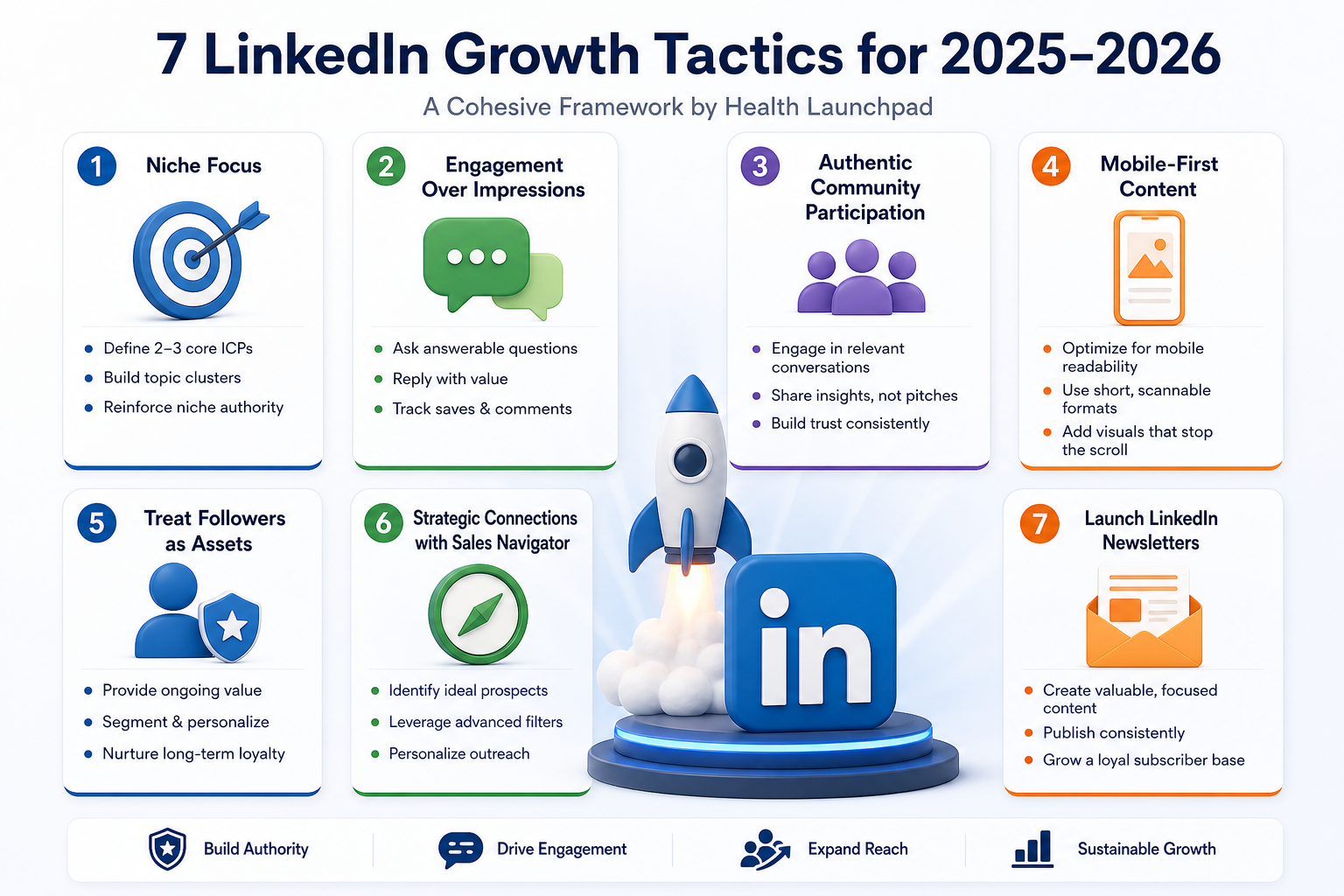
Health Launchpad highlights seven actionable tactics that form a cohesive growth framework for 2025 and 2026. Each strategy focuses on building durable authority, meaningful engagement, and scalable reach within a healthcare technology audience. Implement these in sequence or combine them to create a resilient LinkedIn growth engine.
- Niche focus
Algorithms reward relevance, so sharpening your focus on a well defined niche accelerates credibility and engagement. Tailor your content to address the specific pain points, workflows, and outcomes of a narrow audience rather than chasing broad appeal.
- Define 2 to 3 core ICPs (Ideal Customer Profiles) with explicit challenges.
- Develop topic clusters that directly map to those ICPs’ priorities.
- Audit your feed regularly to ensure every post reinforces your niche authority.
- Prioritize engagement over impressions
Recent algorithm shifts elevate early, meaningful engagement over raw view counts. Focus on sparking thoughtful conversations that stay in the comments rather than chasing high impression numbers alone.
- End posts with precise, answerable questions to invite expert input.
- Encourage sustained dialogue by responding quickly with value driven insights.
- Track saves and comments as leading indicators of engagement quality.
- Authentic community participation
Active involvement in the network compounds reach. Personal profiles and genuine interactions outperform broadcast style posting for credibility and long term growth.
- Dedicate time to comment thoughtfully on relevant posts in your niche.
- Engage with prospects and peers in a respectful, helpful voice.
- Use a consistent routine to join conversations before or alongside original posts.
- Mobile first content
With the majority of LinkedIn users on mobile, content that reads well on small screens wins more attention. Prioritize scannable copy, short paragraphs, and vertical visuals.
- Front load the hook in the first 125 characters for quick capture.
- Use bullet points, bold subheads, and white space to improve readability.
- Prefer vertical visuals and captions for videos to accommodate silent viewing.
- Treat followers as assets
Your follower base is a valuable, renewable channel for conversations and inbound opportunities. A loyal audience compounds reach and trust over time.
- Post consistently to stay top of mind with your followers.
- Deliver high value in each interaction to convert followers into advocates.
- Leverage follower feedback to refine topics and formats that resonate.
- Strategic connections via Sales Navigator
Targeted connection building expands reach with qualified prospects. A deliberate approach reduces noise and accelerates relationship building.
- Set up saved searches for key healthcare technology segments and roles.
- Prioritize connections with a clear relevance to your ICPs and buying committees.
- Use personalized outreach that reflects an understanding of their challenges and needs.
- Launching LinkedIn newsletters
Newsletters create deeper engagement and longer relationships compared to standard posts. They also help establish you as a trusted content creator within your niche.
- Publish a regular cadence of insightful, research backed issues tailored to your audience.
- Promote signups via your profile and posts to grow a loyal subscriber base.
- Measure open rates and subscriber growth to inform future topics and formats.
By integrating these seven tactics, Health Launchpad practitioners can build a durable personal brand, expand their qualified networks, and convert engagement into meaningful opportunities in 2025 and beyond.
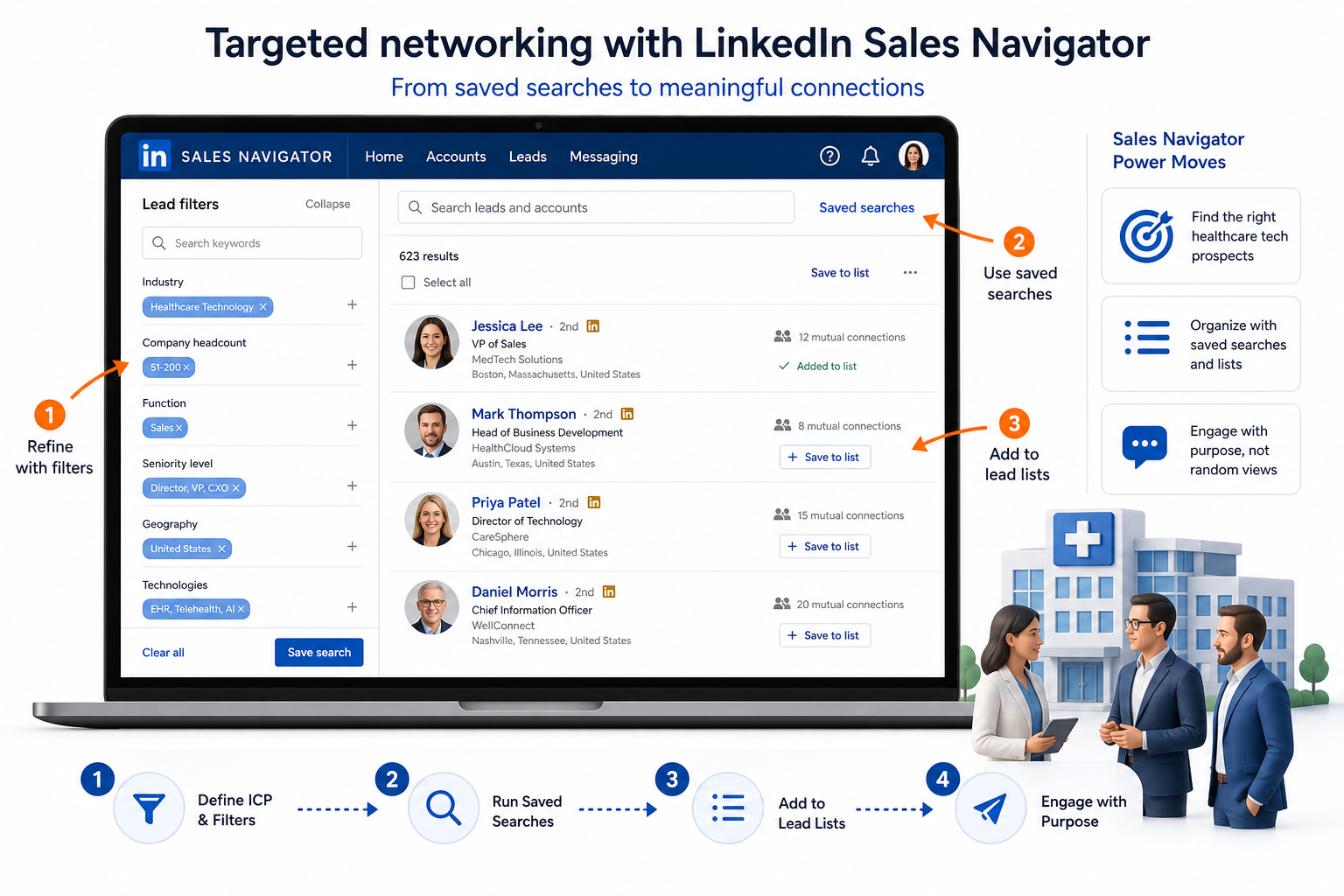
Targeted networking with LinkedIn Sales Navigator
Targeted networking with LinkedIn Sales Navigator positions LinkedIn as a precision tool for building a focused network of healthcare technology companies and the decision makers who influence purchasing decisions. This section outlines how to shift from random profile views to a deliberate, workflow driven approach that accelerates relationship building and pipeline creation.
Why Sales Navigator matters for healthcare technology
Industry audiences in healthcare technology are highly segmented. A broad networking approach often yields noisy connections and low quality conversations. Sales Navigator offers advanced filters and lists that align with your ICPs, enabling you to:
- Identify decision makers and roles central to buying decisions.
- Filter by industry, company size, function, seniority, and technology adoption signals.
- Organize prospects into saved searches and lead lists for consistent outreach.
Core features to leverage
| Feature | How it helps | Practical use |
|---|---|---|
| Saved Searches | Automates discovery by applying complex, multi parameter filters to surface highly relevant profiles. | Set up searches for specific healthcare technology segments, buyer personas, and regional focus. Schedule periodic updates and review results weekly. |
| Lead Lists | Keeps a curated roster of contacts who match your ICP, enabling focused outreach and tracking. | Build lists around hospital IT leaders, clinical innovators, or procurement leads. Tag lists by deal stage or product interest for tailored messages. |
| Advanced Filters | refines search by company size, function, seniority, technologies used, and more. | Filter for healthcare technology decision makers at mid to large sized healthcare systems or regional health networks. |
| InMail and TeamLink | Direct outreach to targets not in your network and insight into shared connections that can warm introductions. | Craft concise, value driven outreach messages. Use TeamLink to identify internal advocates who can facilitate introductions. |
| Notes and Tags | Keep context around each contact and organize by topic, interest, or pipeline stage. | Attach notes about prior interactions, relevant pain points, and preferred communication channels for future follow ups. |
A practical outreach workflow
- Define your ICP clearly. For example, target roles such as Chief Medical Information Officer, VP of IT, or Director of Clinical Informatics within healthcare systems of a defined size.
- Build saved searches using disease area, technology stack, and organizational attributes. Save at least three distinct searches that cover your primary buyer personas.
- Create lead lists from those searches and segment them by potential value and buying stage.
- Profile outreach with personalized, value driven messages that reference a specific challenge or outcome relevant to the target role.
- Leverage mutual connections to request warm introductions when possible, using TeamLink or in message context to increase reply rates.
- Track and iterate on response rates, time to first reply, and conversation quality. Refine search attributes and message templates based on learnings.
Message design best practices
- Lead with relevance mention a known challenge or a concrete outcome relevant to the role and organization.
- Keep it concise provide one clear value proposition and a simple next step, such as a brief call or a shareable resource.
- Invite a low friction reply end with a question that invites sharing a current priority or timeline.
Measuring effectiveness
Move beyond vanity metrics and focus on indicators that signal pipeline potential. Consider the following:
| Metric | What it indicates | How to act |
|---|---|---|
| Response rate | How often targets reply to initial outreach. | Experiment with different value propositions and messaging angles to improve relevance. |
| Quality of replies | Depth of engagement and clarity of potential interest. | Refine questions and tailor follow ups to address stated priorities. |
| Connections to conversations | How many initial conversations turn into ongoing dialogue. | Track time to first call or meeting and adjust targeting or messaging as needed. |
| Lead list to opportunity conversion | Progression from saved lead to qualified opportunity. | Align content and offers with identified pain points to accelerate progression. |
Governance and etiquette
Use Sales Navigator with a respectful, value first approach. Do not overwhelm prospects with frequent unsolicited messages. Maintain professional boundaries, respect privacy, and honor response preferences. When you combine a deliberate networking routine with thoughtful follow ups, you improve your odds of building meaningful partnerships within the healthcare technology ecosystem.
Quick-start checklist
- Define your primary ICPs and buying roles.
- Set up at least three saved searches with precise filters.
- Build 2–3 lead lists and tag them by stage or priority.
- Design a concise, value driven outreach message for initial contact.
- Map a 4 to 6 week outreach cadence with purposeful touchpoints.
By treating Sales Navigator as a core asset for Linkedin Growth Tactics, you transform your networking from quantity to precision. This focused approach reduces noise, accelerates relevant conversations, and lays a stronger foundation for sustainable healthcare technology partnerships.
Mobile first content and vertical storytelling formats
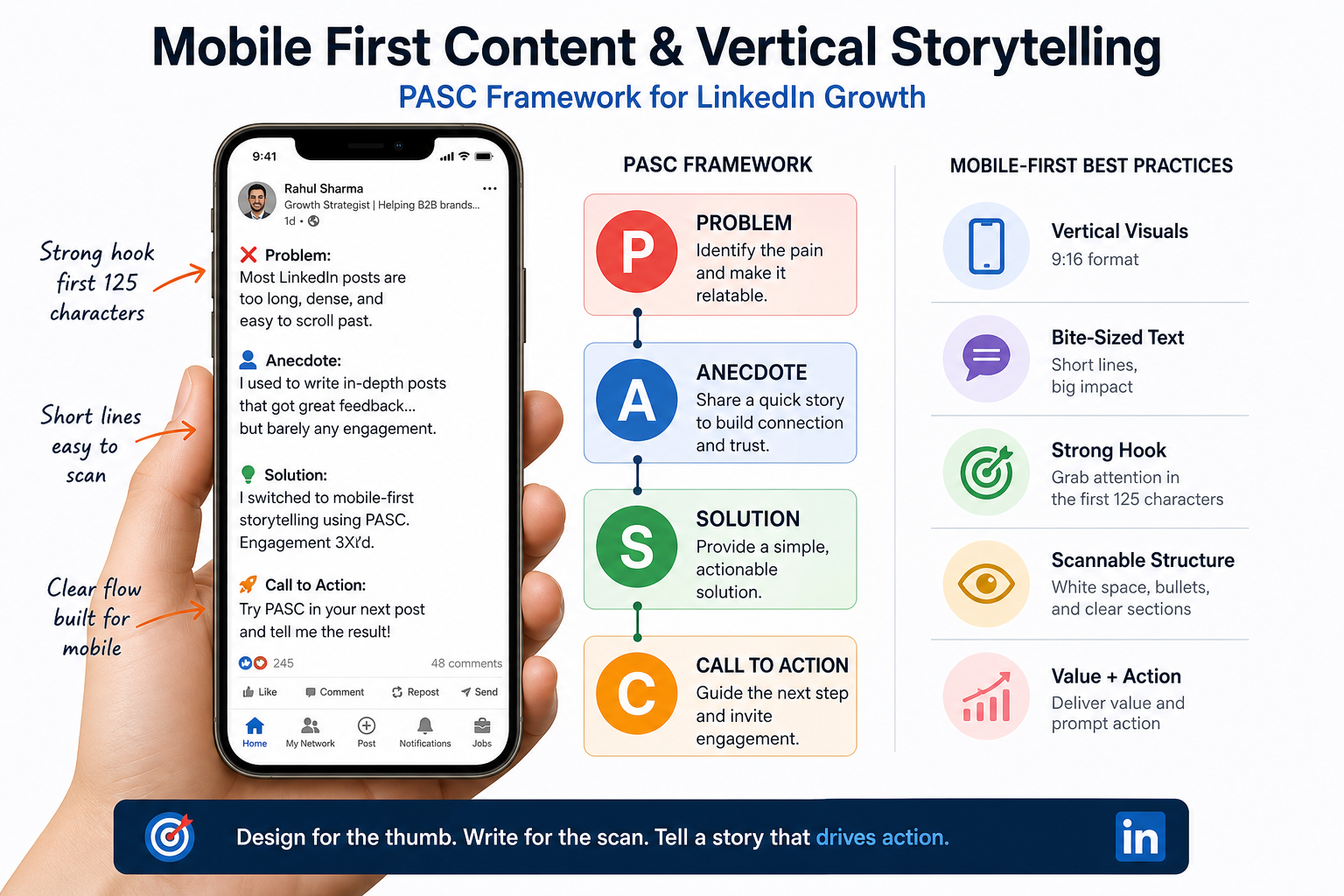
In a LinkedIn environment where the majority of users scroll on mobile, the design of your content must prioritize quick comprehension and visual clarity. Mobile first content and vertical storytelling formats are not optional add ons; they are the core vehicle for grabbing attention, conveying value, and prompting action in a scrolling feed. The core principles are bite sized posts, a compelling first 125 characters, and vertical visuals that communicate without sound or long blocks of text.
Problem
When posts are long, dense, or formatted for desktop only, readers stop early. The mobile user expects fast reads, scannable structure, and immediate relevance. If your content fails to deliver a clear hook within the first lines, you lose the opportunity to earn a scroll. This friction compounds as feeds become more crowded, making it harder to cut through with generic messaging.
Anecdote
Consider a typical LinkedIn scroll session: a user taps a post that looks like a quick read, but the content unfolds into paragraphs that require pinching and zooming. The viewer quickly taps away, leaving a thumbs down to your engagement metrics. The post may contain valuable insights, yet the mobile experience averse to friction undermines its impact. Reframing content for vertical layouts and concise storytelling transforms that moment into a meaningful connection.
Solution
Adopt a mobile centric content workflow that emphasizes the elements below. Use the PASC storytelling framework to structure mobile friendly posts so they read smoothly on small screens.
- Problem — Open with a clear, relatable pain point in a single, scannable sentence. Lead with the outcome or consequence the audience fears if the problem remains unsolved.
- Anecdote — Share a concise, human moment or example that illustrates the problem in action. Keep it to 2 to 3 lines or a short caption block to maintain rhythm.
- Solution — Present a concrete remedy or insight in 2 to 4 bullet points. Use short phrases and optional micro visuals to reinforce the idea.
- Call to Action — End with a specific, low friction next step, such as a question a reader can answer in the comments, a link to a resource, or an invitation to save the post for later reference.
Furthermore, optimize the post format for vertical consumption:
- First 125 characters — Craft a hook that promises a tangible outcome or dramatic insight. This is the prime real estate for mobile users.
- Short paragraphs — Break ideas into 1 to 3 line blocks to improve readability without forcing the reader to scroll horizontally.
- Vertical visuals — Prefer tall, mobile friendly images or vertical carousels. Ensure text on visuals is large enough to read on small screens and includes minimal jargon.
- Captions and subtitles — Provide captions for videos and use bold subheads within slides to guide the eye and maintain context without audio.
- Accessible formatting — Use bullet points, numbered steps, and bold emphasis to help skimming readers quickly grasp the takeaways.
Carousels and short videos are particularly effective for this format. Carousels allow you to tell a sequence of steps or outcomes in a logical, mobile friendly flow, while captioned videos ensure accessibility and sustained engagement even when sound is off.
Actionable guidelines you can apply now
- <strongDraft a 125 character hook that promises a result or risky insight the audience cares about.
- Lean into the PASC structure for every mobile post to maintain coherence and momentum.
- Use vertical design first with bold headings and high contrast to improve scannability.
- Test formats by alternating text posts, carousels, and short videos to identify what resonates with your audience.
- Close with a prompt that invites comments or suggests a practical next step, increasing early engagement signals.
By embracing mobile dominant formats and vertical storytelling, you amplify the reach and resonance of your Linkedin Growth Tactics. The goal is to deliver value quickly, encourage dialogue, and make it effortless for busy professionals to understand, save, and act on your ideas.
Newsletter driven depth and relationships on LinkedIn
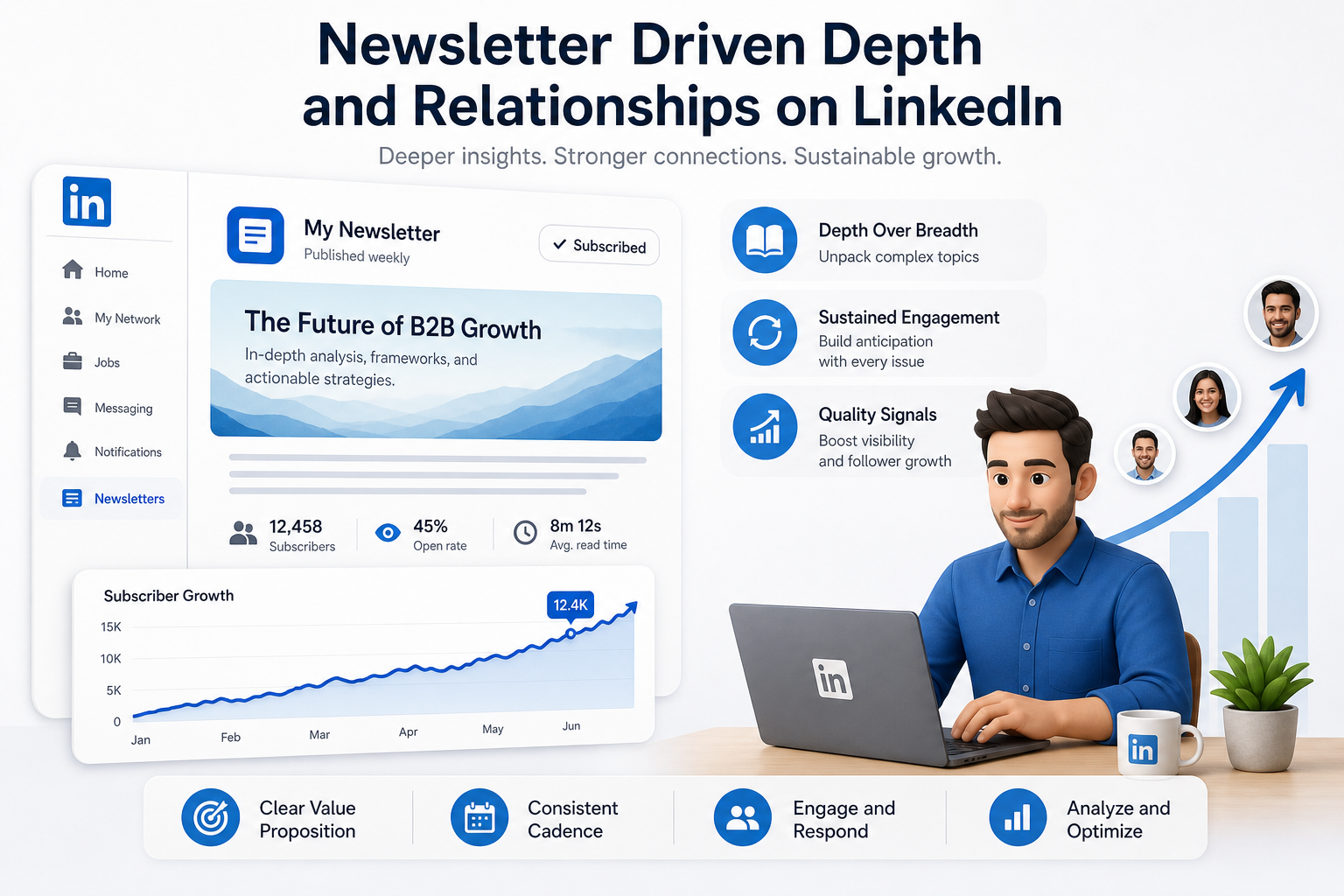
Newsletter driven depth and relationships on LinkedIn offers a powerful pathway to deepen audience understanding and convert engagement into sustained relationships. Newsletters on LinkedIn provide a dedicated channel for delivering longer, more cohesive insights than typical feed posts, enabling you to explore topics with greater nuance while maintaining the visibility benefits of the platform.
Early adoption matters. When a creator launches a LinkedIn newsletter, initial subscribers tend to scale quickly as the feature gains momentum within the network. This early traction often translates into higher follower growth and a more committed readership over time. The newsletter format is particularly effective for audiences seeking in depth coverage, actionable frameworks, and regular cadence without relying on constant feed posting.
Why newsletters outperform standard feed posts
- Depth over breadth: Newsletters allow you to unpack complex topics, share case studies, and present research with proper context.
- Sustained engagement: Regular issue drops create anticipation and a repeatable rhythm that keeps you top of mind.
- Quality signals for growth: Subscriptions, open rates, and reading time signal audience intent and content relevance to the LinkedIn algorithm.
Best practices for building a newsletter program
- Define a clear value proposition: Articulate what readers will gain in every issue and how it helps their work challenges.
- Establish a publish cadence: Start with a realistic schedule (for example, biweekly or monthly) and maintain consistency.
- Lead with practical, actionable content: Include frameworks, templates, checklists, and concrete next steps.
- Integrate with your broader LinkedIn activity: Promote newsletter issues in posts and comments to drive cross channel engagement.
- Measure and iterate: Track open rates, subscriber growth, and clicks to refine topics and formats.
Implementation steps you can apply now
- Choose a core topic cluster: Pick 2–3 interconnected themes that align with your ICPs and buying journeys.
- Draft an introductory issue: Outline the problem, the approach you’ll take, and a sample outcome readers can expect.
- Promote signup opportunities: Include a visible subscribe CTA in your About section, posts, and profile banner.
- Leverage repurposing opportunities: Clip insights from issues into short posts, slides, or micro videos to widen reach.
In the context of Linkedin Growth Tactics, a well executed newsletter program acts as a durable engine for depth and relationships. It complements shorter feed content by providing ongoing value, fostering trust, and guiding followers toward deeper conversations and targeted opportunities. The ultimate impact is not just more readers, but more informed, engaged readers who are receptive to further value exchanges over time.
Profile optimization foundations and real name driven tactics
Optimizing your profile is the foundation of effective LinkedIn growth. A well crafted profile acts as a conversion landing page for visitors who discover you through searches, referrals, or content.
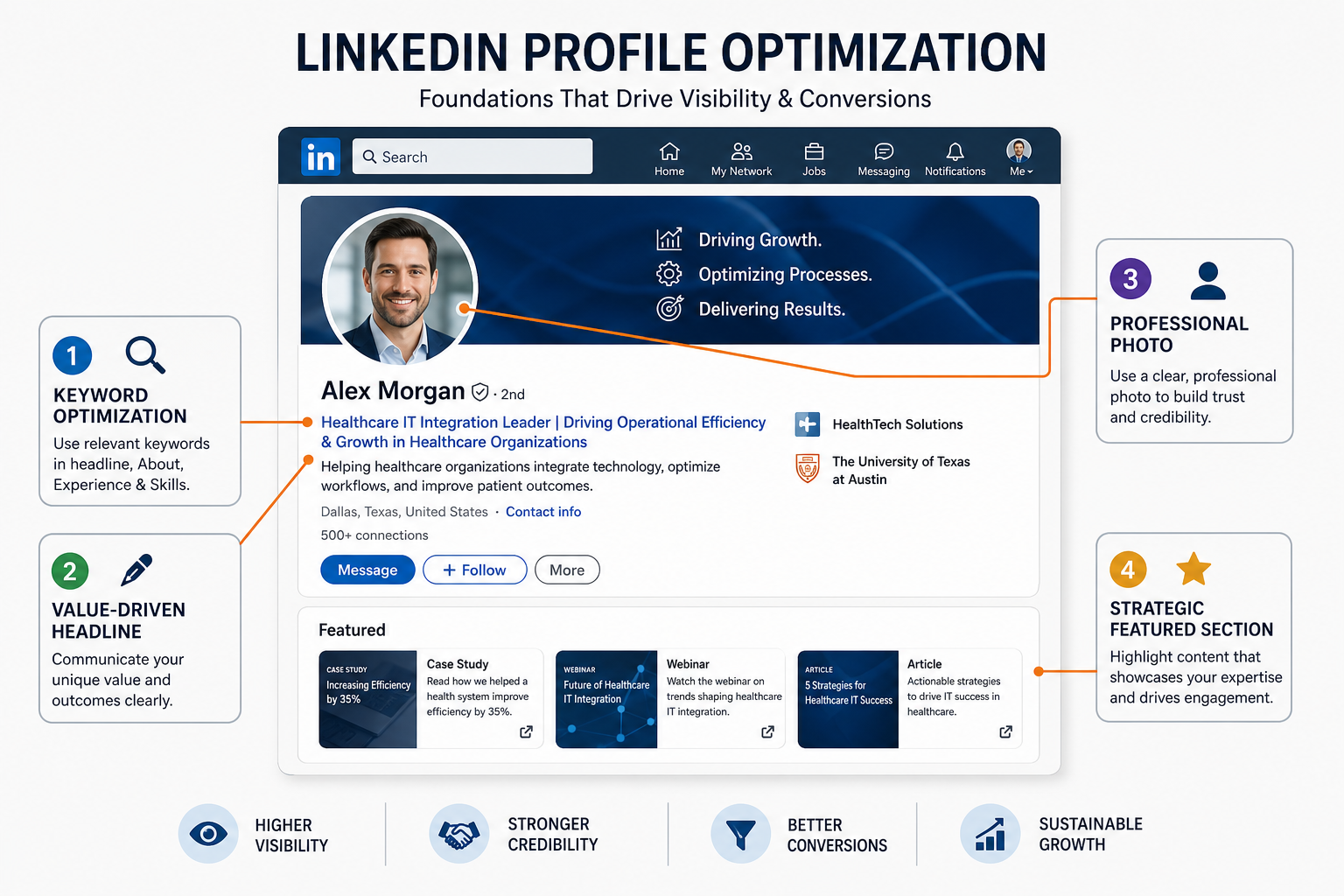
The goal is to signal relevance, credibility, and a clear path to the next step in your growth funnel. By integrating keyword driven optimization, a value oriented headline, a professional photo, and a strategically designed Featured section, you create momentum that supports higher visibility and stronger conversions as part of your LinkedIn Growth Tactics.
Keyword optimization that drives discovery
Think of your profile as a search friendly indexable page. Populate key sections with terms your ICPs are actively searching for, without sacrificing readability or authenticity. There is no separate keyword tool for LinkedIn, so use a practical, research based approach:
- Scan top profiles in your niche to identify recurring terms and phrases that describe your expertise and outcomes.
- Incorporate 3 to 5 core keywords naturally in your About, Experience, and Skills sections.
- Prioritize long tail phrases that reflect concrete outcomes, such as “healthcare IT integration leader” or “B2B healthcare optimization consultant,” rather than generic titles.
- Balance keyword usage with readability; avoid keyword stuffing that reduces clarity or feels mechanical.
Strong headline that communicates value
Your headline is the first impression and the main hook for click through. Move beyond job titles to clearly articulate the outcome you help clients achieve. A practical formula:
- Who you help → Target audience
- What you deliver → Outcome or transformation
- How you achieve it → Primary method or approach
Sample structures you can adapt:
- Helping B2B health tech firms generate measurable ROI through targeted LinkedIn outreach
- Healthcare IT leader enabling hospitals to accelerate digital adoption with practical, evidence based strategies
Professional photo that builds trust at a glance
Profile photos are a quick trust signal. A clear, high resolution headshot with a warm, approachable expression tends to outperform generic or distant imagery. Consider:
- A clean background that minimizes distractions
- Framing from the shoulders up with your face centered
- Professional attire aligned with your brand and audience expectations
Effective Featured section that converts
The Featured section should act as a mini storefront for your value proposition. Use it to showcase tangible assets that prospective clients or collaborators can act on. Structure it with a balanced mix of entry points and depth:
- Low barrier offers such as a free checklist, a short case study, or a quick assessment template
- A mid tier engagement like a 15 minute strategy call or audit
- A high value asset such as a detailed framework or methodology that demonstrates your approach
Public profile visibility and URL hygiene
Make your profile discoverable and easy to share. A clean, public profile URL improves search indexing and brand consistency across channels.
- Set a public profile that highlights your core value proposition and contact options
- Customize your URL to be concise and recognizable
- Ensure accessibility by including alt text for any media you attach and using descriptive labels for links
Practical optimization checklist
- Identify 3 to 5 core keywords aligned with your ICPs and weave them into About, Experience, and Skills.
- Rewrite your headline to clearly state the outcome you deliver and your target audience.
- Refresh your profile photo with a high quality, professional image and consistent branding.
- Curate the Featured section with a mix of low, mid, and high commitment offers and assets.
- Update your public profile URL to a clean, easy to remember string.
When these profile foundations are solid, every piece of content you publish becomes more searchable and more persuasive. You will start attracting more relevant profile views, higher intention connections, and a stronger foundation for converting visitors into meaningful opportunities as part of your LinkedIn Growth Tactics.
Profile hygiene: keywords and headlines as entry points
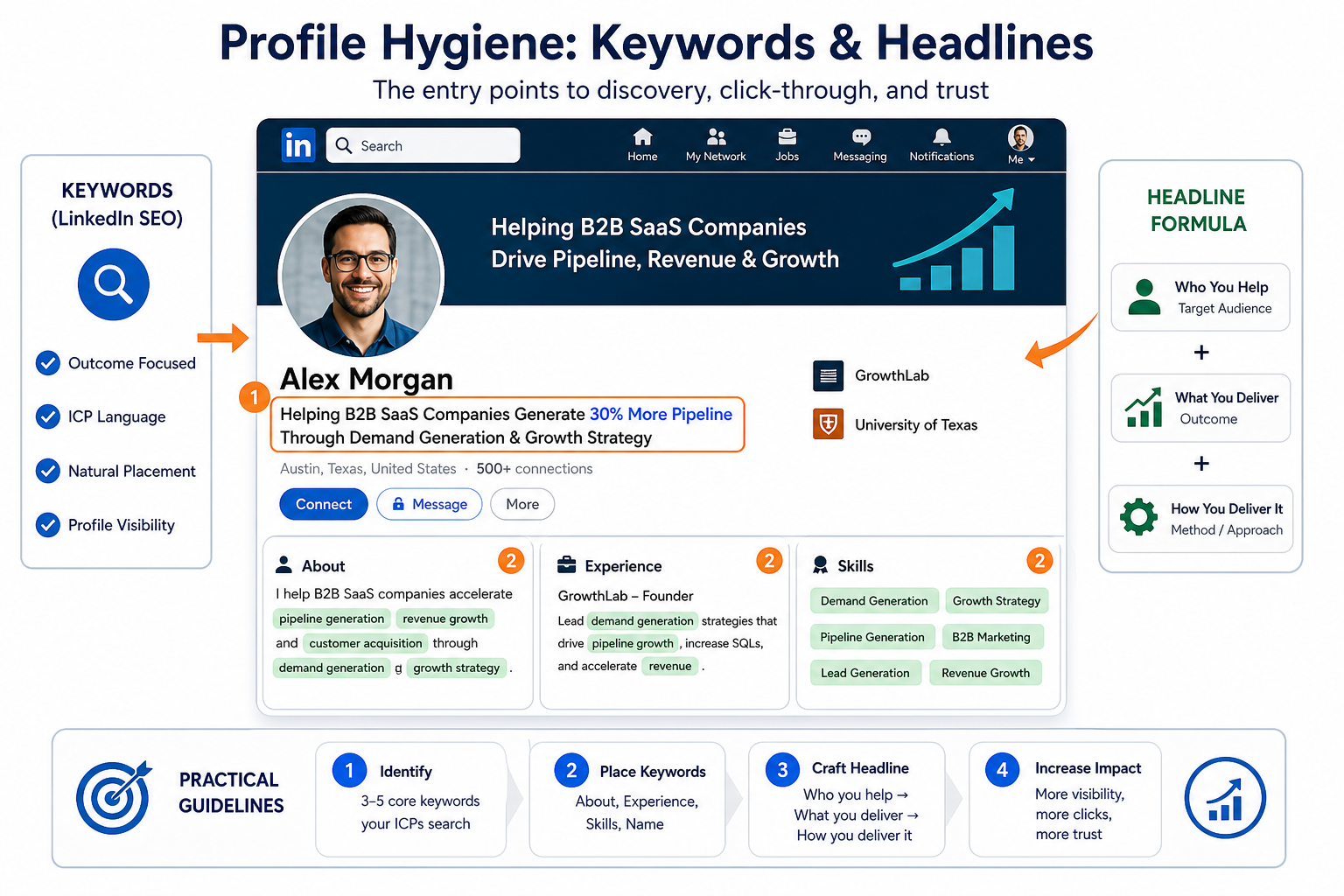
Profile hygiene is the quiet engine that makes your LinkedIn presence discoverable and trustworthy. At its core, keywords function like LinkedIn SEO for your personal profile. When you incorporate precise, outcome oriented terms that your ICPs search for, you improve your profile’s visibility in search results and in suggested profiles. The goal is to weave these terms naturally into your About, Experience, Skills, and even your real name display so that both humans and the algorithm understand who you help and what you deliver.
But keywords alone are not enough. The other half of the equation is the headline, which should immediately convey measurable value to your target audience. Rather than listing a title such as “CEO” or “Founder,” transform your headline into a compact statement of outcomes and scope. A strong headline answers three quick questions for a viewer: Who do you help, What results do you enable, and How do you deliver it. This combination builds instant credibility and primes visitors to explore your profile further.
Practical guidelines for integrating keywords and headlines
- Identify 3 to 5 core keywords that your ICPs actively search for, focusing on concrete outcomes rather than generic roles.
- Place keywords strategically in your About section, Experience entries, and Skills, ensuring readability remains natural and not keyword stuffed.
- Craft outcome driven headlines using a simple formula: Who you help → Target audience, What you deliver → Outcome, How you deliver it → Primary method.
- Use concrete numbers or milestones when possible to strengthen credibility in the headline.
- Test variations by rotating a few headline formats weekly and tracking profile views and connection requests as signals of resonance.
Concrete headline templates you can adapt include:
- Helping B2B health tech firms generate measurable ROI through targeted LinkedIn outreach
- Healthcare IT leaders enabling hospitals to accelerate digital adoption with practical, evidence based strategies
- Turning complex clinical workflows into clear digital solutions for mid to large healthcare systems
Adopt a holistic profile hygiene approach by aligning your keywords with your most relevant outcomes and by presenting a headline that promises specific value. This synergy increases both click through from search results and the initial trust visitors place in your expertise, laying a stronger foundation for deeper engagement and meaningful conversations within your LinkedIn Growth Tactics framework.
Using visuals and carousels to double your reach
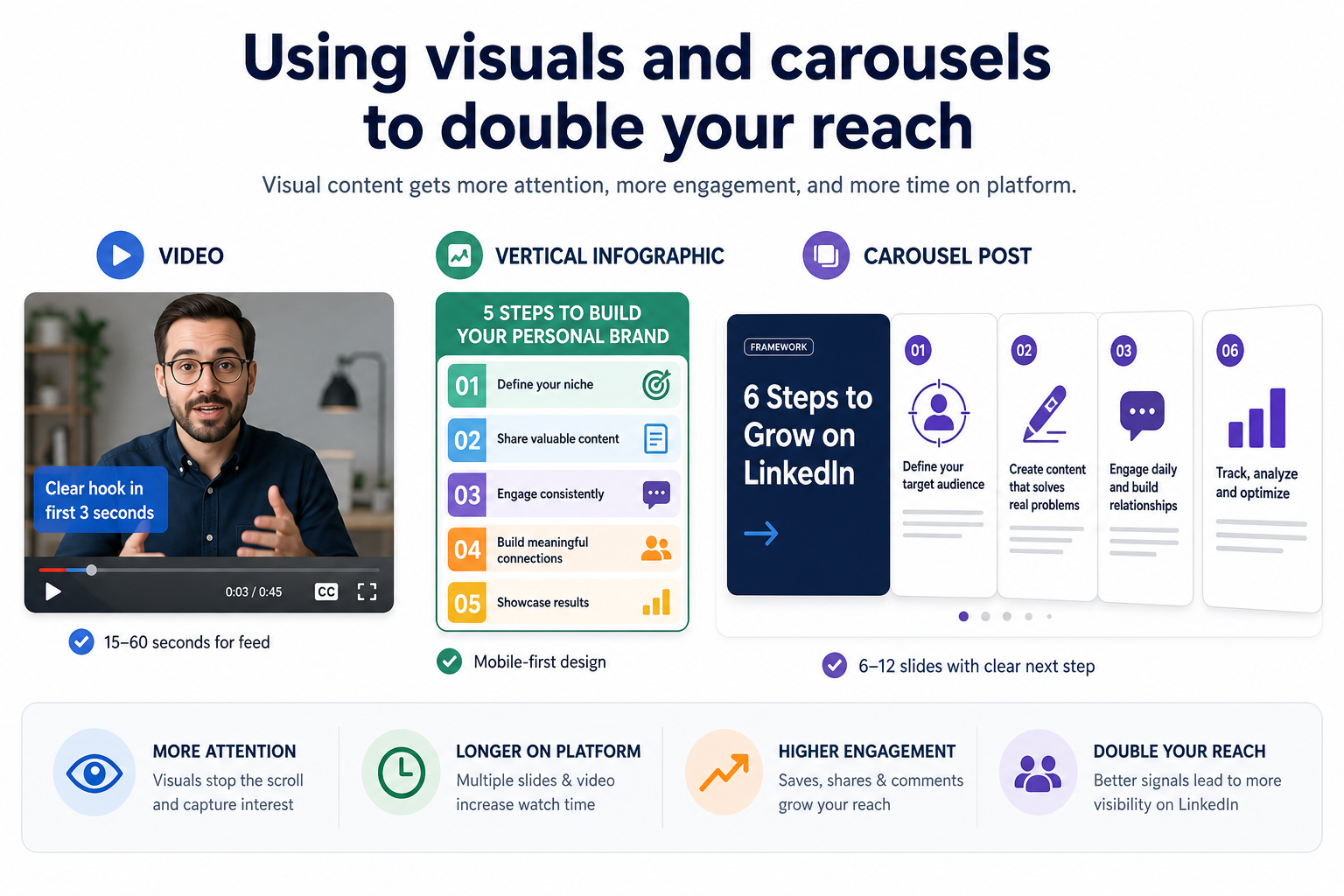
Visual content on LinkedIn has become a core driver of reach and time spent on the platform. By leveraging videos, vertical infographics, and especially carousel posts, creators can capture attention more effectively and keep audiences engaged for longer on the native feed. This section outlines practical approaches to using visuals to double your reach while maintaining clarity and value in every interaction.
Why visuals increase reach and time on platform
- Attention capture: Movements, colors, and motion draw the eye more than plain text, increasing initial scroll pauses.
- On platform time: Video and carousel formats encourage multiple screens and longer viewing sessions, signaling value to the algorithm.
- Scannability and retention: Visuals compress complex ideas into digestible chunks, making it easier for busy professionals to absorb and remember key takeaways.
Best formats to prioritize
- Video with captions and clear hooks in the first 3 seconds. Keep clips concise, typically 15 to 60 seconds for feeds, and longer for newsletters or long form posts where appropriate.
- Vertical infographics designed for mobile screens, using large typography and bold color blocks to communicate a sequence or framework.
- Carousel posts that guide readers through a step by step process, framework, or case study in 6 to 12 slides. Each slide should deliver a concrete value or data point and prompt the next action.
Carousel post design principles
- Strong hook on the cover slide: Use a bold headline and a visual teaser to set expectations for the sequence.
- Narrative flow: Structure slides to tell a story or solve a problem in a logical progression from problem to solution to takeaway.
- Visual consistency: Maintain brand colors, fonts, and layout to enable quick recognition across posts.
- Clear CTA on the final slide: End with a specific action such as saving the post, leaving a comment, or checking a resource link.
Practical production guidelines
- Captions matter: Always include captions for videos to ensure accessibility and to accommodate muted playback.
- Mobile first design: Design for narrow widths; use large headlines, short lines, and ample white space.
- Asset optimization: Export video in square or vertical aspect ratios (1:1 or 9:16) and keep file sizes reasonable for quick load times.
- Slide economy: Limit each carousel slide to a single idea, ideally supported by a single data point or takeaway.
Copy and tone for visuals
- Concise, outcome driven text: Use action oriented language that promises a result readers can apply.
- Subheads inside slides: Break text with bold subheads to aid skimming and comprehension.
- Accessibility: Include high contrast colors, descriptive image alt text, and readable font sizes to reach a broader audience.
Distribution tactics to amplify reach
- Pin top performing visuals: If your platform supports pinning, keep your best carousel at the top to maximize visibility.
- Repurpose across formats: Slice a carousel into shorter posts, create a video summary, or extract key slides as static images for ongoing content streams.
- Engage around the post: Comment thoughtful questions on responses and invite experts to share their perspectives to sustain momentum.
Measurement and iteration
Track not only reach, but engagement quality and the depth of interactions. Useful signals include
- Average watch time and completion rates for videos
- Carousel saves and shares, indicating perceived value
- Comment quality and length, suggesting meaningful dialogue
- Click-throughs to resources or newsletters tied to the visuals
Quick starter checklist
- Brainstorm 3 topics that benefit from a visual narrative and outline a 6 to 12 slide carousel for each.
- Produce a captioned short video that introduces one of the topics with a compelling hook.
- Design vertical infographics with a clean layout and readable type.
- Publish at least one carousel and one video per week for a four week test period.
- Monitor performance metrics and adjust formats based on what drives saves, comments, and longer viewing times.
By integrating videos, vertical infographics, and well crafted carousel posts into your Linkedin Growth Tactics playbook, you can significantly expand reach, deepen engagement, and extend on platform time. The most effective content blends practical value with a clear, visually engaging structure that invites readers to explore and act.
Building a coherent content strategy that aligns with goals
Building a coherent content strategy that aligns with goals is a foundational element of Linkedin Growth Tactics. A well designed plan connects every post to a clear objective, whether the aim is to drive profile visits, grow followers, or generate inbound inquiries. By prioritizing consistency over intensity, you construct a durable personal brand that compounds over time and resists the volatility of platform changes.
Define your end goals clearly
Begin with the destination in mind. Translate abstract ambitions like “more visibility” into concrete, measurable goals. Examples include:
- Increase weekly profile visits by 25 percent over the next 8 weeks
- Grow organic followers within the target ICP by 10 percent per month
- Generate at least 3 inbound inquiries or conversations per week from new connections
Map content to the buyer journey
Structure your content around three core phases and ensure formats align with each stage:
| Phase | Audience Need | Content Formats | Desired Action |
|---|---|---|---|
| Awareness | Recognize a problem and discover potential approaches | Short posts, carousels, quick videos | Profile visits, follow for more insights |
| Consideration | Evaluate options and build trust in your expertise | Case studies, tutorials, guides | Save for later, join a discussion, subscribe to a newsletter |
| Decision | Identify a concrete path to action | Templates, frameworks, checklists | Book a call, request a proposal, download a resource |
Craft a repeatable content blueprint
Turn your strategy into a reusable system. A practical blueprint includes a weekly rhythm, topic clusters, and a clear value exchange. Example structure:
- Theme clusters: 3 to 5 interconnected topics tightly aligned with ICP needs
- Cadence: 3 to 5 posts per week, with at least one deep dive per week
- Format mix: 1 carousel, 1 video, 1 text post, plus 1 insight thread
- Value exchange: every post should offer a takeaway, checklist, or resource
Link goals to signals and metrics
Move beyond vanity metrics and focus on signals that imply alignment with your objectives. Consider the following metrics:
- Profile visits from ICPs
- New followers within target segments
- Saves and shares indicating perceived value
- Direct inquiries, messages, or calendar bookings
Content quality controls and review cadence
Maintain quality through predefined checks and a regular review cycle. Suggested process:
- Pre publish check for alignment with the month’s themes
- Post performance snapshot 48 hours after publication
- Weekly quality review to adjust topics, formats, and call to actions
Quick start checklist
- Articulate 2 to 3 core goals for the next 90 days
- Define 3 to 5 topic clusters that map to those goals
- Design a 4 week content calendar with a balanced format mix
- Draft a reusable value proposition for each post type
- Establish a simple dashboard to track the defined signals weekly
With a coherent content strategy that links each post to a concrete objective, you create a predictable momentum cycle. This approach makes your activity sustainable, scalable, and more likely to convert engagement into meaningful opportunities within your Linkedin Growth Tactics framework.