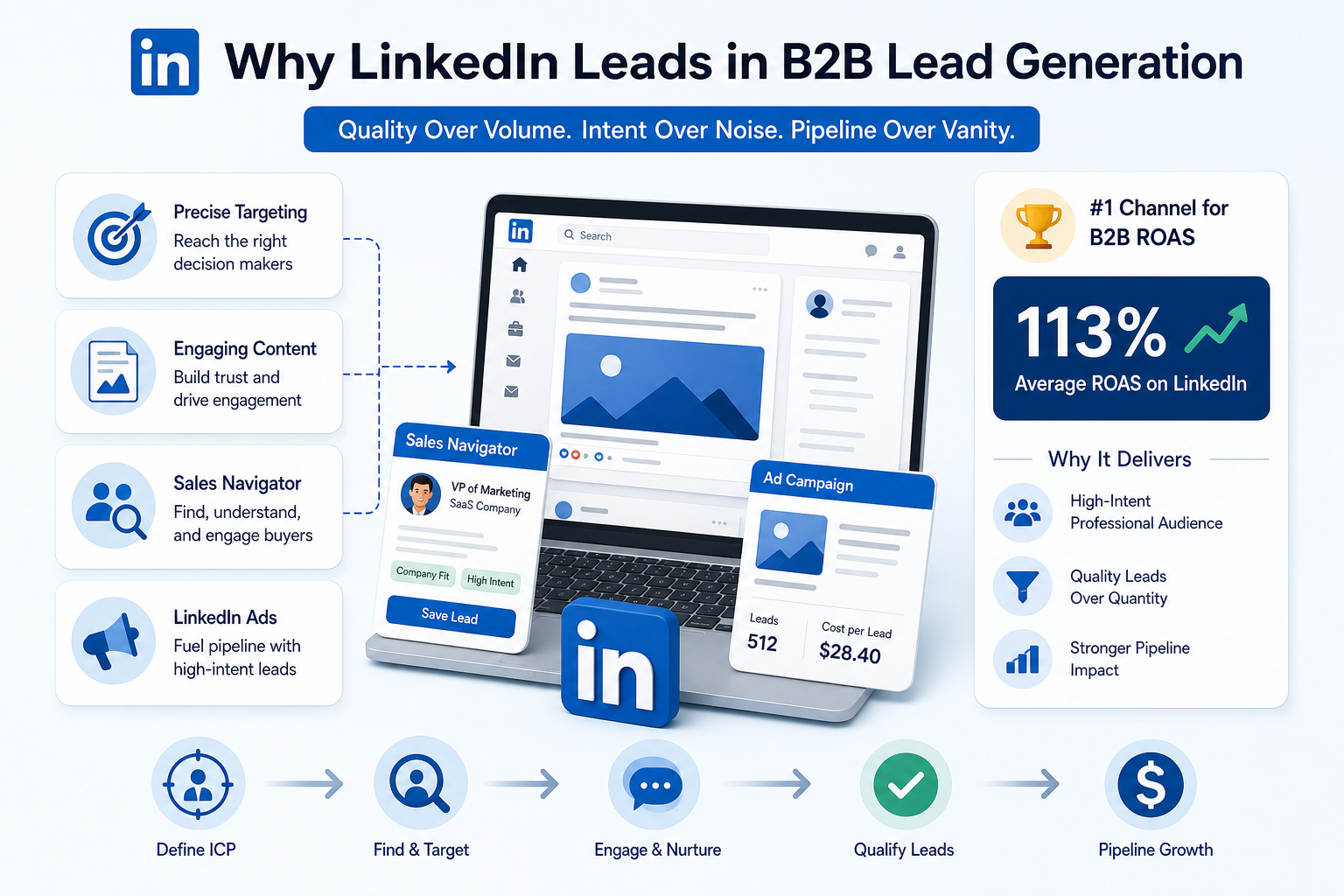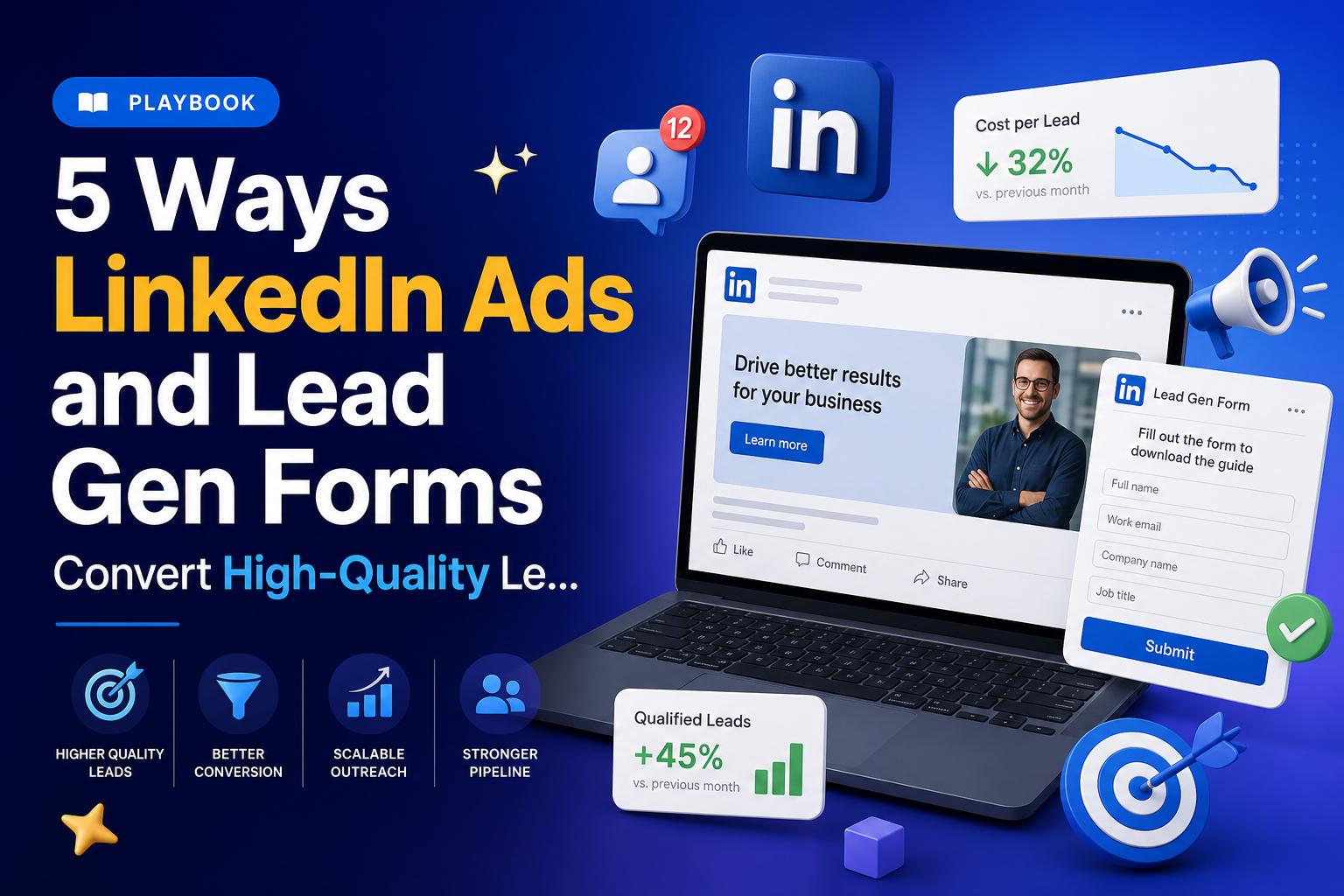
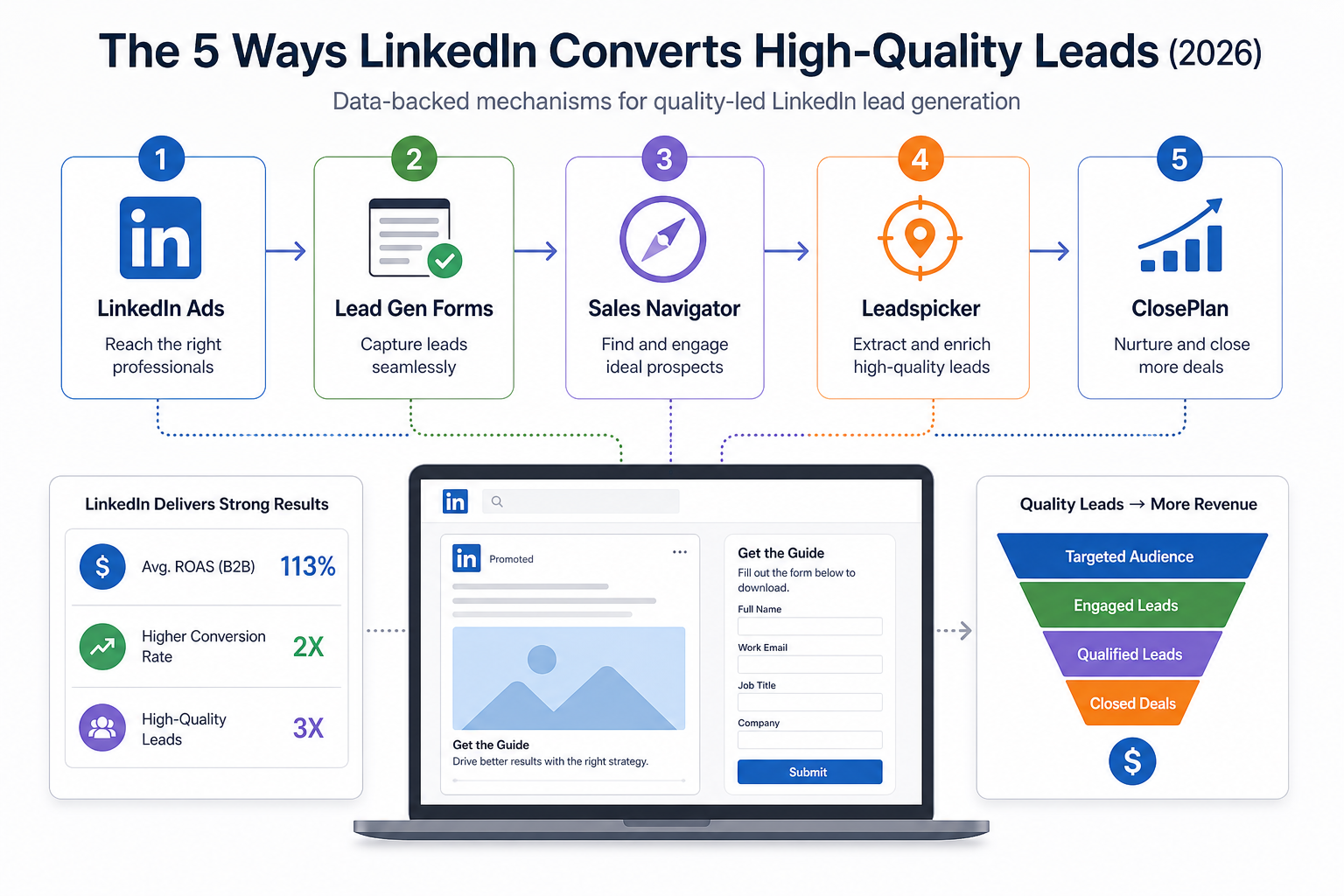
The 5 Ways LinkedIn Ads and Lead Gen Forms Convert High-Quality Leads (2026)
The following five mechanisms act as concrete levers to convert high quality leads on LinkedIn in 2026. The strategy is anchored in the platform’s proven efficiency for B2B advertising and a focus on delivering leads who are more likely to convert. Research and industry observations consistently highlight a strong return on ad spend on LinkedIn, with reported averages around 113 percent ROAS in B2B campaigns. This data underpins a shift toward quality-led lead generation that emphasizes targeted outreach, credible profiles, and contextually relevant messaging rather than mass outreach alone.
LinkedIn Ads
LinkedIn Ads serve as the primary paid channel to reach a professional audience with precision. Lead quality improves when campaigns are aligned with an explicit value proposition and a defined buyer persona. Key angles include Sponsored Content for native feed visibility and Lead Gen Forms integrated directly with ads to streamline the capture process. The platform’s targeting capabilities enable marketers to specify industry, function, seniority, and company size, which helps ensure that ad visibility is reserved for prospects most likely to engage. In practice, this means a tighter funnel where impressions translate into meaningful interactions and, ultimately, higher quality inquiries that fit the ideal customer profile. For practitioners, starting with a clear objective, a tested creative, and a concise offer is essential to minimize friction and maximize the efficiency of ad spend.
Lead Gen Forms
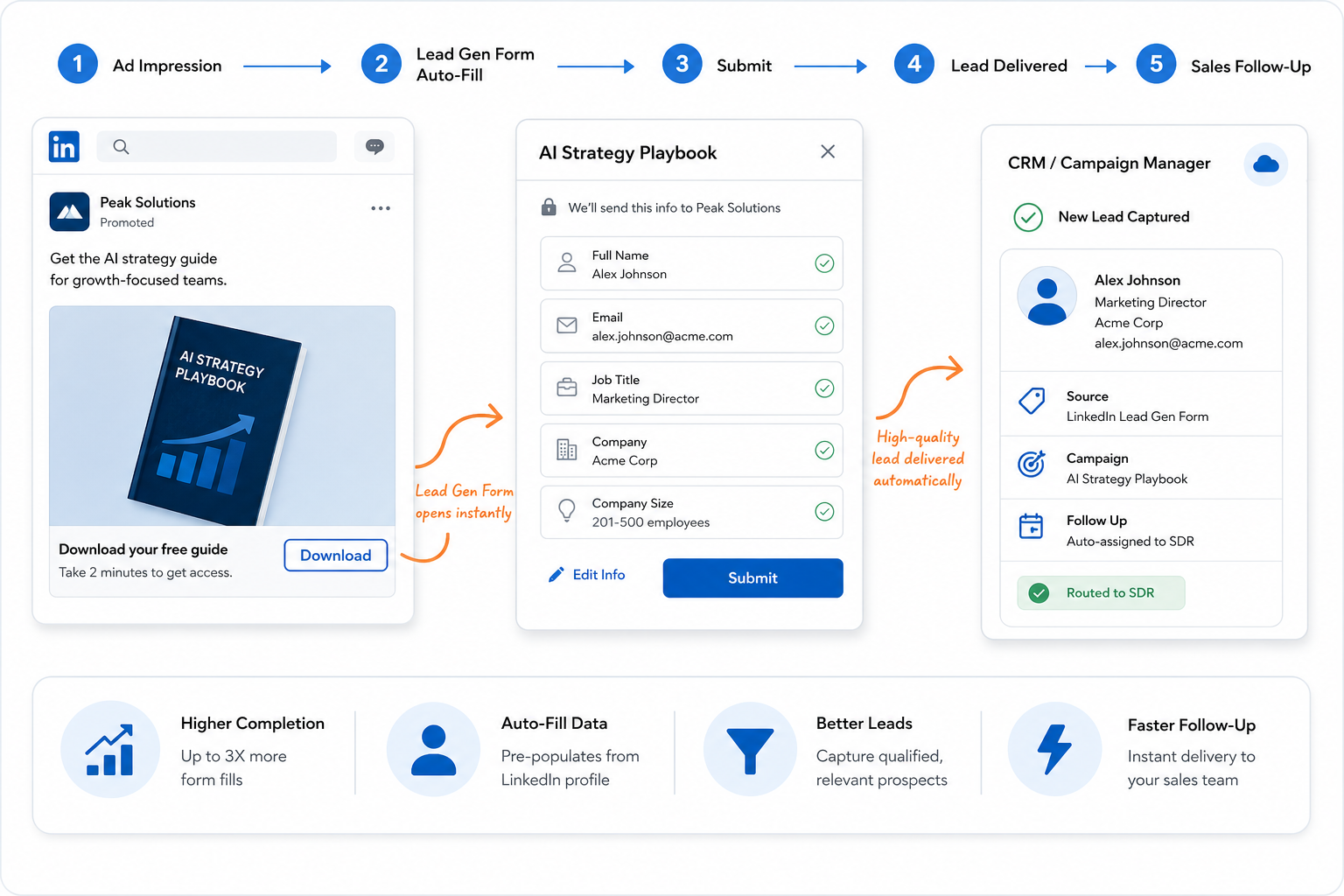
Lead Gen Forms are a critical component of converting interest into actionable data without forcing a heavy lift from the prospect. These forms pre-fill from LinkedIn profile data, reducing friction and increasing completion rates. The consequence is a higher quality signal at the moment of capture, which can be acted upon quickly by the sales team. When Lead Gen Forms are paired with a well-crafted value proposition and follow-up sequence, they function as a pipeline accelerator by shortening the time from impression to qualification. It is important to design forms with a focused field set, avoiding overreach, and to set up automated routing so qualified leads reach the right SDR or account team without delay.
LinkedIn Sales Navigator
Sales Navigator provides a deeper layer of intent and account-level visibility that complements both organic and paid activities. By enabling advanced account targeting, purchase stage indicators, and alerts about engagement signals, it helps sales teams prioritize outreach to high-probability prospects. The platform supports coordinated outreach through TeamLink and relationship visualization, which can improve response rates when messages reference shared connections or mutual context. In a data-driven playbook, Navigator acts as a quality filter that helps convert inbound interest into opportunities at scale, while maintaining a focus on the right accounts and the right people within those accounts.
Leadspicker
Leadspicker introduces an automation layer that augments LinkedIn outreach with real-time prospecting and enrichment. By consolidating signals from multiple sources, Leadspicker helps fill gaps in CRM data and provides a richer set of contact attributes for personalization. A strong use case is to harvest engagement signals from LinkedIn posts and interactions, then align outreach with those signals to improve reply rates. The result is more efficient outreach that respects prospect constraints while increasing the likelihood of engagement and qualified conversations. For teams seeking scalable growth, Leadspicker can help maintain high-quality lead velocity without sacrificing targeting precision.
ClosePlan
ClosePlan offers a structured framework for moving qualified leads through to closed deals by embedding a collaboration-centric approach into the outreach and proposal process. By aligning the sales process with a clear plan of record, teams can coordinate proposal development, stakeholder alignment, and progress tracking in one platform. The outcome is a more predictable pipeline where each touchpoint is purpose-built to advance the opportunity. ClosePlan supports multi-person collaboration and ongoing visibility, which reduces cycle times and helps ensure that the quality of the lead is preserved as it progresses toward a decision.
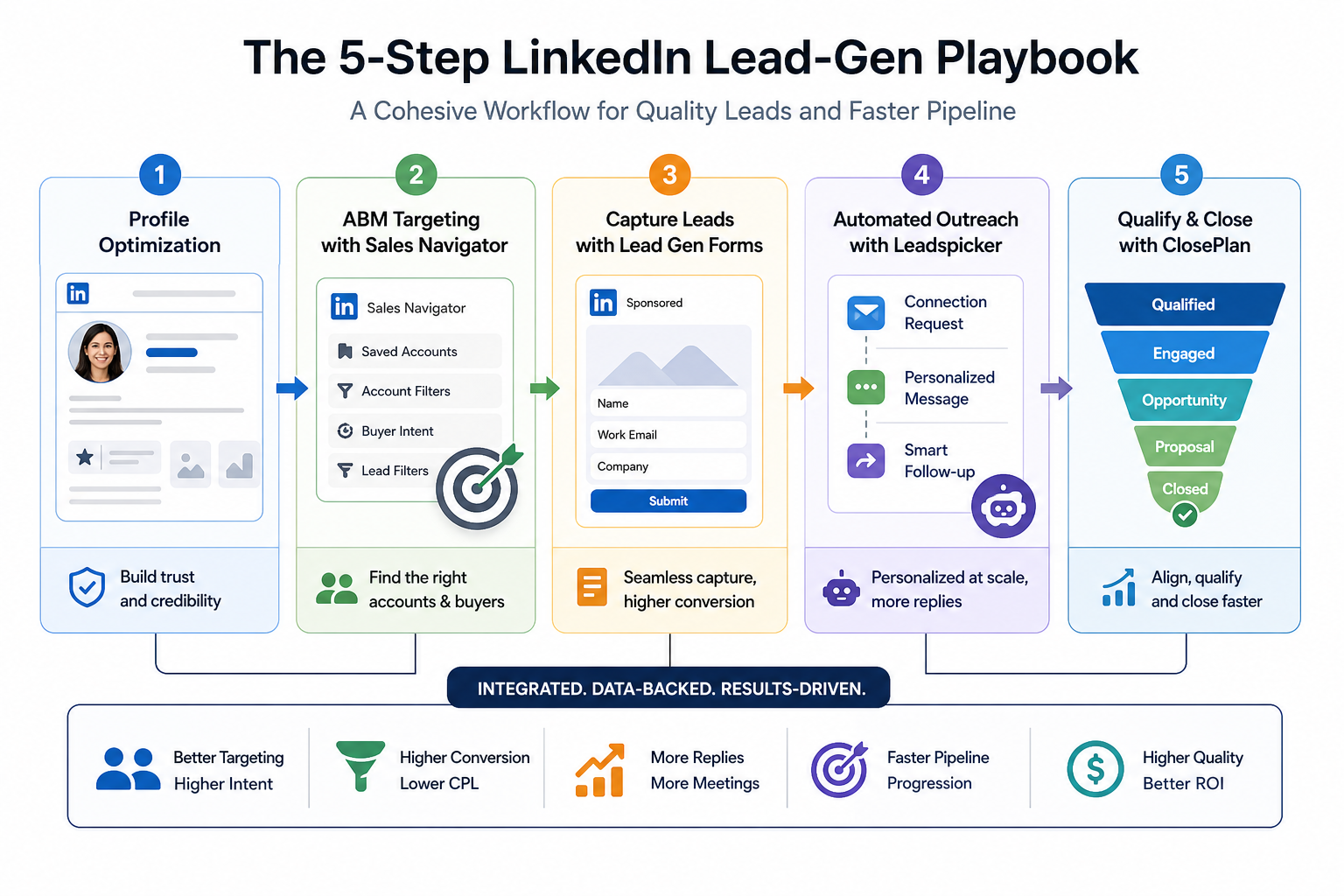
Broader context and practical takeaway. The five mechanisms described here form a cohesive, multi-channel approach that emphasizes lead quality and scalable outreach. Data-backed signals from LinkedIn Ads and Lead Gen Forms drive early engagement, while LinkedIn Sales Navigator helps identify and prioritize the most promising accounts. Automation and enrichment from Leadspicker reduce manual data gaps and enable more personalized outreach, and ClosePlan provides a disciplined path to convert high quality leads into measurable outcomes. For teams aiming to maximize results, this combination supports both organic and paid strategies and aligns with the overarching emphasis on high intent and credible, contextual conversations. For more practical insights and strategy details, you can explore related guidance at https://linqin.ai/blog.
LinkedIn Ads
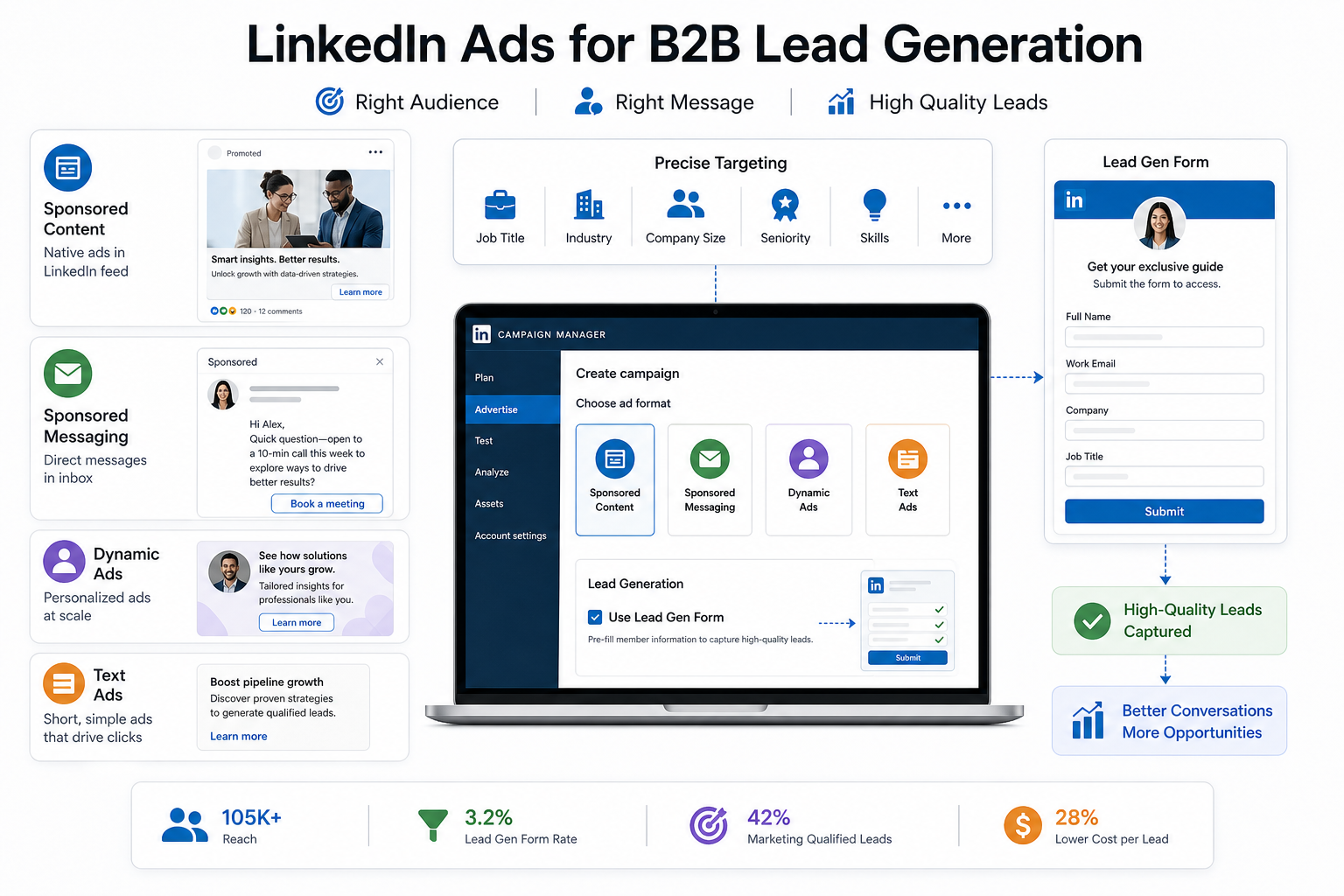
LinkedIn Ads stand out as a premier channel for B2B lead generation because they reach a professional audience with precision and intent. When campaigns are anchored to a clear value proposition and a defined buyer persona, the quality of inquiries improves dramatically. The platform supports multiple formats that fit different stages of the funnel, all designed to drive meaningful interactions rather than passive impressions.
- Sponsored Content serves native ads in the LinkedIn feed, delivering visibility where professionals already engage. This format is ideal for sharing thought leadership, case studies, and outbound offers in a non disruptively integrated way.
- Sponsored Messaging places direct messages in the recipient’s LinkedIn inbox, enabling timely, contextually relevant outreach that prompts quick engagement. It is particularly effective for time bound offers or onboarding conversations that require a personal touch.
- Dynamic Ads personalize ad creative to each viewer, increasing relevance by reflecting the individual’s profile attributes. This format helps capture attention with tailored visuals and copy that speak to the prospect’s role or company context.
- Text Ads are self-service units that deliver concise messages in the right-hand rail or top of the page, offering a fast way to test value propositions and drive qualified clicks with minimal setup time.
Across these formats, targeting remains central. LinkedIn’s capabilities allow marketers to specify industry, function, seniority, and company size, ensuring ad visibility is restricted to prospects most likely to engage. This precision supports a tighter funnel where impressions translate into meaningful interactions and higher quality inquiries that fit the ideal customer profile. For practitioners, starting with a well defined objective, a tested creative, and a concise offer is essential to minimize friction and maximize the efficiency of ad spend.
Lead Gen Forms play a crucial role in turning interest into actionable data. These forms pre fill from LinkedIn profile data, reducing friction and boosting completion rates. When Lead Gen Forms are paired with a strong value proposition and a disciplined follow up sequence, they act as a pipeline accelerator by shortening the time from impression to qualification. It remains important to design forms with a focused field set and to route qualified leads automatically to the appropriate SDR or account team for rapid follow up.
Data supports the effectiveness of LinkedIn Ads in B2B contexts. LinkedIn is frequently cited for delivering strong return on ad spend, with industry observations noting ROAS around 113 percent in B2B campaigns. This performance underscores the value of balancing reach with lead quality and leveraging a mix of Sponsored Content, Sponsored Messaging, Dynamic Ads, and Text Ads in concert with Lead Gen Forms to maximize both scale and relevance. For more practical guidance and operational tactics, see our data backed playbook at https://linqin.ai/blog.
Lead Gen Forms
Lead Gen Forms are a core component of LinkedIn Ads that streamline the capture of qualified leads directly within the ad experience. By auto-filling form fields from the member’s LinkedIn profile data, these forms reduce friction for prospects and dramatically improve completion rates. That frictionless experience helps ensure that the leads you capture are timely and relevant, creating a smoother handoff to your sales team and accelerating the time from impression to qualification.
From a practical perspective, Lead Gen Forms function as a pipeline accelerator when paired with a tight value proposition and a disciplined follow-up sequence. Because the form pre-populates critical fields such as name, email, and company details, prospects are more likely to complete the submission, which in turn yields higher quality signals for your marketing and sales teams. To maximize impact, design forms with a focused field set that captures only what you truly need to qualify a lead, and route completed submissions automatically to the right SDR or account team for rapid engagement.
Competitor guidance often highlights several practical considerations that can influence performance. First, Lead Gen Forms are frequently cited as a driver of higher-quality inquiries when used in conjunction with a clearly stated offer or value prop. Second, pricing visibility or cost considerations are discussed in the broader context of lead gen tactics, with emphasis on ensuring the offer justification justifies the lead capture. Third, the role of Lead Gen Forms in delivering qualified leads from a quality audience is underscored by the alignment between the form experience and precise targeting settings in Campaign Manager. In other words, a well targeted Lead Gen Form tends to produce more qualified signals than generic lead capture, reducing wasted outreach and improving close rates.
To optimize Lead Gen Forms for maximum results, consider the following practical tips:
- Define a concise and compelling value proposition in the form invitation. A clear reason for completing the form increases completion and reduces drop-offs.
- Limit fields to essentials and avoid asking for information you can obtain later in the nurture process. A focused form tends to yield higher completion and cleaner data signals.
- Automate lead routing in Campaign Manager so qualified leads reach the appropriate SDR or account executive without delay. Timely follow-up is critical for maintaining lead quality.
- Leverage CRM integration where possible to enrich captured data, synchronize lead status, and align marketing with sales workflow.
- Experiment with different form titles and creative to determine which messages drive the best response rates for your target segments.
- Use Lead Gen Forms with Sponsored Content and Sponsored Messaging to ensure a cohesive top of funnel experience and consistent follow-up playbooks.
- Test pricing and offers within the form copy to calibrate what resonates with your audience, while keeping the form streamlined and credible.
Integration guidance through Campaign Manager is essential for scaling quality leads. Set up automated routing rules, define lead qualification criteria, and connect your preferred CRM or marketing automation system to enable seamless data transfer and nurture workflows. Ongoing measurement should track form completion rate, lead quality indicators, and downstream conversion rates to optimize the mix of ad formats, targeting, and follow-up sequences. For teams exploring broader strategies that combine organic and paid efforts, consider how Lead Gen Forms fit into a multi-channel playbook described in our data-backed lead generation framework, and explore more actionable insights at https://linqin.ai/blog.
LinkedIn Sales Navigator
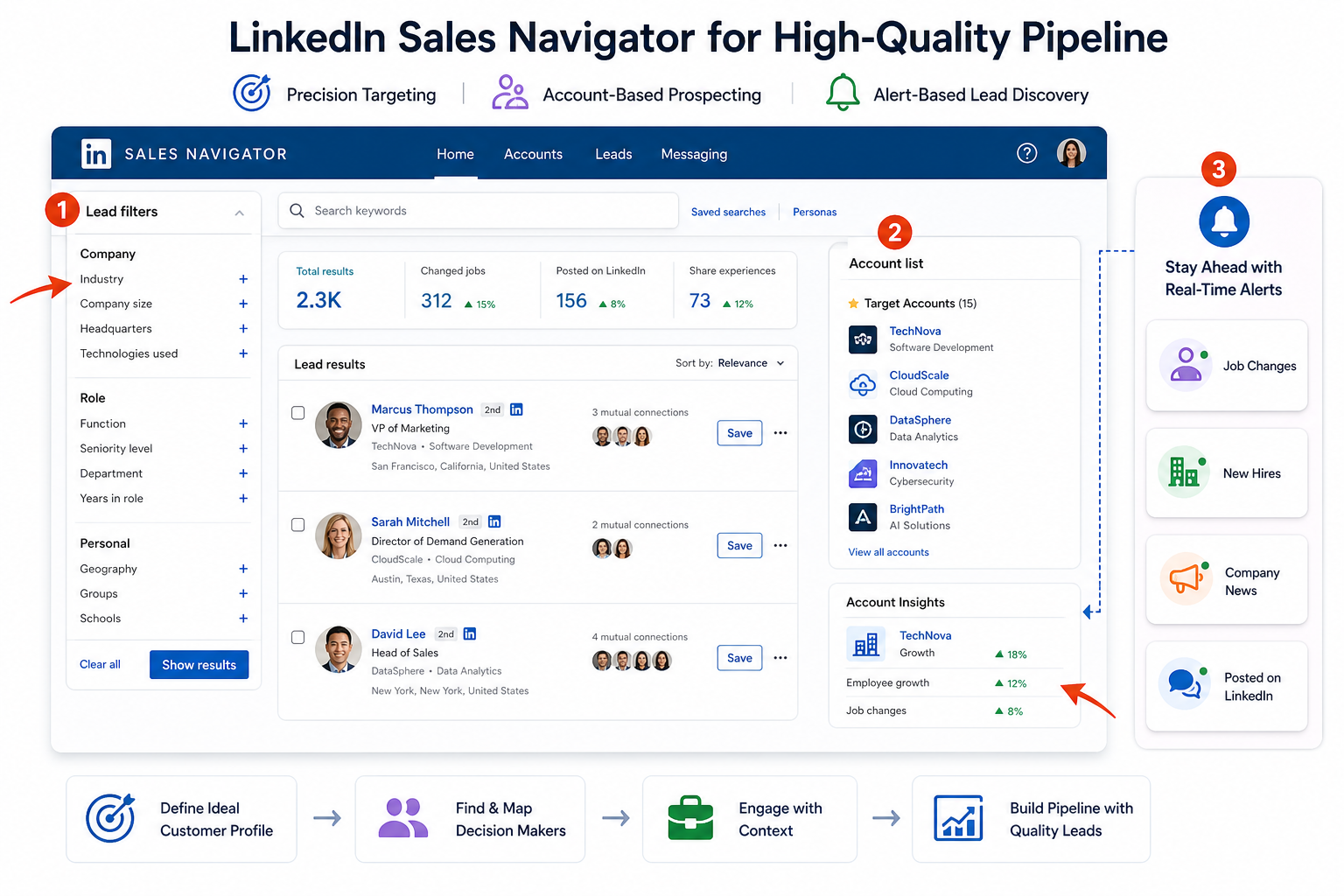
LinkedIn Sales Navigator is a precision engine for targeting, account based prospecting, and timely lead discovery. By surfacing rich account data and role-specific insights, it helps marketing and sales teams slice through noise to reach the right decision makers at the right time. This focused approach is especially valuable when the goal is higher quality pipeline rather than a broad but shallow reach.
Enhancing targeting starts with advanced filters that go beyond basic demographics. Navigator enables you to specify firmographics such as industry, company size, geography, and technology footprint, paired with functional signals like seniority, function, and department. This combination supports tight ICP alignment, ensuring outreach is relevant to the personas most likely to engage. In practice, this means your messages and content can be tailored to the responsibilities and challenges specific to each target, increasing the likelihood of meaningful interactions and faster qualification cycles.
Account based prospecting with Sales Navigator emphasizes depth over volume. The tool enables you to build and organize target accounts, map key stakeholders, and monitor organizational changes within those accounts. By aligning account lists with your ABM strategy, you can orchestrate coordinated outreach across Sales, Marketing, and Customer Success, reinforcing credibility through consistently contextual conversations. This ABM posture on LinkedIn mirrors the broader industry guidance that emphasizes right account, right person, right moment as a core driver of high quality pipeline.
- Targeted account lists let you save and prioritize accounts that fit your ideal customer profile, making it easier to allocate resources where they matter most.
- Stakeholder mapping surfaces who is involved in buying decisions, enabling you to tailor outreach to each influencer and decision maker.
- TeamLink and relationship insights reveal internal connections and shared affinities, increasing warm introductions and acceptance rates for outreach.
Alert-based lead discovery adds a continual stream of high intent signals. Sales Navigator can notify you about changes within accounts, new hires in target roles, or updates that indicate potential buying interest. These alerts create timely moments to initiate conversations when relevance is at its peak, helping you intercept buyers as they move closer to a purchase decision. In a competitive landscape where advanced targeting and ABM tactics are frequently discussed, these real time cues help ensure your outreach remains contextual and opportunistic rather than reactive or generic.
Competitors and industry practitioners frequently highlight the value of leveraging advanced search tricks and ABM tactics on LinkedIn to reach the right accounts. Sales Navigator directly supports this approach by providing filters and signals that align with those principles, making it easier to execute a disciplined ABM playbook. When paired with enrichment and automation from tools like Leadspicker and a structured follow up framework, Navigator-driven intent signals translate into higher quality pipeline and faster progression from outreach to opportunity.
For teams pursuing a data-backed, scalable LinkedIn lead generation strategy, Sales Navigator serves as the backbone for precision outreach. It helps ensure that every message is anchored to a relevant account and a decision maker with buying influence, reducing wasted effort and elevating the probability of conversation and qualification. To explore how to integrate this capability into a broader playbook that combines profile optimization, content strategy, and paid amplification, you can read more guidance at https://linqin.ai/blog.
Leadspicker
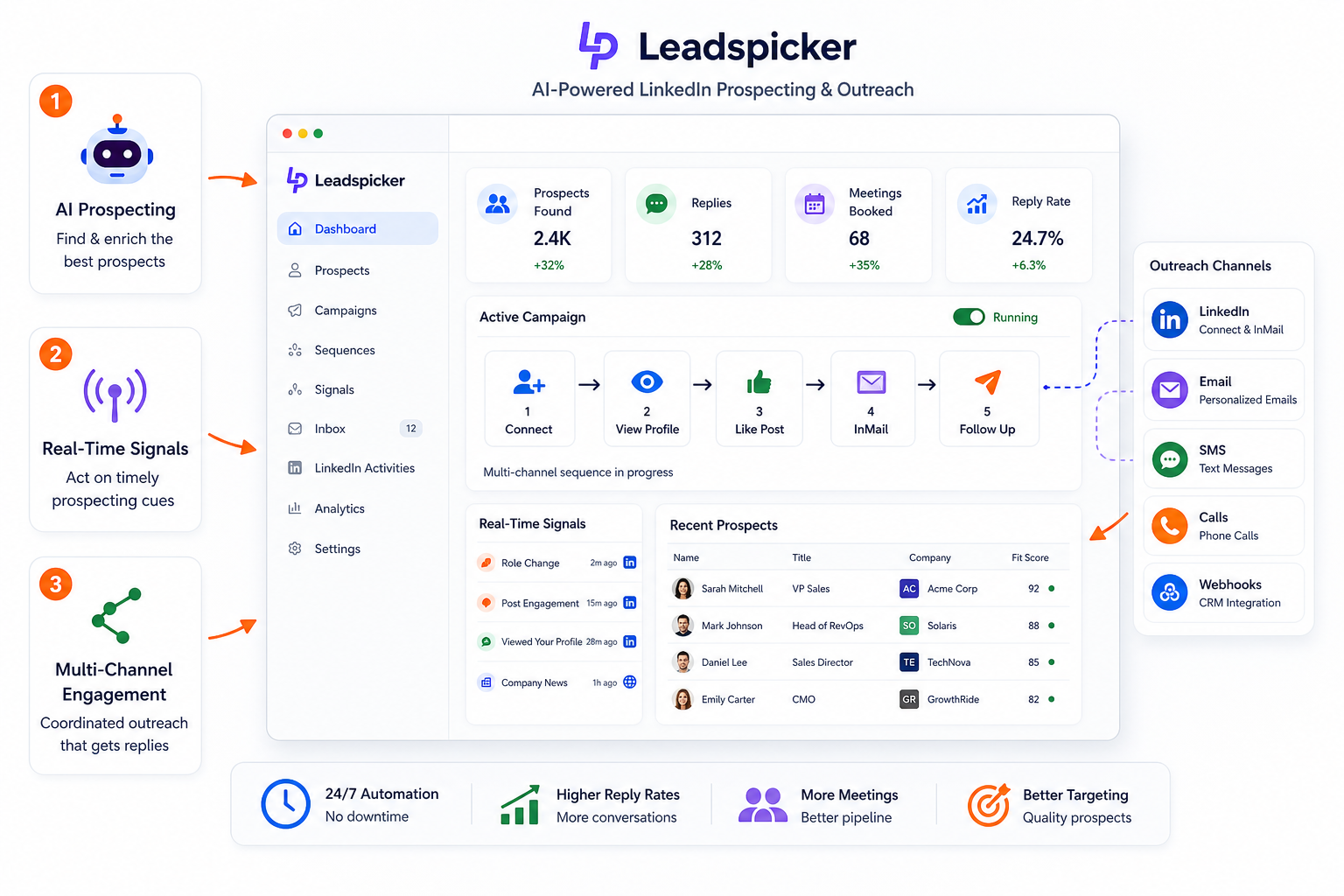
Leadspicker acts as a central engine for automation in LinkedIn led prospecting, turning manual outreach into a disciplined, scalable sequence. Through autonomous AI-assisted lead generation, the platform continuously identifies and enriches high-potential prospects, then orchestrates multi channel touchpoints that align with your target accounts. By running 24/7 prospecting workflows, teams can maintain steady pipeline momentum even when human SDRs are offline, while preserving a human touch where it matters most.
Key capabilities include:
- Autonomous AI prospecting that continuously sources accurate contactable profiles, builds complete prospect records, and prioritizes targets based on fit signals and buying intent. This reduces manual search time and accelerates time-to-first outreach.
- Real time prospecting signals deliver timely insights such as engagement cues, role changes, or purchase indicators. These signals trigger contextually relevant outreach moments, increasing the likelihood of a reply and advancing conversations faster.
- Multi channel engagement sequences span LinkedIn activities and other channels, enabling coordinated messaging, InMail, and post interactions that feel natural rather than spammy. This integrated approach helps maintain consistency across touchpoints and improves overall response rates.
- LinkedIn activity integration seamless alignment with existing LinkedIn actions such as post engagement, profile views, and connection events. This keeps automation tethered to the prospect’s current activity, ensuring messages feel timely and relevant.
- Automated lead enrichment enriches captured data with context from multiple sources, providing richer profiles for sales and marketing to act on. Clean, complete records support faster qualification and more precise follow ups.
- Unified outreach cadence coordinating messages, follow ups, and trigger-based interactions into a single, repeatable playbook. A well orchestrated cadence keeps outreach humanized while maximizing throughput.
- Impact on reply rates and meetings the combination of autonomous prospecting, real time signals, and LinkedIn activity alignment has been described as boosting reply rates and increasing booked meetings by creating more relevant and timely interactions.
From a measurement perspective, the platform supports scalable pipeline generation by turning data into action. Automated routing ensures qualified leads move swiftly to the right SDR or account executive, while multi channel sequences are designed to maintain engagement without overwhelming prospects. For teams evaluating the impact of automation on results, Leadspicker provides a concrete pathway to convert LinkedIn interactions into measurable outcomes, aligning with best practices for high quality pipeline and efficient outreach.
For readers exploring a cohesive LinkedIn lead generation framework that combines profile optimization, content strategy, and paid amplification, deeper actionables and case studies can be found at https://linqin.ai/blog.
ClosePlan
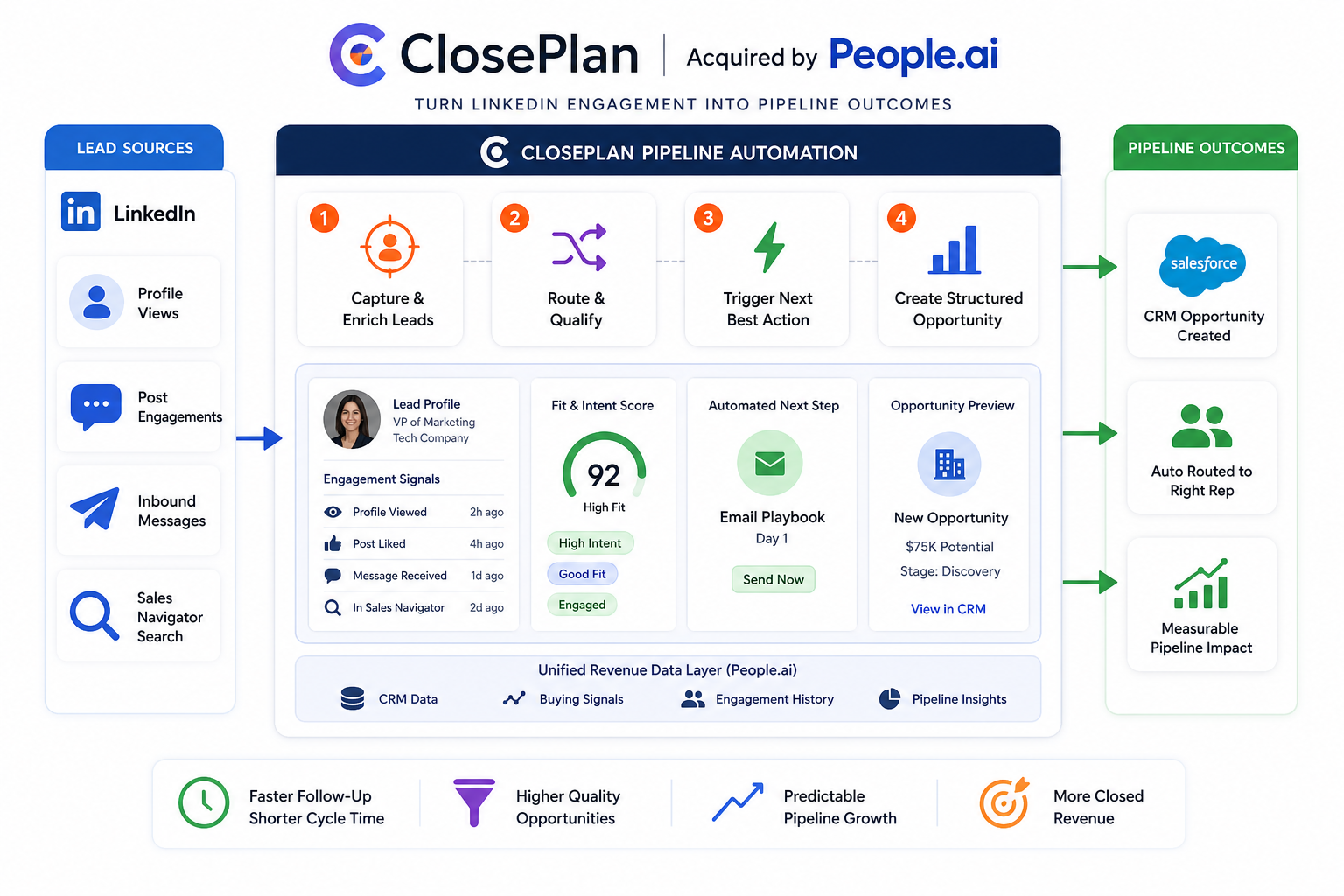
ClosePlan functions as a critical node in a pipeline automation stack by converting engaged LinkedIn leads into structured, actionable opportunities. In the context of modern lead generation, this means taking the signals generated by profile optimization, content engagement, and outbound outreach and translating them into a repeatable, measurable progression through the sales funnel. When integrated with a broader lead generation framework, ClosePlan helps ensure that every touchpoint on LinkedIn and beyond is anchored to a clear next step in the opportunity lifecycle.
The acquisition of ClosePlan by People.AI underscores a shift toward unified revenue automation where CRM data, buying signals, and engagement history are harmonized. In practice, this means your generated leads are not merely collected but continuously enriched with context that informs qualification, prioritization, and next-best actions. The result is a pipeline that moves more predictably from interest to opportunity, with less manual handoff and fewer dropped prospects.
- Automated routing and handoff route engaged leads to the right SDR or account executive based on fit signals, buying intent, and account context. This reduces time-to-engagement and accelerates qualification cycles.
- Real-time activity signals capture LinkedIn interactions, profile views, and post engagements, then translate them into concrete follow-up triggers and playbooks that keep outreach timely and relevant.
- Structured opportunity creation convert warm leads into well-defined opportunities with standardized fields, capturing account, contact, stage, and potential value to feed into the CRM and forecasting models.
- Unified data enrichment augmentes contact and account records with external context, giving sales teams a richer basis for prioritization and personalized outreach.
- Pipeline measurability ties every activity back to pipeline metrics such as opportunity stage progression, forecasted close dates, and expected revenue, enabling more accurate revenue planning.
In a practical workflow, ClosePlan helps align marketing and sales by ensuring that engagement on LinkedIn translates into accountable, trackable steps within the sales process. This alignment supports the broader objective of high-quality pipeline rather than volume alone, enabling teams to quantify the impact of LinkedIn lead generation tactics that work. For readers seeking to see how such a tool fits into a cohesive playbook that blends profile optimization, content strategy, and paid amplification, further actionable guidance and case studies are available at https://linqin.ai/blog.
How to combine these five in a cohesive LinkedIn lead-gen playbook
To build a cohesive LinkedIn lead generation playbook that emphasizes quality over volume, sequence the five components as an integrated workflow rather than isolated tactics. Start with a foundation that persuades prospects to engage, then layer precise targeting, seamless capture, automated yet personalized outreach, and a clear path to close. This approach mirrors how data-backed lead generation can deliver higher intent leads and faster progression through the pipeline.
1) Profile optimization as the conversion anchor
Treat your LinkedIn profile like a dedicated landing page for your ideal client. Begin with a professional, approachable photo and a headline that communicates the value you offer beyond a job title. Craft an About section that directly addresses your targets’ pain points and outcomes, weaving in keywords that matter to them. Populate Experience with concrete accomplishments and media such as case studies or presentations to build credibility. Ensure that every element signals credibility, relevance, and trust so that prospects who click through are primed to engage rather than deterred by a weak first impression.
- Pro tip: A polished profile increases response rates when outreach begins, making all subsequent steps more effective.
2) ABM driven targeting with Sales Navigator
Leverage Sales Navigator to execute an account based marketing (ABM) mindset that aligns with your ICP and target buying groups. Use advanced filters and signals to identify accounts with buyer intent cues, role changes, or engagement signals that indicate rising interest. Build a prioritized list of accounts and set up alerts for relevant changes, so outreach moments feel timely and contextual rather than generic. This ensures that every message anchors to a specific account and decision maker, elevating the odds of meaningful engagement and faster qualification.
- Key practice: Pair Navigator filters with signals to maintain a disciplined ABM cadence across target accounts, reducing wasted effort and increasing pipeline quality.
3) Lead Gen Forms inside LinkedIn campaigns for high intent capture
Integrate Lead Gen Forms into LinkedIn campaigns to capture high-quality profiles with minimal friction. Lead Gen Forms simplify the conversion path by auto-filling professional details from LinkedIn profiles, reducing typing friction and increasing form completion rates. Align each form with the ABM account and role context from Sales Navigator so that the captured leads are immediately contextual for your SDRs. Use a mix of Sponsored Content and Lead Gen Forms to surface relevant content offers or case studies that entice prospects to share contact information in exchange for valuable assets.
- Optimization note: Design form fields to capture essential data for qualification while keeping the form concise to avoid abandonment.
4) Automated outreach orchestration with Leadspicker
Put automation to work with Leadspicker to execute autonomous, multi channel outreach that respects the human touch. The platform continuously sources contactable profiles, enriches them, and runs 24/7 sequences that touch LinkedIn activity, InMail, and post engagements in a coordinated cadence. This ensures you maintain steady momentum in the pipeline while preserving timely relevance based on real time prospect signals. The unified outreach cadence helps keep touches human and contextually connected to the target account and their recent activity.
- Primary benefits: Real time prospecting signals trigger timely follow ups, and multi channel sequences reduce the risk of message fatigue while increasing response likelihood.
5) ClosePlan inspired alignment to convert engagement into opportunities
Align engagement with a ClosePlan inspired process to convert engaged LinkedIn leads into clearly defined opportunities. Use automated routing to send engaged leads to the most appropriate SDR or account executive, based on fit signals and buying intent collected through profile views, post engagements, and InMail responses. Translate warm leads into structured opportunities with standardized fields capturing account, contact, stage, and potential value. Enrich records with external data to sharpen prioritization and tailor next actions, while tying activity back to pipeline metrics like forecasted close dates and expected revenue. This creates a closed loop where LinkedIn activity directly informs qualification, prioritization, and revenue forecasting.
- Core capabilities: Automated routing, real time activity signals, structured opportunity creation, unified data enrichment, and clear pipeline measurability.
Practical sequence: a data-backed playbook in action
Week 1 to Week 2
- Polish and align your profile with target client messaging and a compelling value proposition.
- Configure Sales Navigator with ABM account lists and set up alerts for key signals.
- Create Lead Gen Form lead magnets aligned to account needs (for example, a case study or ROI calculator) and pair with Sponsored Content that speaks to the same value proposition.
Week 2 to Week 4
- Launch automated outreach via Leadspicker, using the ABM account context from Sales Navigator to tailor sequences across LinkedIn InMail, profile interactions, and post engagements.
- Monitor engagement signals and trigger timely follow ups with form leads and engaged contacts. Maintain a humanized cadence by balancing automated touches with personalized notes informed by profile data and content interactions.
Week 4 onward
- Route engaged leads into a ClosePlan inspired workflow where SDRs or account executives take over for qualification, define next steps, and capture opportunity details for CRM and forecasting. Regularly enrich data and review pipeline metrics to optimize the balance between lead quality and outreach throughput.
For ongoing improvement, measure not only response rates but also the quality of engagements that progress to opportunities. Track metrics such as time to first contact, conversion from lead form to qualified lead, and win rate from ClosePlan aligned opportunities. This data-informed approach ensures that each component reinforces the others, delivering higher quality leads and scalable, predictable growth. To explore more actionable guidance and case studies that illuminate how to combine profile optimization, ABM targeting, Lead Gen Forms, automated outreach, and ClosePlan aligned processes, you can read more guidance at https://linqin.ai/blog.
Why LinkedIn remains a top channel for high-quality B2B leads in 2026
We know LinkedIn remains a strategic centerpiece for B2B lead generation in 2026 because it combines precise professional targeting with measurable outcomes. Our approach centers on converting high intent into opportunities by leveraging the platform where decision makers actually operate, engage, and evaluate solutions in real time.
The data backs this consistent advantage. LinkedIn now ranks as the top channel for return on ad spend in B2B advertising, delivering an average ROAS of 113 percent. That means every marketing dollar invested on LinkedIn tends to translate into more pipeline impact compared with other networks. We use this insight to inform not just how much we invest, but how we invest in quality interactions that move prospects through the funnel efficiently.
Beyond raw reach, we prioritize the nuance of quality at scale. Competitor content and industry benchmarks emphasize balancing lead quantity with lead quality. In practice, this means we design our LinkedIn programs to attract the right accounts and the right buyers, then nurture them with targeted content and contextually relevant outreach. The result is a pipeline where each lead has a clear path to qualification, a stronger fit, and a higher probability of conversion.
- Quality over volume: We pair rigorous ICP alignment with engaging content and ABM signals to ensure leads align with buying intent rather than simply filling the top of the funnel.
- Account centricity: Using Sales Navigator and related signals helps us identify the right accounts and the right stakeholders within them, so outreach is timely and meaningful.
- Conversion-ready profiles: We treat LinkedIn profiles and content as conversion anchors, ensuring every interaction has a clear next step in the buyer journey.
In our playbook, LinkedIn is not just a traffic channel but a tightly orchestrated engine for high-quality, scalable growth. We continuously measure not only response rates but also how engagements translate into qualified opportunities and revenue. For practical guidance on turning LinkedIn activity into a reliable pipeline, we share data-backed tactics and case studies at https://linqin.ai/blog.